Institute for Clinical Chemistry and Clinical Pharmacology, University Hospital Bonn, University of Bonn, Bonn, Germany.
PLoS One. 2013 Apr 30;8(4):e62872. doi: 10.1371/journal.pone.0062872. Print 2013.
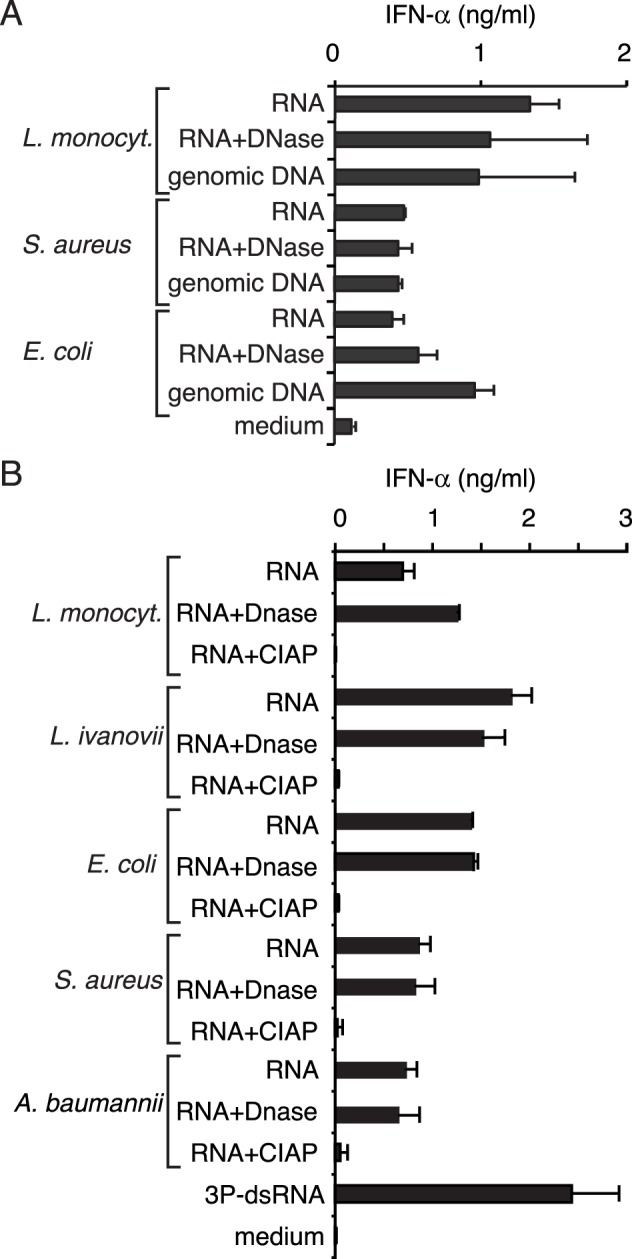
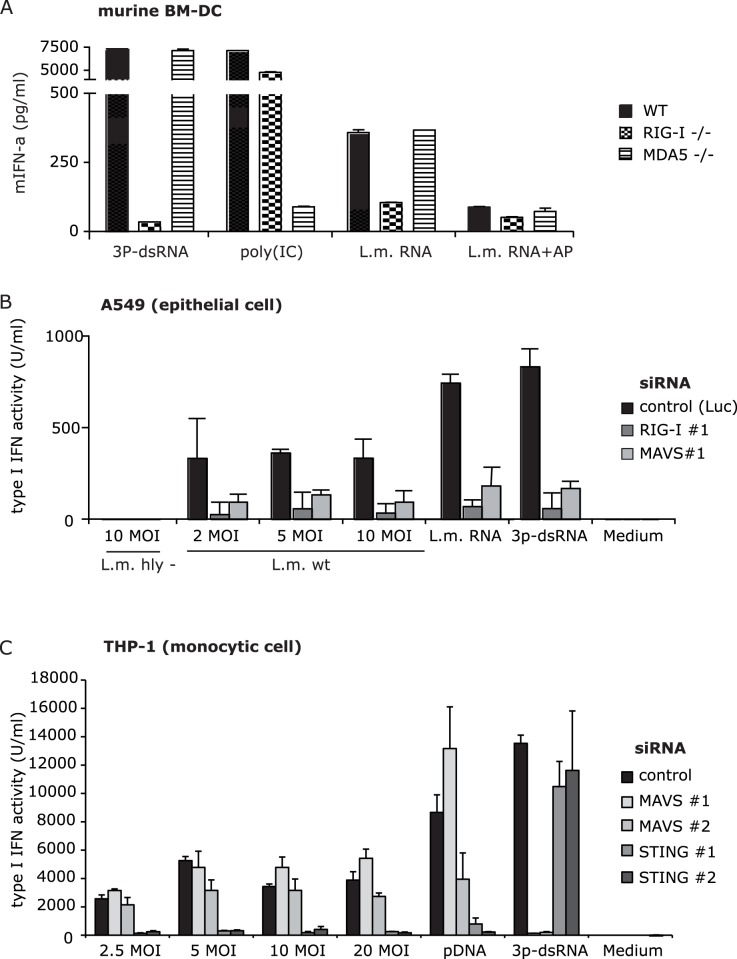
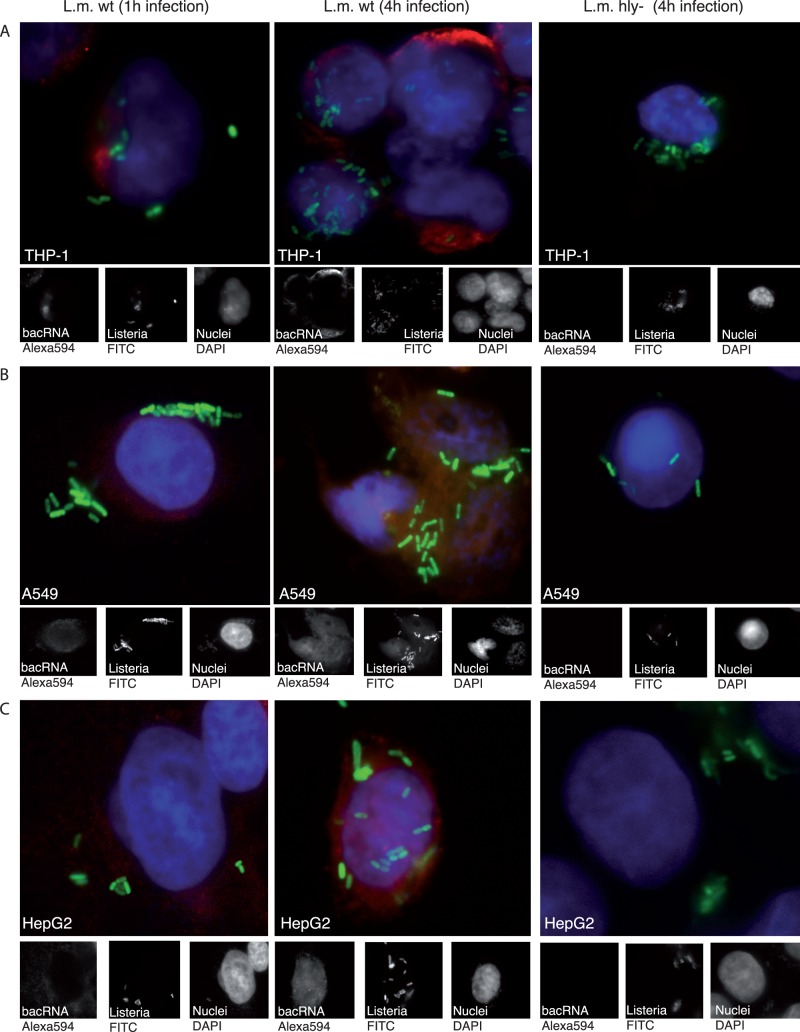
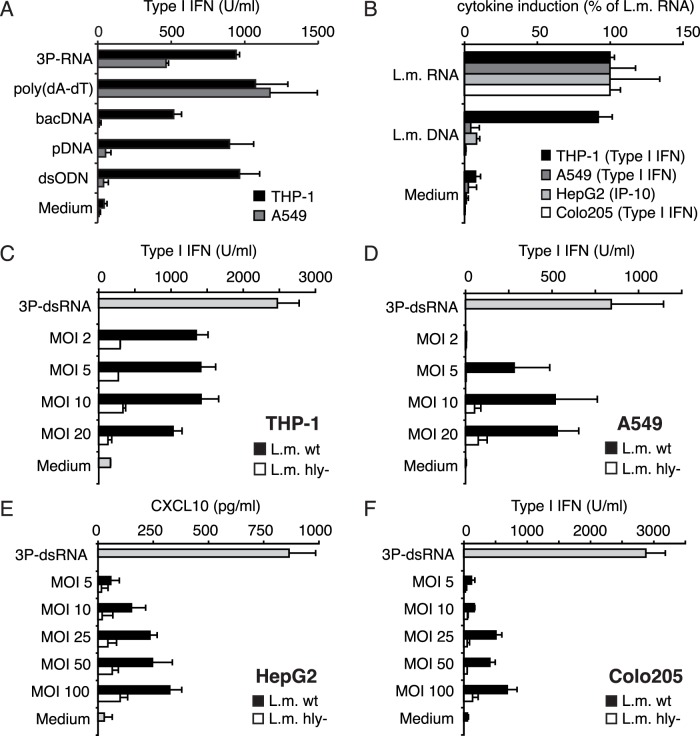
The innate immune system senses pathogens by pattern recognition receptors in different cell compartments. In the endosome, bacteria are generally recognized by TLRs; facultative intracellular bacteria such as Listeria, however, can escape the endosome. Once in the cytosol, they become accessible to cytosolic pattern recognition receptors, which recognize components of the bacterial cell wall, metabolites or bacterial nucleic acids and initiate an immune response in the host cell. Current knowledge has been focused on the type I IFN response to Listeria DNA or Listeria-derived second messenger c-di-AMP via the signaling adaptor STING. Our study focused on the recognition of Listeria RNA in the cytosol. With the aid of a novel labeling technique, we have been able to visualize immediate cytosolic delivery of Listeria RNA upon infection. Infection with Listeria as well as transfection of bacterial RNA induced a type-I-IFN response in human monocytes, epithelial cells or hepatocytes. However, in contrast to monocytes, the type-I-IFN response of epithelial cells and hepatocytes was not triggered by bacterial DNA, indicating a STING-independent Listeria recognition pathway. RIG-I and MAVS knock-down resulted in abolishment of the IFN response in epithelial cells, but the IFN response in monocytic cells remained unaffected. By contrast, knockdown of STING in monocytic cells reduced cytosolic Listeria-mediated type-I-IFN induction. Our results show that detection of Listeria RNA by RIG-I represents a non-redundant cytosolic immunorecognition pathway in non-immune cells lacking a functional STING dependent signaling pathway.
天然免疫系统通过不同细胞区室中的模式识别受体来感知病原体。在内涵体中,细菌通常被 TLR 识别;然而,兼性细胞内细菌(如李斯特菌)可以逃避内涵体。一旦进入细胞质,它们就可以被细胞质模式识别受体识别,这些受体识别细菌细胞壁的成分、代谢物或细菌核酸,并在宿主细胞中引发免疫反应。目前的知识主要集中在宿主细胞通过信号适配器 STING 对李斯特菌 DNA 或李斯特菌衍生的第二信使 c-di-AMP 的 I 型 IFN 反应上。我们的研究集中在细胞质中李斯特菌 RNA 的识别上。借助一种新的标记技术,我们能够在感染时可视化李斯特菌 RNA 的即时细胞质递呈。李斯特菌感染以及细菌 RNA 的转染均可诱导人单核细胞、上皮细胞或肝细胞产生 I 型 IFN 反应。然而,与单核细胞不同,上皮细胞和肝细胞的 I 型 IFN 反应不受细菌 DNA 的触发,表明存在一种不依赖于 STING 的李斯特菌识别途径。RIG-I 和 MAVS 的敲低导致上皮细胞中 IFN 反应的消除,但单核细胞中的 IFN 反应不受影响。相反,单核细胞中 STING 的敲低降低了细胞质中李斯特菌介导的 I 型 IFN 诱导。我们的结果表明,RIG-I 对李斯特菌 RNA 的检测代表了非免疫细胞中一种非冗余的细胞质免疫识别途径,这些细胞缺乏功能性依赖 STING 的信号通路。