Department of Experimental Medicine, Section of Biotechnology and Molecular Biology, Second University of Naples, via de Crecchio 7, Naples 80138, Italy.
Microb Cell Fact. 2013 May 9;12:46. doi: 10.1186/1475-2859-12-46.
Glycosaminoglycans, such as hyaluronic acid, heparin, and chondroitin sulfate, are among the top ranked products in industrial biotechnology for biomedical applications, with a growing world market of billion dollars per year. Recently a remarkable progress has been made in the development of tailor-made strains as sources for the manufacturing of such products. The genetic modification of E. coli K4, a natural producer of chondroitin sulfate precursor, is challenging considering the lack of detailed information on its genome, as well as its mobilome. Chondroitin sulfate is currently used as nutraceutical for the treatment of osteoarthritis, and several new therapeutic applications, spanning from the development of skin substitutes to live attenuated vaccines, are under evaluation.
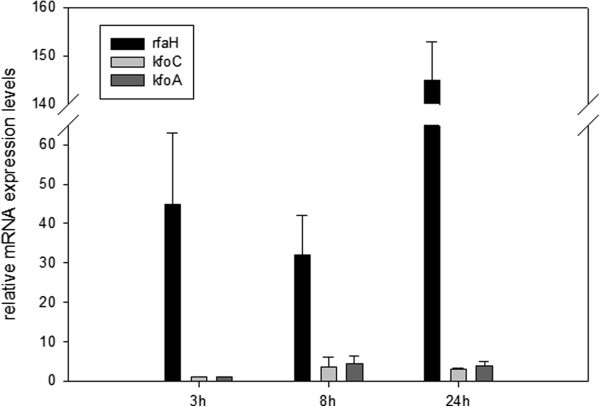
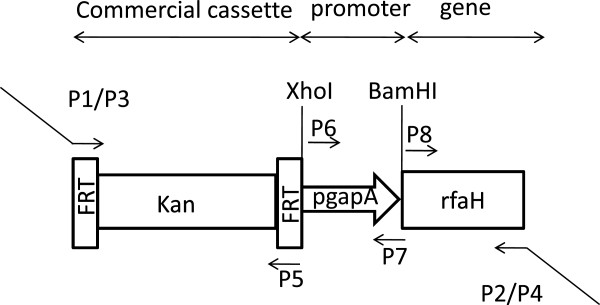
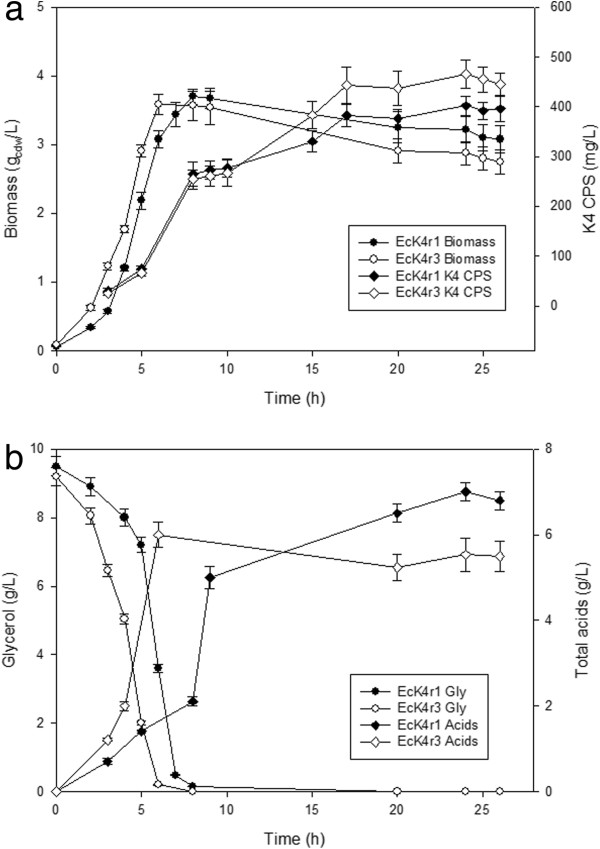
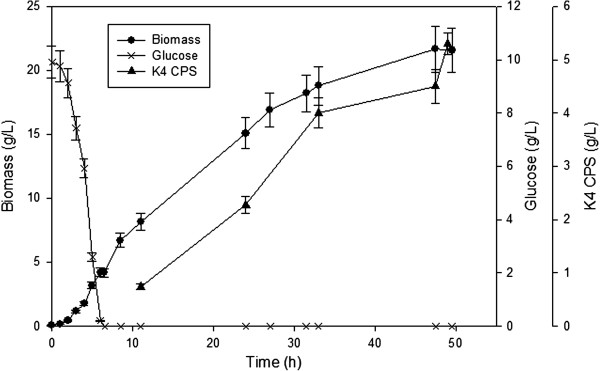
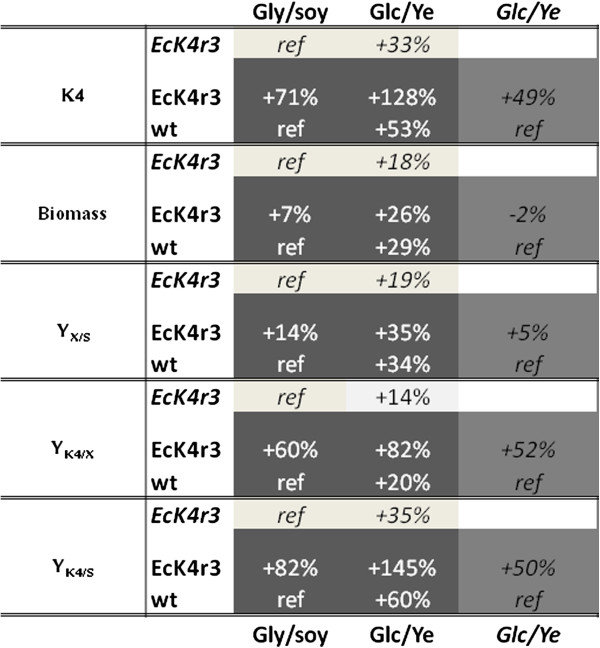
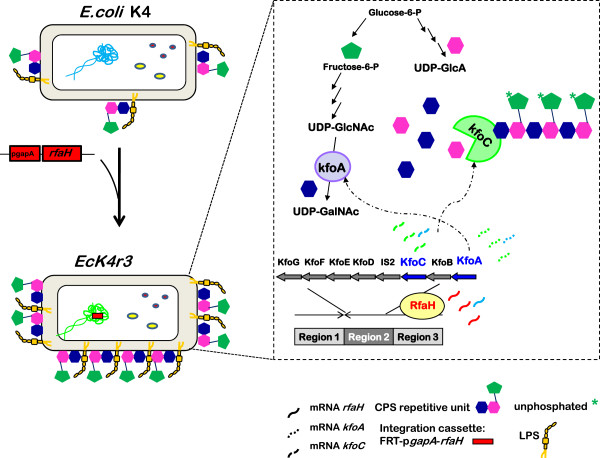
E. coli K4 was used as host for the overexpression of RfaH, a positive regulator that controls expression of the polysaccharide biosynthesis genes and other genes necessary for the virulence of E. coli K4. Various engineering strategies were compared to investigate different types of expression systems (plasmid vs integrative cassettes) and integration sites (genome vs endogenous mobile element). All strains analysed in shake flasks on different media showed a capsular polysaccharide production improved by 40 to 140%, compared to the wild type, with respect to the final product titer. A DO-stat fed-batch process on the 2L scale was also developed for the best performing integrative strain, EcK4r3, yielding 5.3 g ∙ L(-1) of K4 polysaccharide. The effect of rfaH overexpression in EcK4r3 affected the production of lipopolysaccharide and the expression of genes involved in the polysaccharide biosynthesis pathway (kfoC and kfoA), as expected. An alteration of cellular metabolism was revealed by changes of intracellular pools of UDP-sugars which are used as precursors for polysaccharide biosynthesis.
The present study describes the identification of a gene target and the application of a successful metabolic engineering strategy to the unconventional host E. coli K4 demonstrating the feasibility of using the recombinant strain as stable cell factory for further process implementations.
糖胺聚糖,如透明质酸、肝素和硫酸软骨素,是用于生物医学应用的工业生物技术中排名最高的产品之一,其全球市场每年以数十亿美元计。最近,在开发定制菌株作为制造这些产品的来源方面取得了显著进展。考虑到缺乏有关其基因组及其移动组的详细信息,对天然产生硫酸软骨素前体的大肠杆菌 K4 进行基因修饰具有挑战性。硫酸软骨素目前用作治疗骨关节炎的营养保健品,并且正在评估几种新的治疗应用,从开发皮肤替代品到活减毒疫苗。
大肠杆菌 K4 被用作过表达 RfaH 的宿主,RfaH 是一种正调控因子,可控制多糖生物合成基因和大肠杆菌 K4 毒力所必需的其他基因的表达。比较了各种工程策略,以研究不同类型的表达系统(质粒与整合盒)和整合位点(基因组与内源性移动元件)。在不同培养基的摇瓶中分析的所有菌株与野生型相比,荚膜多糖的最终产物滴度提高了 40%至 140%。还为表现最佳的整合菌株 EcK4r3 开发了 DO-stat 补料分批过程,在 2L 规模上可产 5.3 g/L 的 K4 多糖。如预期的那样,rfaH 过表达对 EcK4r3 中的脂多糖产生和多糖生物合成途径(kfoC 和 kfoA)中涉及的基因的表达产生了影响。细胞代谢的改变通过用于多糖生物合成的前体 UDP-糖的细胞内池的变化而显现出来。
本研究描述了鉴定一个基因靶标和应用成功的代谢工程策略来非常规宿主大肠杆菌 K4,证明了使用重组菌株作为进一步工艺实施的稳定细胞工厂的可行性。