University of Massachusetts Medical School, Worcester, MA 10605, United States.
J Hepatol. 2013 Sep;59(3):442-9. doi: 10.1016/j.jhep.2013.04.022. Epub 2013 May 7.
BACKGROUND & AIMS: Interferon-γ (IFN-γ), a cytokine produced by activated natural killer cells (NK) and T lymphocytes, is an important regulator of innate and adaptive immunity during hepatitis C virus (HCV) infection. However, the cellular sources and mechanisms of IFN-γ induction in HCV-infection are not fully understood.
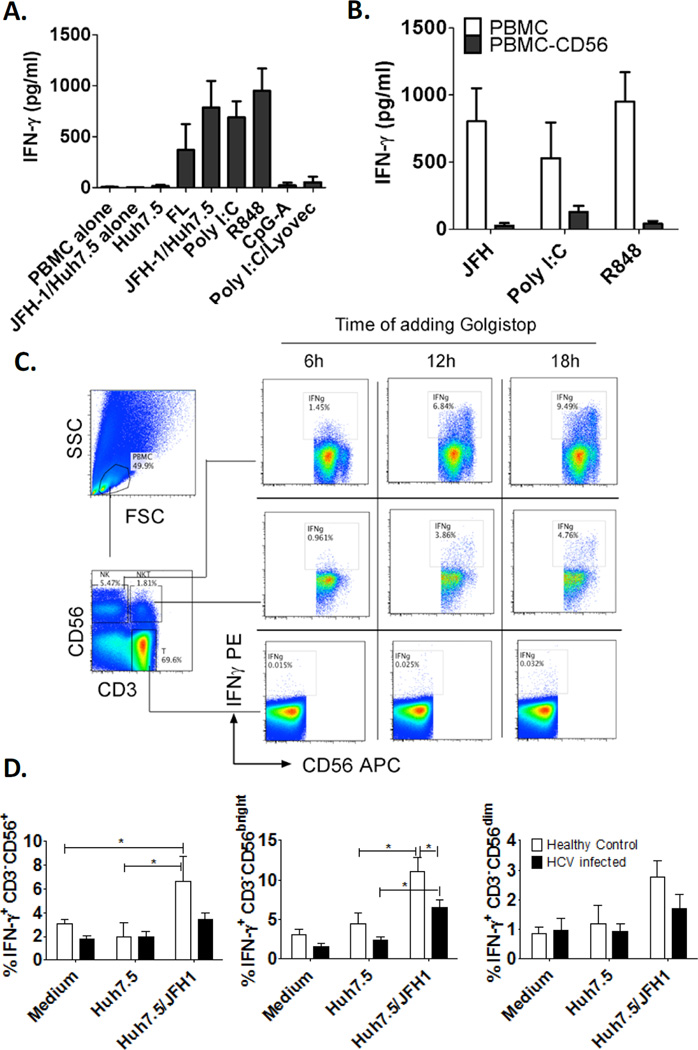
We cultured normal human peripheral blood mononuclear cells (PBMCs) with different populations of immune cells and JFH-1 HCV-infected HuH7.5 (JFH-1/HuH7.5) cells.
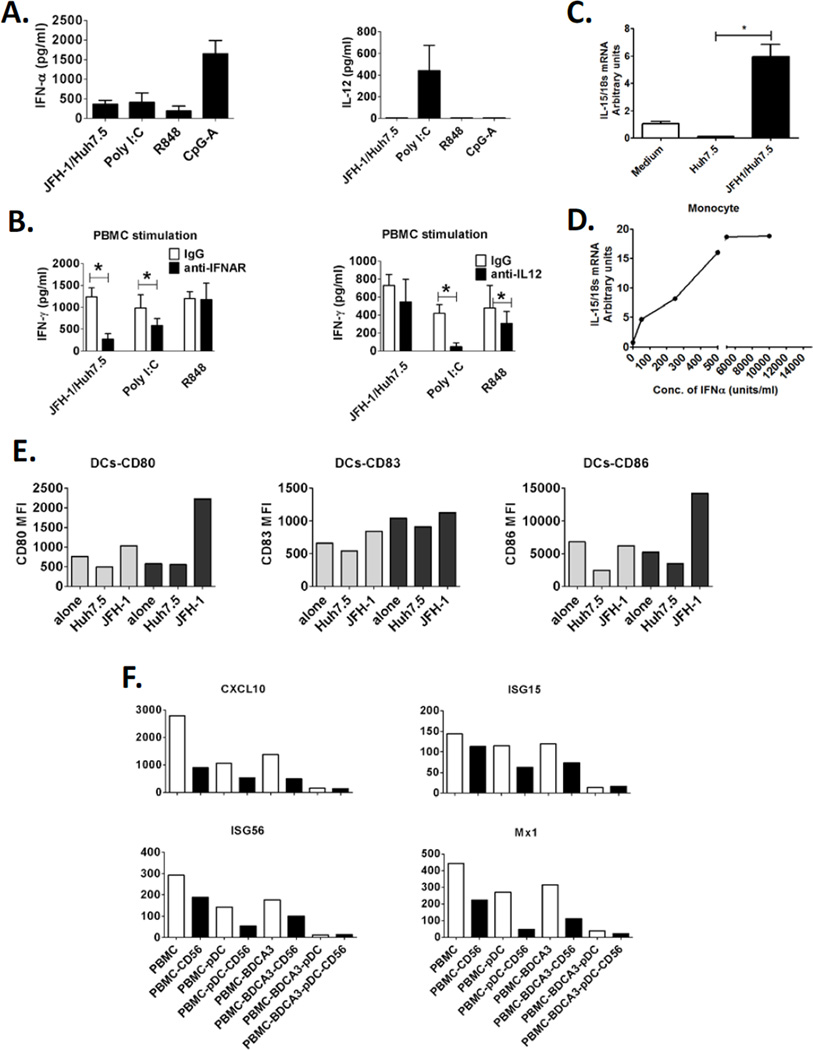
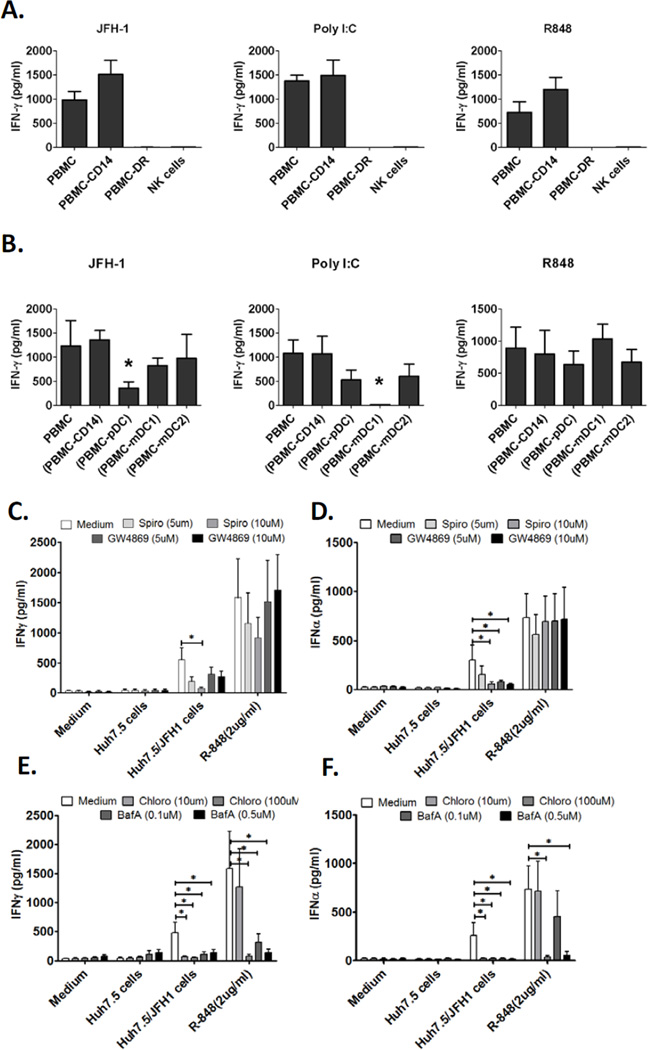
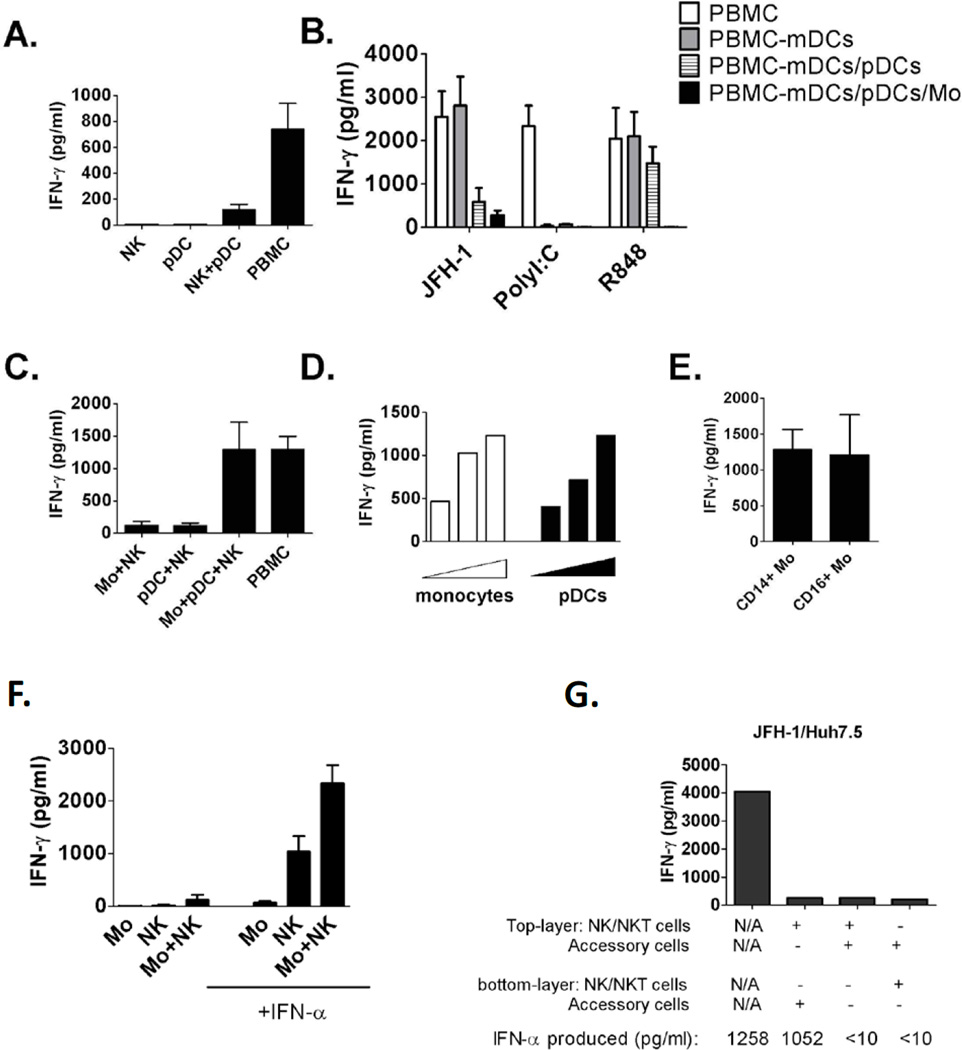
We found that PBMCs produced large amounts of IFN-γ after co-culture with JFH-1/HuH7.5 cells. Using intracellular cytokine staining, we confirmed that NK cells and NKT cells (to a lesser extent) were the major IFN-γ producers within PBMCs. Purified NK/NKT cells did not produce IFN-γ in response to JFH-1/HuH7.5 cells and depletion of accessory (HLA-DR(+)) cells prevented IFN-γ induction in PBMCs. Through selective cell depletion of dendritic cells or monocytes from PBMCs, we determined that plasmacytoid dendritic cells (pDCs) were indispensable for NK-IFN-γ induction and the presence of monocytes was needed for maximal NK-IFN-γ induction. We further revealed that NK-IFN-γ induction depended on pDC-derived IFN-α while other IFN-γ inducing cytokines, IL-12, and IL-18, played minimal roles. Close contact between JFH-1/HuH7.5 cells and NK cells was required for IFN-γ production and monocyte-derived IL-15 significantly augmented IFN-γ induction.
We discovered a novel mechanism where NK cells interact with pDCs and monocytes, efficiently producing IFN-γ in response to HCV-infected cells. This indicates that co-operation between NK cells and accessory cells is critical for IFN-γ production and regulation of immunity during HCV infection.
干扰素-γ(IFN-γ)是一种由激活的自然杀伤细胞(NK)和 T 淋巴细胞产生的细胞因子,是丙型肝炎病毒(HCV)感染期间固有和适应性免疫的重要调节剂。然而,HCV 感染中 IFN-γ诱导的细胞来源和机制尚不完全清楚。
我们培养了正常人外周血单核细胞(PBMCs),并用不同免疫细胞群体和 JFH-1 HCV 感染的 HuH7.5(JFH-1/HuH7.5)细胞进行共培养。
我们发现 PBMCs 与 JFH-1/HuH7.5 细胞共培养后会产生大量 IFN-γ。通过细胞内细胞因子染色,我们证实 NK 细胞和 NKT 细胞(程度较小)是 PBMC 中产生 IFN-γ的主要细胞。纯化的 NK/NKT 细胞不会对 JFH-1/HuH7.5 细胞产生 IFN-γ,而辅助(HLA-DR(+))细胞的耗竭可阻止 PBMC 中 IFN-γ的诱导。通过从 PBMC 中选择性地耗尽树突状细胞或单核细胞,我们确定浆细胞样树突状细胞(pDCs)对 NK-IFN-γ的诱导是必不可少的,而单核细胞的存在对于最大程度地诱导 NK-IFN-γ是必需的。我们进一步揭示了 NK-IFN-γ的诱导依赖于 pDC 衍生的 IFN-α,而其他 IFN-γ诱导细胞因子,如 IL-12 和 IL-18,作用较小。JFH-1/HuH7.5 细胞与 NK 细胞之间的紧密接触是 IFN-γ产生所必需的,单核细胞衍生的 IL-15 显著增强了 IFN-γ的诱导。
我们发现了一种新的机制,即 NK 细胞与 pDCs 和单核细胞相互作用,可有效针对 HCV 感染的细胞产生 IFN-γ。这表明 NK 细胞与辅助细胞之间的合作对于 IFN-γ的产生和 HCV 感染期间免疫的调节至关重要。