Insect Pest Control Laboratory, Joint FAO/IAEA Programme of Nuclear Techniques in Food and Agriculture, Vienna, Austria.
PLoS One. 2013 May 7;8(5):e61875. doi: 10.1371/journal.pone.0061875. Print 2013.
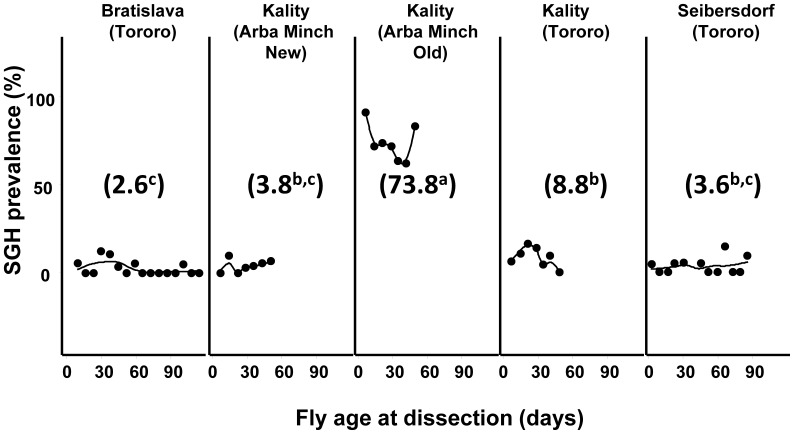
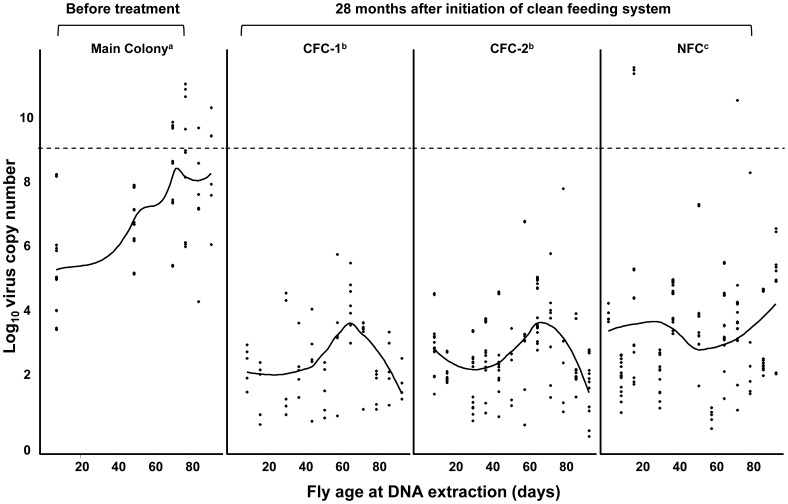
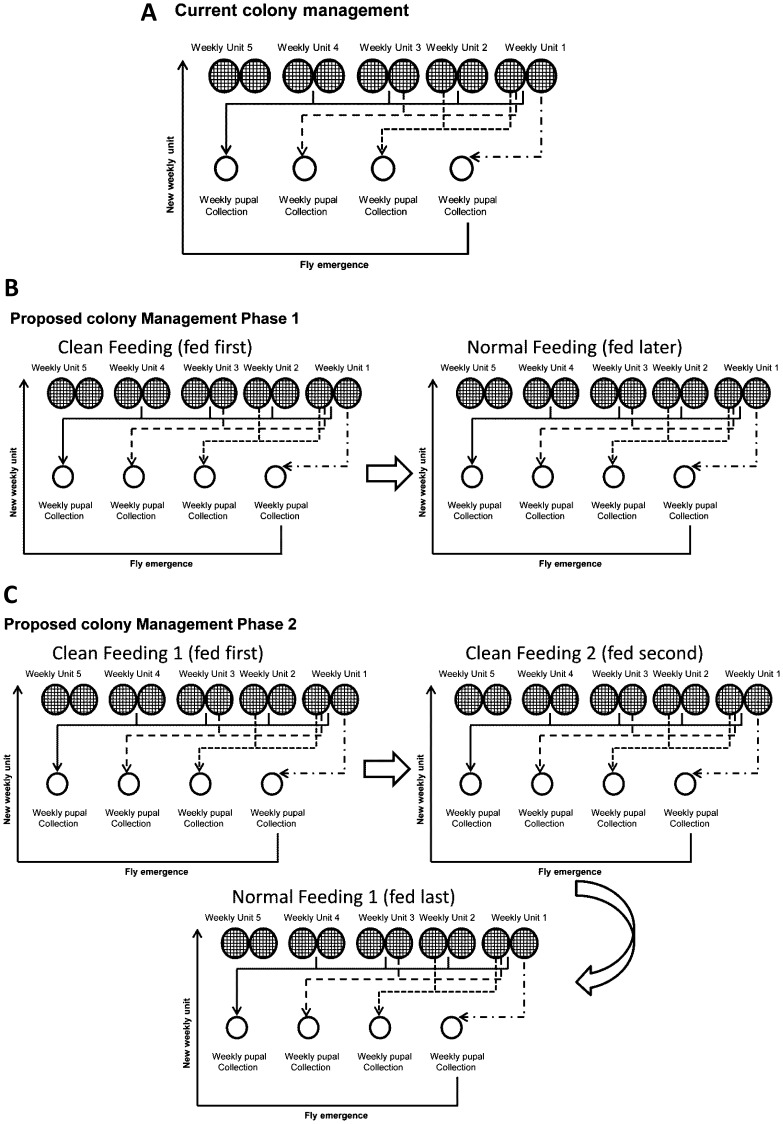
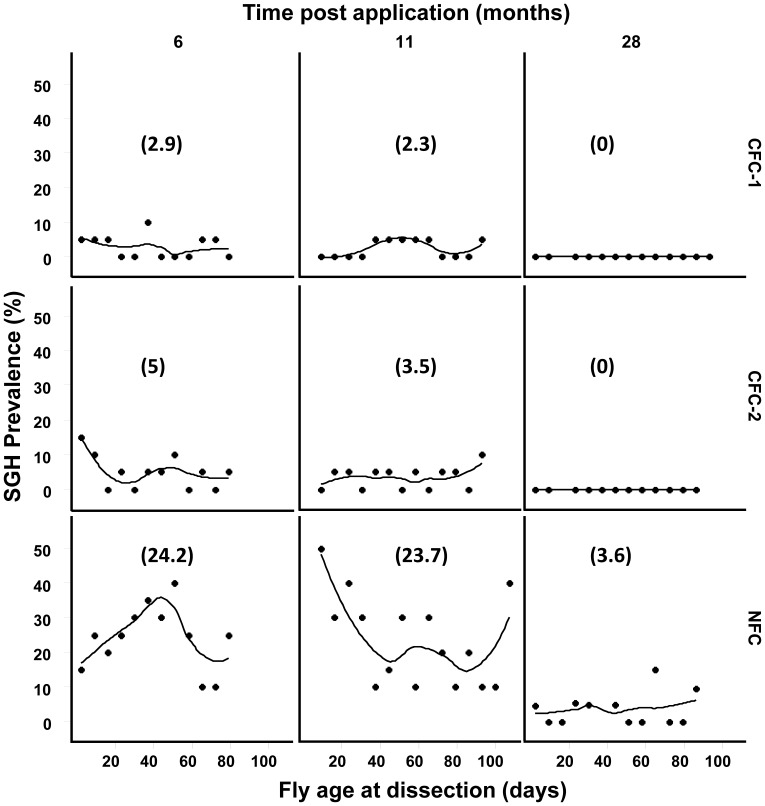
Many species of tsetse flies are infected by a virus that causes salivary gland hypertrophy (SGH) syndrome and the virus isolated from Glossina pallidipes (GpSGHV) has recently been sequenced. Flies with SGH have a reduced fecundity and fertility. Due to the deleterious impact of SGHV on G. pallidipes colonies, several approaches were investigated to develop a virus management strategy. Horizontal virus transmission is the major cause of the high prevalence of the GpSGHV in tsetse colonies. Implementation of a "clean feeding" regime (fresh blood offered to each set of flies so that there is only one feed per membrane), instead of the regular feeding regime (several successive feeds per membrane), was among the proposed approaches to reduce GpSGHV infections. However, due to the absence of disposable feeding equipment (feeding trays and silicone membranes), the implementation of a clean feeding approach remains economically difficult. We developed a new clean feeding approach applicable to large-scale tsetse production facilities using existing resources. The results indicate that implementing this approach is feasible and leads to a significant reduction in virus load from 10(9) virus copies in regular colonies to an average of 10(2.5) and eliminates the SGH syndrome from clean feeding colonies by28 months post implementation of this approach. The clean feeding approach also reduced the virus load from an average of 10(8) virus copy numbers to an average of 10(3) virus copies and SGH prevalence of 10% to 4% in flies fed after the clean fed colony. Taken together, these data indicate that the clean feeding approach is applicable in large-scale G. pallidipes production facilities and eliminates the deleterious effects of the virus and the SGH syndrome in these colonies.
许多采采蝇物种都感染了一种导致唾液腺肥大(SGH)综合征的病毒,最近已经对从 G. pallidipes 中分离出的病毒(GpSGHV)进行了测序。患有 SGH 的苍蝇繁殖力和生育率降低。由于 SGHV 对 G. pallidipes 群体的有害影响,人们研究了几种方法来制定病毒管理策略。水平病毒传播是 GpSGHV 在采采蝇群体中高流行的主要原因。实施“清洁喂养”制度(每一组苍蝇提供新鲜血液,因此每张膜只有一次喂食),而不是常规的喂养制度(每张膜连续喂食几次),是减少 GpSGHV 感染的方法之一。然而,由于缺乏一次性喂养设备(喂食托盘和硅酮膜),因此实施清洁喂养方法在经济上仍然具有挑战性。我们开发了一种新的清洁喂养方法,适用于使用现有资源的大型采采蝇生产设施。结果表明,实施这种方法是可行的,可将病毒载量从常规群体中的 10(9)个病毒拷贝显著降低至平均 10(2.5)个,并通过实施这种方法 28 个月后,从清洁喂养群体中消除 SGH 综合征。清洁喂养方法还将病毒载量从平均 10(8)个病毒拷贝数降低至平均 10(3)个病毒拷贝数,并将清洁喂养后喂养的苍蝇中的 SGH 患病率从 10%降低至 4%。综上所述,这些数据表明,清洁喂养方法适用于大型 G. pallidipes 生产设施,并可消除这些群体中病毒和 SGH 综合征的有害影响。