Schumacher Thomas, Ruehland Claus, Schultheiss Christine, Brinkman Marc, Roedel Franz, Reiser Christian O A, Hess Juergen, Reichel Christoph
Siegfried Biologics GmbH, Heinrich-Hertz-Str. 1b, 14532 Kleinmachnow, Germany;
Int J Biomed Sci. 2007 Sep;3(3):199-205.
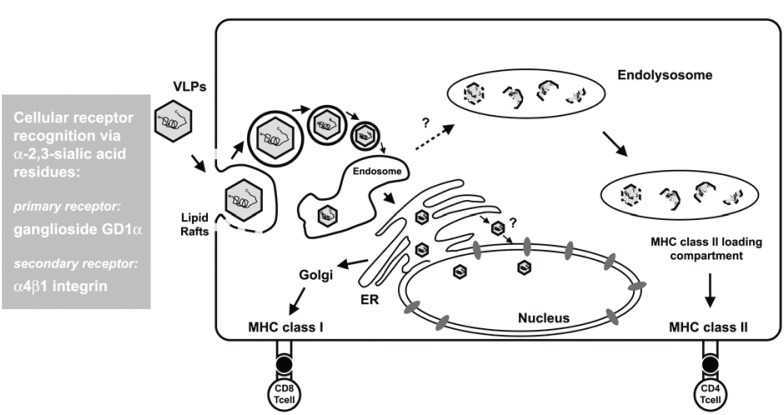
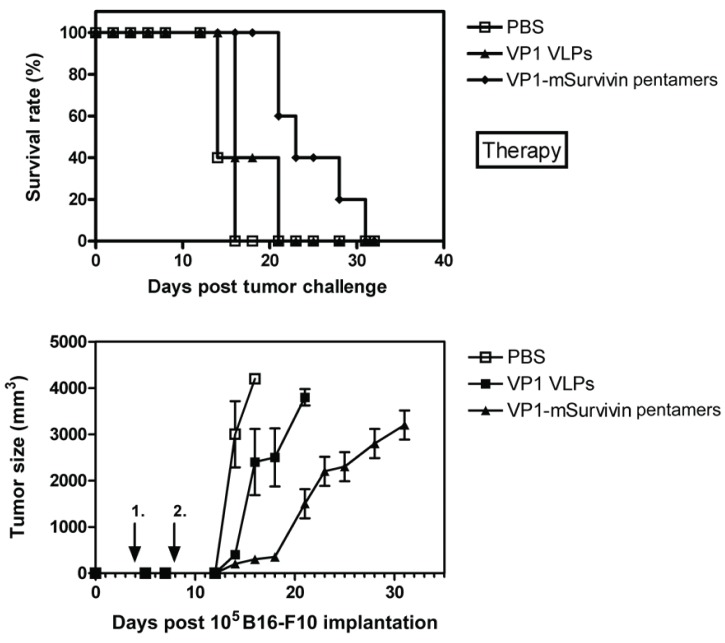
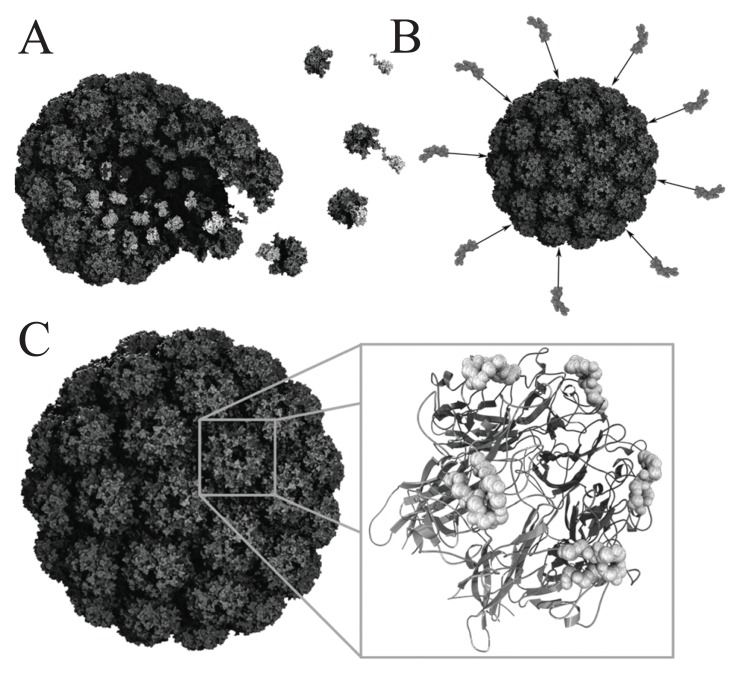
Success in cancer immunotherapy depends on the identification and efficient targeting of specific tumor-associated antigens. Two pivotal strategies to prime patients' immune system against malignant cells are tumor-specific adoptive T-cell therapy and tumor-specific vaccination. Here, we will focus on immunotherapeutic vaccination and discuss the advantages and disadvantages of different strategies to deliver tumor-specific T-cell epitopes. A particular focus will be put on virus-like particles (VLPs) as vehicle to deliver tumor-specific epitopes in the context of full-length proteins, as multi-epitope constructs or as individual tumor-associated T-cell epitopes. VLPs represent non-infectious and non-replicating antigen delivery systems devoid of any nucleic acid. They constitute innovative immunotherapeutic agents against cancer due to their superior, adjuvant-like antigenicity. We will present various tumor-associated antigens currently in different stages of development including survivin, as promising candidates for targeted tumor therapies.
癌症免疫疗法的成功取决于特定肿瘤相关抗原的识别和有效靶向。使患者免疫系统对抗恶性细胞的两个关键策略是肿瘤特异性过继性T细胞疗法和肿瘤特异性疫苗接种。在此,我们将聚焦于免疫治疗性疫苗接种,并讨论递送肿瘤特异性T细胞表位的不同策略的优缺点。将特别关注病毒样颗粒(VLP)作为载体,在全长蛋白、多表位构建体或单个肿瘤相关T细胞表位的背景下递送肿瘤特异性表位。VLP代表不含任何核酸的非感染性和非复制性抗原递送系统。由于其卓越的、佐剂样抗原性,它们构成了针对癌症的创新免疫治疗剂。我们将介绍目前处于不同开发阶段的各种肿瘤相关抗原,包括生存素,作为靶向肿瘤治疗的有前景的候选者。