Jeremiah Israel, Okike Ola, Akani Chris
Department of Obstetrics and Gynaecology, University of Port Harcourt Teaching Hospital, Port Harcourt, Nigeria.
Int J Biomed Sci. 2011 Jun;7(2):120-4.
This study was undertaken to assess the prevalence of IgG antibody to Chlamydia trachomatis in subfertile patients at the University of Port Harcourt Teaching Hospital and to determine associated factors between this and infertility.
This case controlled study was conducted among 100 women presenting for infertility consultation at the University of Port Harcourt Teaching Hospital. One hundred women with normal intrauterine pregnancies attending the antenatal clinic were used as controls. A questionnaire was used to obtain information on their socio-demographic data, sexual and obstetric history administered to them. 2mls of venous blood was collected, labelled and sent to the laboratory. The presence of IgG antibody to Chlamydia trachomatis was determined. Hysterosalpingography was performed on all infertile women to assess tubal patency. Data management was with SPSS 15.0 for Windows(®) statistical software.
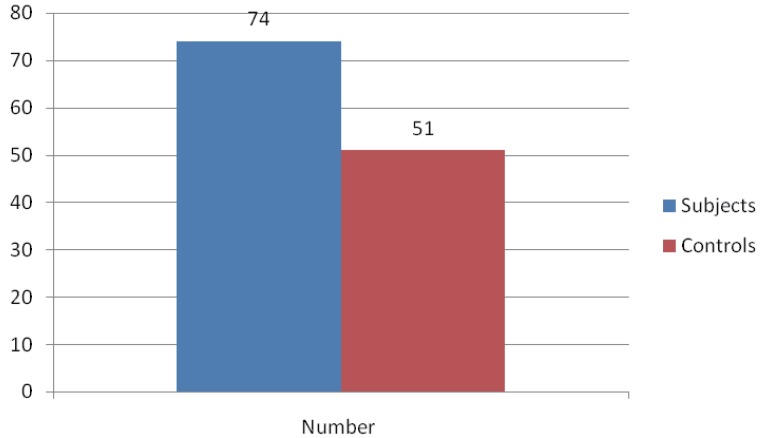
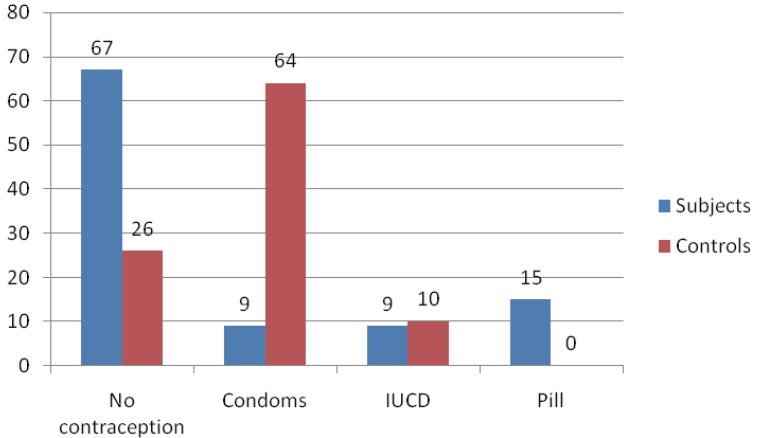
The mean age of the subjects was 30 ± 3.1 years, median parity 0.5 and average life time sexual partner 3.7 ± 2.8. All the participants in the study were married. 62% of subjects had tertiary education. The Chlamydia trachomatis IgG antibody prevalence in the subfertile population was 74% and 51% in the control group, P<0.001. Tubal occlusion occurred in 58 (78.4%) of cases positive for chlamydia antibody. Pelvic inflammatory disease and mucopurulent discharge were the most common presentating symptoms among Chlamydia antigen positive infertile women, P<0.001. There was an association between subfertility and the number of life time sexual partners. There was an association between subfertility and non usage of condoms.
The prevalence IgG antibody to Chlamydia trachomatis was significantly higher in women with subfertility compared to women with proven fertility. There was a strong association between Chlamydia antibody positivity and tubal occlusion. In a resource-poor country such as Nigeria, enzyme immunosorbent assay for chlamydial IgG antibodies may be substituted for HSG for the detection of tubal occlusion.
本研究旨在评估哈科特港大学教学医院不育患者中沙眼衣原体IgG抗体的流行情况,并确定其与不育之间的相关因素。
本病例对照研究在哈科特港大学教学医院就诊的100名寻求不育咨询的女性中进行。以100名在产前诊所就诊且宫内妊娠正常的女性作为对照。使用问卷获取她们的社会人口学数据、性史和产科史信息。采集2毫升静脉血,标记后送实验室。检测沙眼衣原体IgG抗体的存在情况。对所有不育女性进行子宫输卵管造影以评估输卵管通畅情况。数据管理使用Windows(®)版SPSS 15.0统计软件。
研究对象的平均年龄为30±3.1岁,中位产次为0.5,平均终身性伴侣数为3.7±2.8。研究中的所有参与者均已婚。62%的研究对象接受过高等教育。不育人群中沙眼衣原体IgG抗体的流行率为74%,对照组为51%,P<0.001。衣原体抗体阳性的病例中有58例(78.4%)发生输卵管阻塞。盆腔炎和黏液脓性分泌物是衣原体抗原阳性不育女性中最常见的症状,P<0.001。不育与终身性伴侣数量之间存在关联。不育与未使用避孕套之间存在关联。
与已证实有生育能力的女性相比,不育女性中沙眼衣原体IgG抗体的流行率显著更高。衣原体抗体阳性与输卵管阻塞之间存在密切关联。在尼日利亚这样资源匮乏的国家,衣原体IgG抗体的酶免疫吸附测定可替代子宫输卵管造影用于检测输卵管阻塞。