Neurobiology and Anatomy, Drexel University College of Medicine Philadelphia, PA, USA ; Lockheed Martin Corporation Philadelphia, PA, USA.
Front Comput Neurosci. 2013 May 9;7:52. doi: 10.3389/fncom.2013.00052. eCollection 2013.
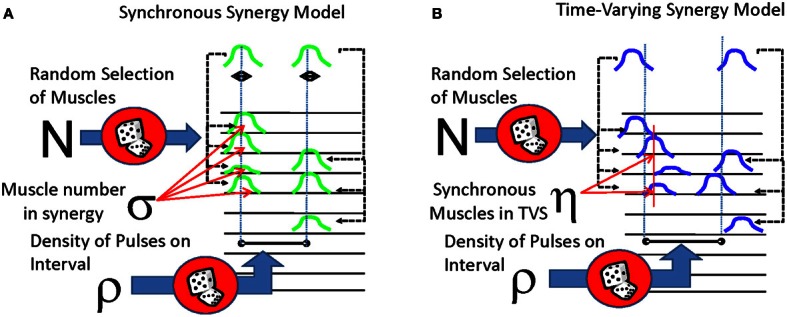
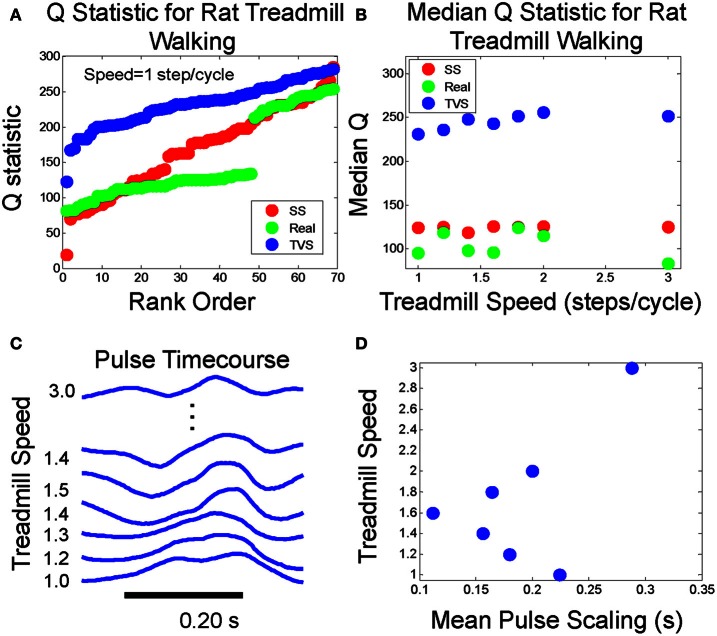
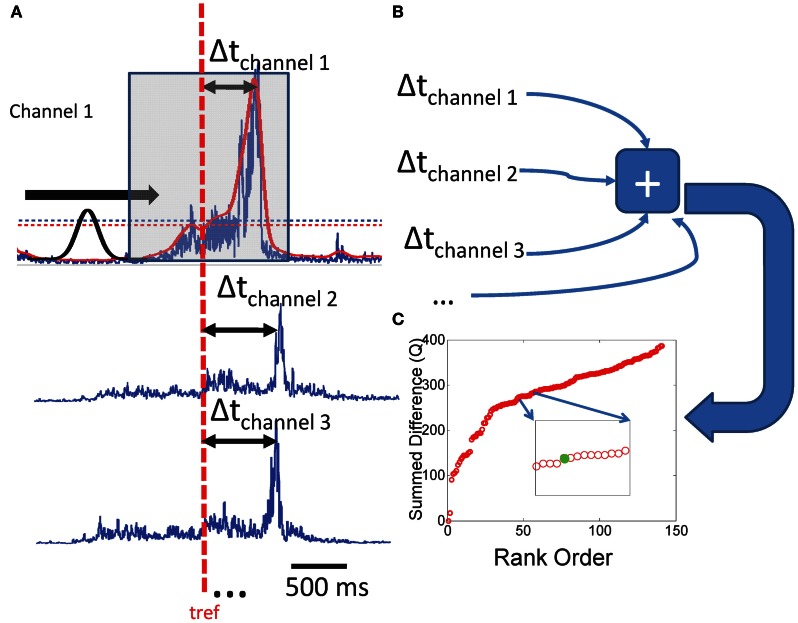
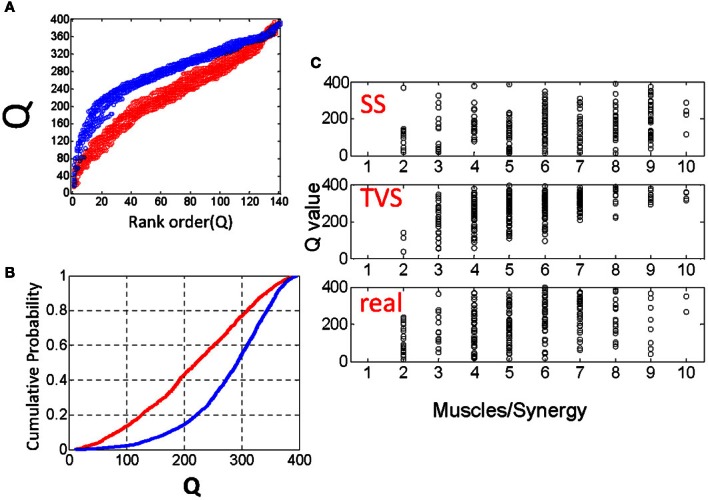
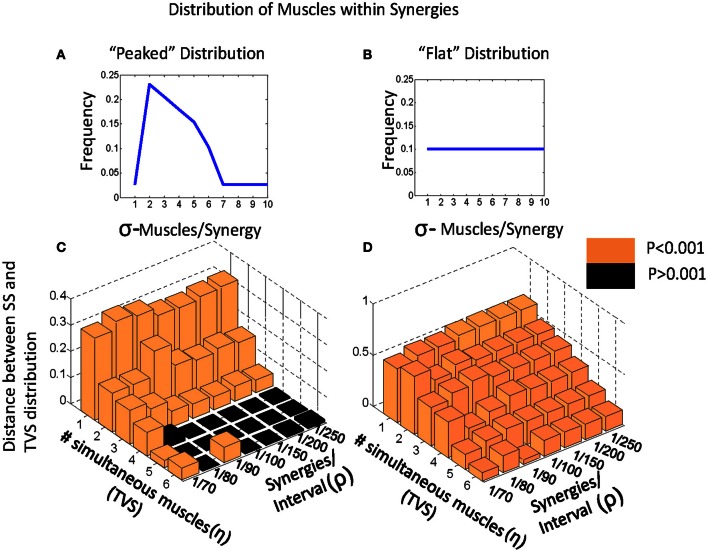
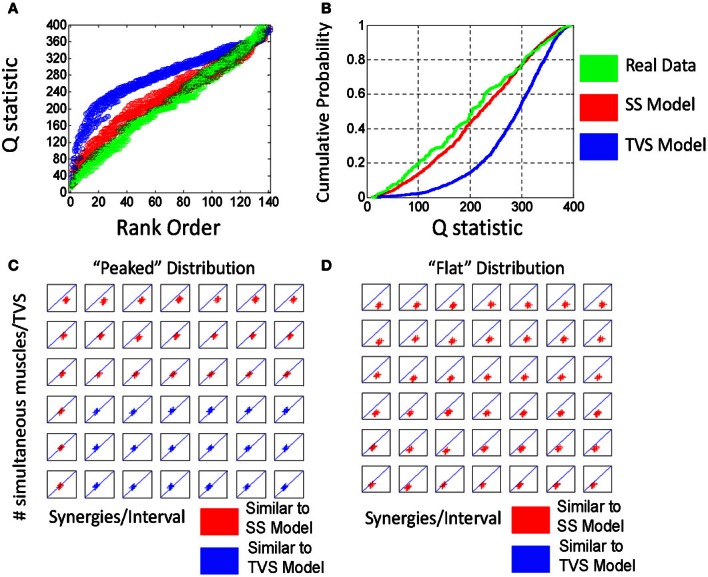
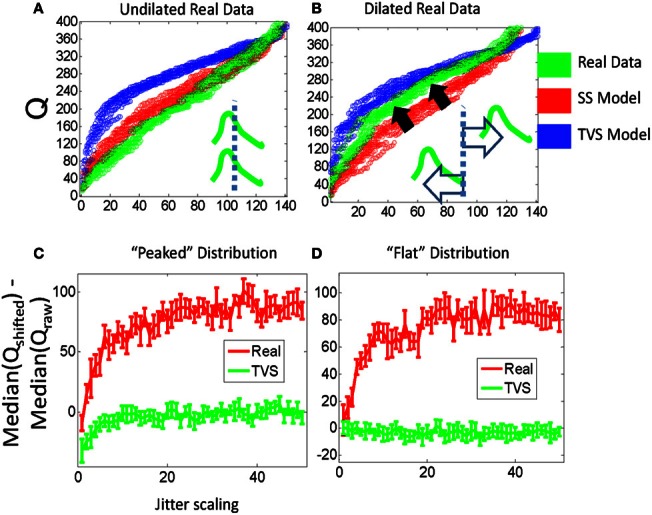
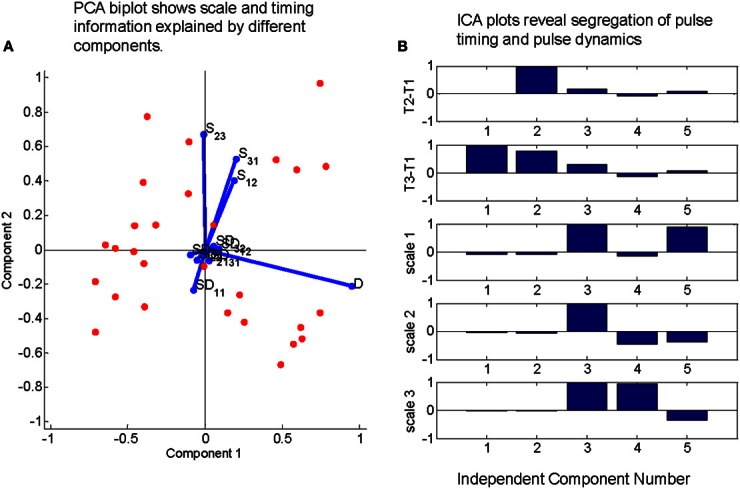
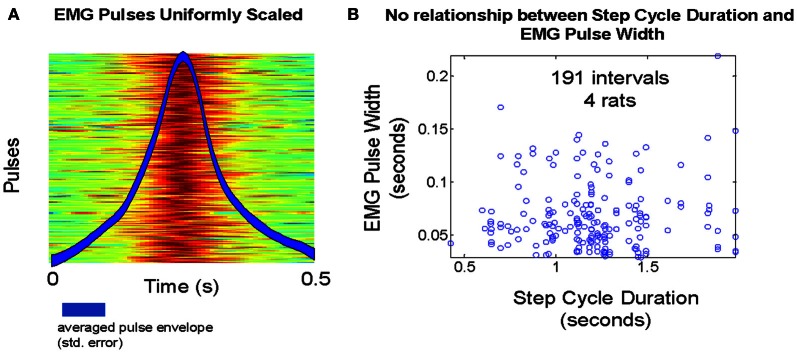
We present and apply a method that uses point process statistics to discriminate the forms of synergies in motor pattern data, prior to explicit synergy extraction. The method uses electromyogram (EMG) pulse peak timing or onset timing. Peak timing is preferable in complex patterns where pulse onsets may be overlapping. An interval statistic derived from the point processes of EMG peak timings distinguishes time-varying synergies from synchronous synergies (SS). Model data shows that the statistic is robust for most conditions. Its application to both frog hindlimb EMG and rat locomotion hindlimb EMG show data from these preparations is clearly most consistent with synchronous synergy models (p < 0.001). Additional direct tests of pulse and interval relations in frog data further bolster the support for synchronous synergy mechanisms in these data. Our method and analyses support separated control of rhythm and pattern of motor primitives, with the low level execution primitives comprising pulsed SS in both frog and rat, and both episodic and rhythmic behaviors.
我们提出并应用了一种方法,该方法使用点过程统计来区分运动模式数据中协同作用的形式,然后再进行明确的协同作用提取。该方法使用肌电图 (EMG) 脉冲峰值定时或起始定时。在脉冲起始可能重叠的复杂模式中,峰值定时更可取。从 EMG 峰值定时的点过程中得出的间隔统计量将时变协同作用与同步协同作用 (SS) 区分开来。模型数据表明,该统计量在大多数情况下都具有鲁棒性。该方法应用于青蛙后肢 EMG 和大鼠运动后肢 EMG 数据表明,这些准备数据最符合同步协同作用模型(p < 0.001)。在青蛙数据中对脉冲和间隔关系的直接测试进一步支持了这些数据中同步协同作用机制的支持。我们的方法和分析支持运动原语的节奏和模式的分离控制,其中低水平执行原语包括青蛙和大鼠中的脉冲 SS,以及两者的发作和节律行为。