Okanoya Emotional Information Project, Exploratory Research for Advanced Technology, Japan Science and Technology Agency Wako, Saitama, Japan ; Emotional Information Joint Research Laboratory, Brain Science Institute, RIKEN Wako, Saitama, Japan.
Front Psychol. 2013 May 10;4:212. doi: 10.3389/fpsyg.2013.00212. eCollection 2013.
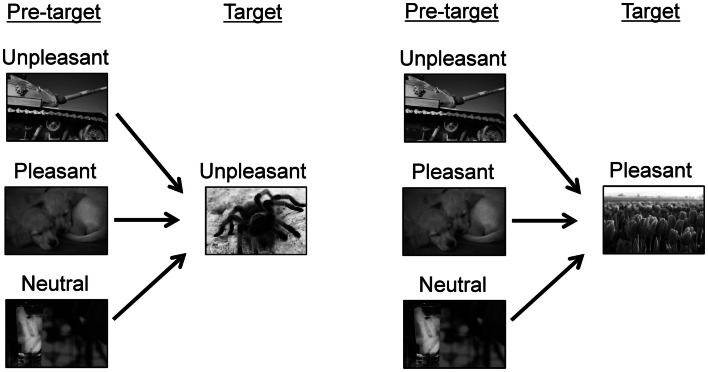
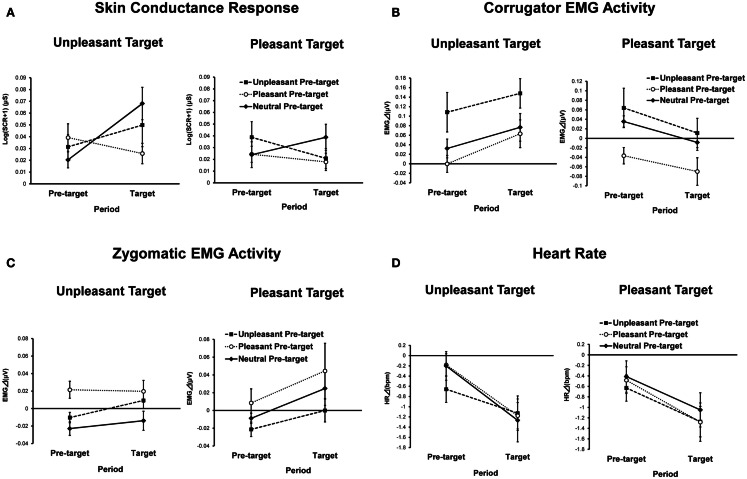
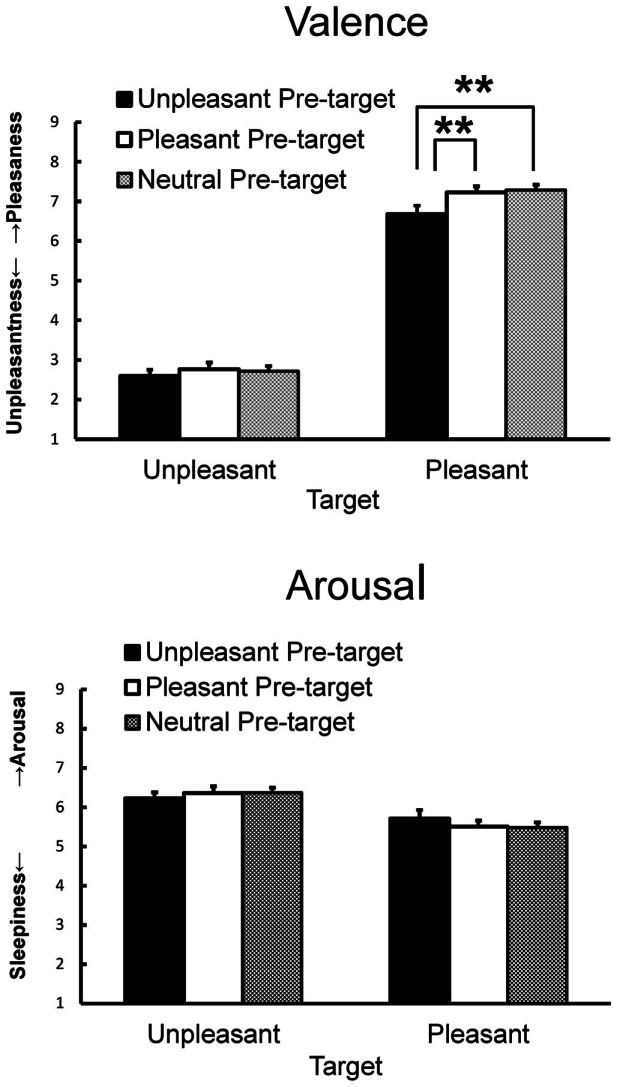
A series of emotional events successively occur in temporal context. The present study investigated how physiological and psychological responses are modulated by emotional context. Skin conductance response (SCR), heart rate, corrugator activity, zygomatic activity, and subjective feelings during emotional picture viewing were measured. To create an emotional context, a unpleasant or pleasant picture was preceded by three types of pictures, i.e., unpleasant, pleasant, and neutral pictures, resulting in six pairings. The results showed that viewing an unpleasant picture attenuated pleasant feelings induced by the following pleasant picture. On the other hand, preceding pleasant pictures decreased SCR to the following pictures. The effects of contextual modulation on emotional responses might be due to the informative function of pre-existing feelings; unpleasant feelings signal a threatening environment, whereas pleasant feelings signal a benign environment. With respect to facial muscle activities, viewing a pleasant picture decreased corrugator activity in response to the preceding picture. These findings suggest several types of contextual modulation effects on psychological, autonomic, and somatic responses to emotional stimuli.
一系列的情绪事件相继发生在时间背景中。本研究调查了生理和心理反应是如何被情绪背景所调节的。在观看情绪图片时,测量了皮肤电反应(SCR)、心率、皱眉肌活动、颧骨活动和主观感受。为了创造一个情绪背景,一个不愉快或愉快的图片之前有三种类型的图片,即不愉快、愉快和中性图片,导致六种配对。结果表明,观看不愉快的图片会减弱随后愉快图片所产生的愉快感觉。另一方面,愉快的图片会降低对后续图片的 SCR。上下文调制对情绪反应的影响可能是由于先前存在的感觉的信息功能;不愉快的感觉表示威胁环境,而愉快的感觉表示良性环境。就面部肌肉活动而言,观看愉快的图片会降低对前一张图片的皱眉肌活动。这些发现表明,情绪刺激的心理、自主和躯体反应存在几种类型的上下文调制效应。