Department of Bioscience and Biotechnology, University of Camerino Camerino, Macerata, Italy.
Front Oncol. 2013 May 14;3:122. doi: 10.3389/fonc.2013.00122. eCollection 2013.
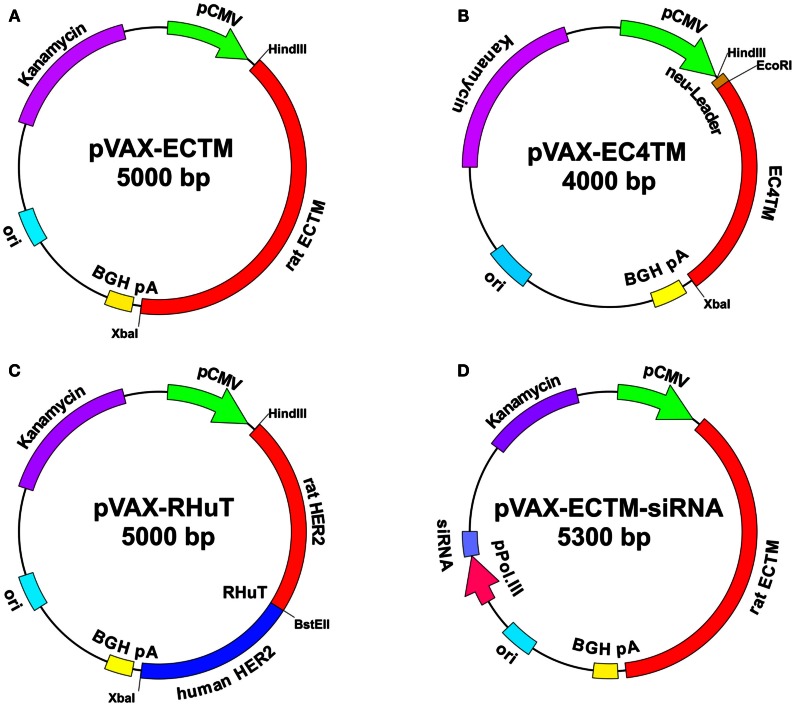
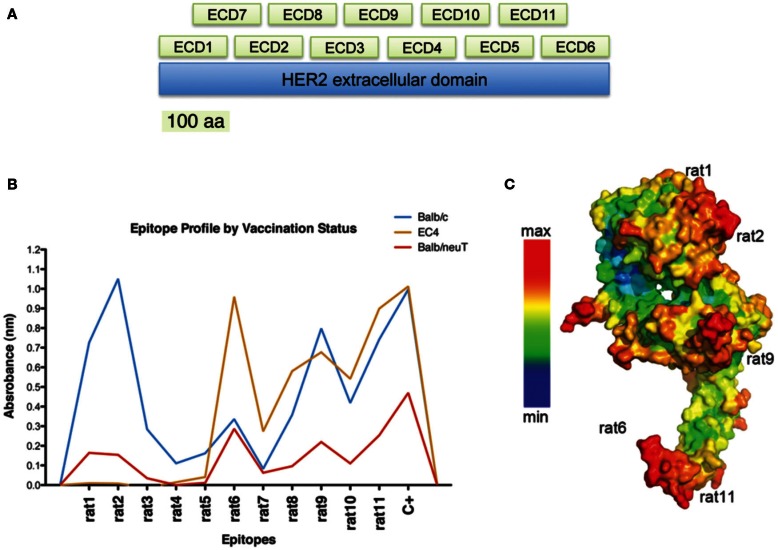
The crucial role of HER2 in epithelial transformation and its selective overexpression on cancer tissues makes it an ideal target for cancer immunotherapies such as passive immunotherapy with Trastuzumab. There are, however, a number of concerns regarding the use of monoclonal antibodies which include resistance, repeated treatments, considerable costs, and side effects that make active immunotherapies against HER2 desirable alternative approaches. The efficacy of anti-HER2 DNA vaccination has been widely demonstrated in transgenic cancer-prone mice, which recapitulate several features of human breast cancers. Nonetheless, the rational design of a cancer vaccine able to trigger a long-lasting immunity, and thus prevent tumor recurrence in patients, would require the understanding of how tolerance and immunosuppression regulate antitumor immune responses and, at the same time, the identification of the most immunogenic portions of the target protein. We herein retrace the findings that led to our most promising DNA vaccines that, by encoding human/rat chimeric forms of HER2, are able to circumvent peripheral tolerance. Preclinical data obtained with these chimeric DNA vaccines have provided the rationale for their use in an ongoing Phase I clinical trial (EudraCT 2011-001104-34).
HER2 在上皮转化中的关键作用及其在癌症组织上的选择性过表达,使其成为癌症免疫疗法的理想靶点,如曲妥珠单抗的被动免疫疗法。然而,单克隆抗体的使用存在一些问题,包括耐药性、重复治疗、高昂的成本和副作用,这使得针对 HER2 的主动免疫疗法成为一种理想的替代方法。抗 HER2 DNA 疫苗在易患癌症的转基因小鼠中的疗效已得到广泛证实,这些小鼠重现了人类乳腺癌的多种特征。然而,为了能够触发持久的免疫反应,从而防止患者肿瘤复发,合理设计一种能够触发持久免疫反应的癌症疫苗,就需要了解耐受和免疫抑制如何调节抗肿瘤免疫反应,同时还需要确定目标蛋白中最具免疫原性的部分。本文追溯了导致我们最有前途的 DNA 疫苗的发现,这些疫苗通过编码人/大鼠嵌合形式的 HER2,能够绕过外周耐受。这些嵌合 DNA 疫苗的临床前数据为其在正在进行的 I 期临床试验(EudraCT 2011-001104-34)中的应用提供了依据。