Laboratory of Molecular RNA Virology and Antiviral Strategies, Department of Microbiology, Yong Loo Lin School of Medicine, National University Health System, MD4, Level 5, 5 Science Drive 2, National University of Singapore, Singapore 117597, Singapore.
Drug Discov Today. 2013 Oct;18(19-20):969-83. doi: 10.1016/j.drudis.2013.05.002. Epub 2013 May 15.
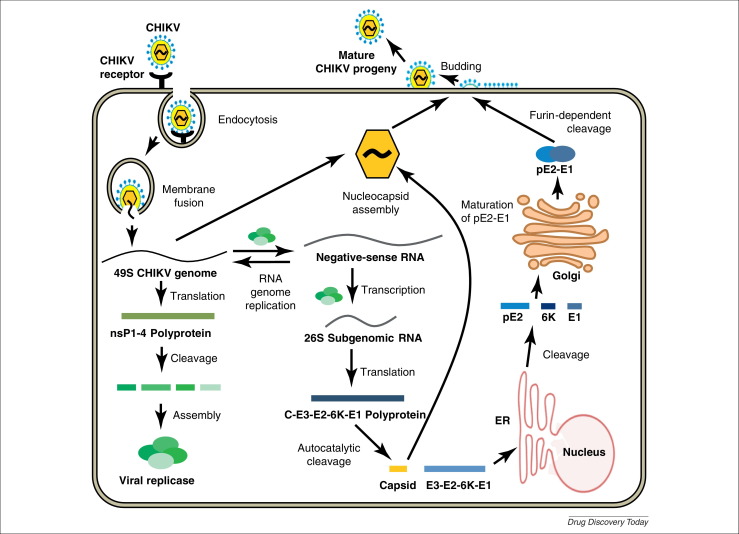
Chikungunya virus (CHIKV) has re-emerged as a significant public health threat since the 2005 chikungunya fever epidemic in La Réunion. Driven by the medical importance of this virus, as well as the lack of approved antivirals, research into the field of CHIKV antivirals has recently intensified. Potential therapeutics that have been reported to show anti-CHIKV activity in vitro range from known broad-spectrum antivirals like chloroquine to novel strategies involving RNA silencing technology. Although most of the earlier efforts focused on compounds that target host components, some recent studies have reported viral targets such as nonstructural proteins. This article examines the reported in vitro and in vivo efficacies, as well as the therapeutic potential of these antiviral compounds.
基孔肯雅热病毒(CHIKV)自 2005 年留尼汪岛基孔肯雅热疫情以来,再次成为严重的公共卫生威胁。由于该病毒具有重要的医学意义,而且没有批准的抗病毒药物,因此最近加强了基孔肯雅热抗病毒药物领域的研究。据报道,具有体外抗 CHIKV 活性的潜在治疗方法范围广泛,包括氯喹等已知的广谱抗病毒药物,以及涉及 RNA 沉默技术的新型策略。尽管早期的大部分努力都集中在针对宿主成分的化合物上,但最近的一些研究报告了非结构蛋白等病毒靶点。本文检查了这些抗病毒化合物的报告的体外和体内疗效以及治疗潜力。