Division of Pediatric Endocrinology, Children's Hospital at Montefiore, Bronx, New York, United States of America.
PLoS One. 2013 May 17;8(5):e63021. doi: 10.1371/journal.pone.0063021. Print 2013.
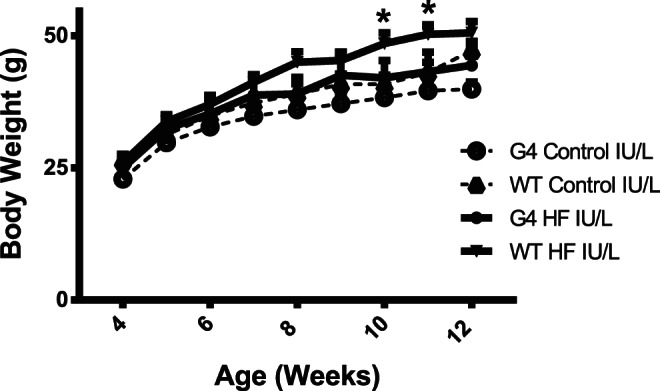
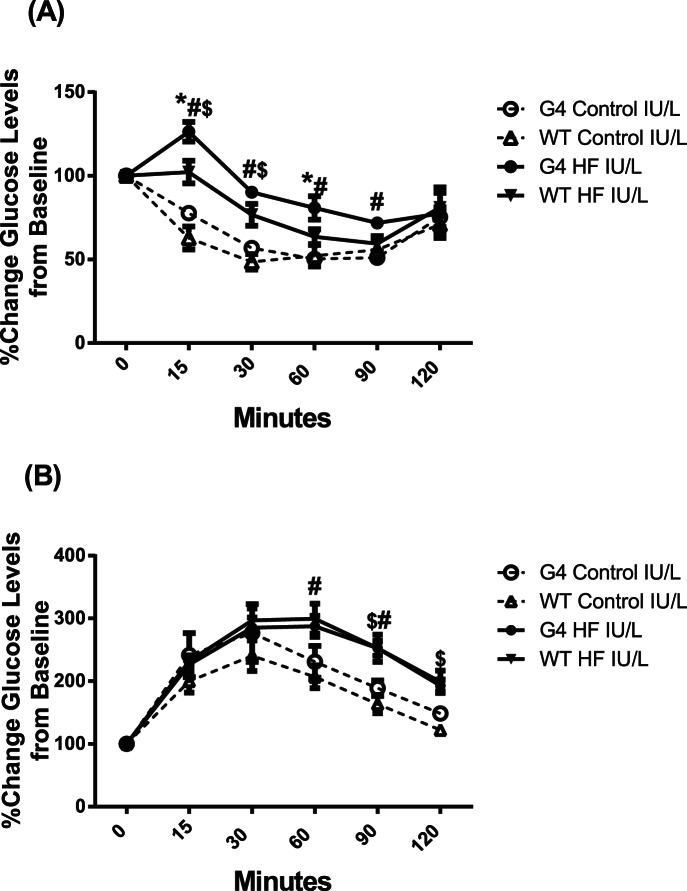
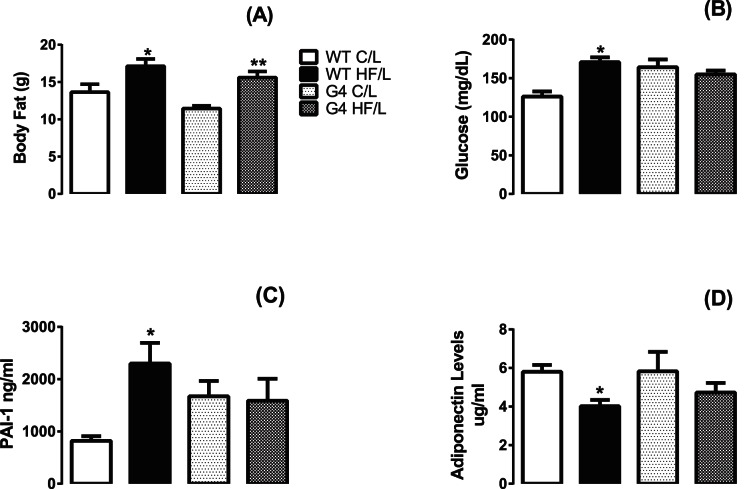
Genetic and environmental factors, including the in utero environment, contribute to Metabolic Syndrome. Exposure to high fat diet exposure in utero and lactation increases incidence of Metabolic Syndrome in offspring. Using GLUT4 heterozygous (G4+/-) mice, genetically predisposed to Type 2 Diabetes Mellitus, and wild-type littermates we demonstrate genotype specific differences to high fat in utero and lactation. High fat in utero and lactation increased adiposity and impaired insulin and glucose tolerance in both genotypes. High fat wild type offspring had increased serum glucose and PAI-1 levels and decreased adiponectin at 6 wks of age compared to control wild type. High fat G4+/- offspring had increased systolic blood pressure at 13 wks of age compared to all other groups. Potential fetal origins of adult Metabolic Syndrome were investigated. Regardless of genotype, high fat in utero decreased fetal weight and crown rump length at embryonic day 18.5 compared to control. Hepatic expression of genes involved in glycolysis, gluconeogenesis, oxidative stress and inflammation were increased with high fat in utero. Fetal serum glucose levels were decreased in high fat G4+/- compared to high fat wild type fetuses. High fat G4+/-, but not high fat wild type fetuses, had increased levels of serum cytokines (IFN-γ, MCP-1, RANTES and M-CSF) compared to control. This data demonstrates that high fat during pregnancy and lactation increases Metabolic Syndrome male offspring and that heterozygous deletion of GLUT4 augments susceptibility to increased systolic blood pressure. Fetal adaptations to high fat in utero that may predispose to Metabolic Syndrome in adulthood include changes in fetal hepatic gene expression and alterations in circulating cytokines. These results suggest that the interaction between in utero-perinatal environment and genotype plays a critical role in the developmental origin of health and disease.
遗传和环境因素,包括宫内环境,导致代谢综合征。宫内和哺乳期暴露于高脂肪饮食会增加后代代谢综合征的发病率。我们使用葡萄糖转运蛋白 4 杂合子(G4+/-)小鼠,即遗传易患 2 型糖尿病的小鼠,以及野生型同窝仔鼠,证明了它们在宫内和哺乳期对高脂肪饮食的基因型特异性差异。宫内和哺乳期高脂肪饮食增加了两种基因型的肥胖,并损害了胰岛素和葡萄糖耐量。高脂肪野生型后代在 6 周龄时血清葡萄糖和 PAI-1 水平升高,脂联素水平降低,而与对照野生型相比。高脂肪 G4+/-后代在 13 周龄时收缩压升高,与所有其他组相比。研究了成年代谢综合征的潜在胎儿起源。无论基因型如何,宫内高脂肪饮食在胚胎第 18.5 天都会降低胎儿体重和头臀长,与对照组相比。参与糖酵解、糖异生、氧化应激和炎症的肝基因表达增加。与高脂肪野生型胎儿相比,高脂肪 G4+/-胎儿的血清葡萄糖水平降低。与对照组相比,只有高脂肪 G4+/-胎儿而不是高脂肪野生型胎儿的血清细胞因子(IFN-γ、MCP-1、RANTES 和 M-CSF)水平升高。这些数据表明,怀孕期间和哺乳期高脂肪饮食会增加代谢综合征雄性后代的发病率,而 GLUT4 杂合缺失会增加收缩压升高的易感性。宫内高脂肪饮食导致的胎儿适应性改变,可能导致成年后代谢综合征,包括胎儿肝脏基因表达的变化和循环细胞因子的改变。这些结果表明,宫内围产期环境与基因型之间的相互作用在健康和疾病的发育起源中起着关键作用。