Autoimmune Genetics Laboratory, VIB, Leuven, Belgium.
Orphanet J Rare Dis. 2013 May 21;8:79. doi: 10.1186/1750-1172-8-79.
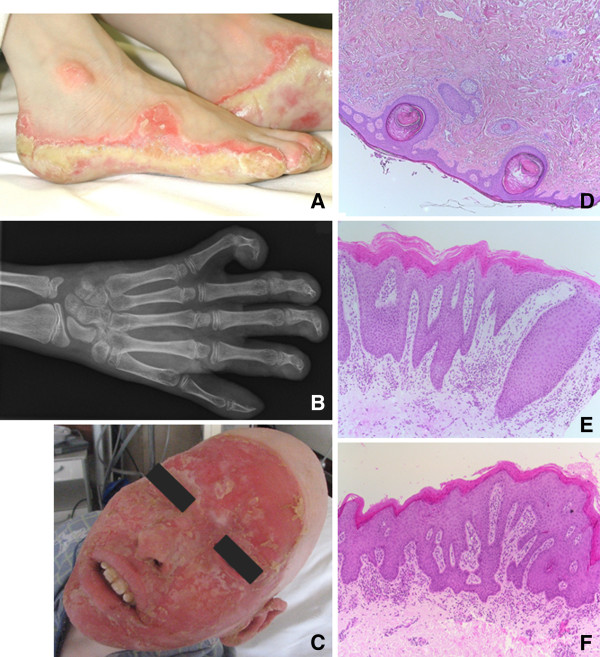
Olmsted syndrome is a rare congenital skin disorder presenting with periorifical hyperkeratotic lesions and mutilating palmoplantar keratoderma, which is often associated with infections of the keratotic area. A recent study identified de novo mutations causing constitutive activation of TRPV3 as a cause of the keratotic manifestations of Olmsted syndrome.
Genetic, clinical and immunological profiling was performed on a case study patient with the clinical diagnosis of Olmsted syndrome.
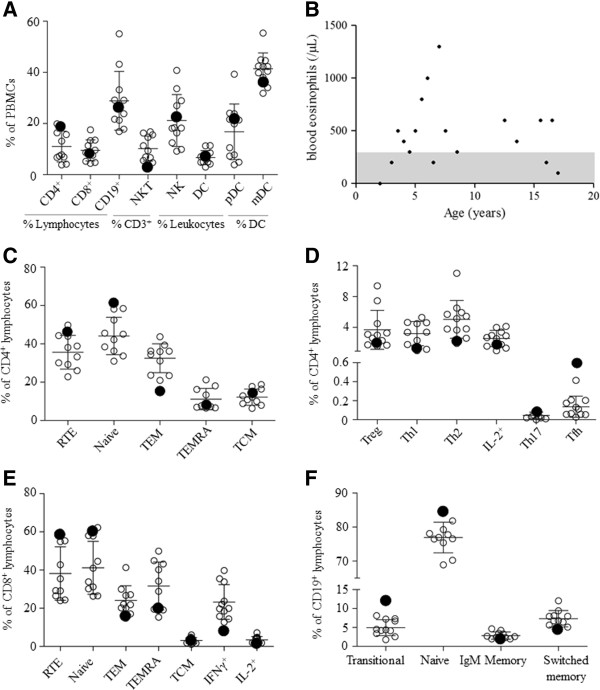
The patient was found to harbour a previously undescribed 1718G-C transversion in TRPV3, causing a G573A point mutation. In depth clinical and immunological analysis found multiple indicators of immune dysregulation, including frequent dermal infections, inflammatory infiltrate in the affected skin, hyper IgE production and elevated follicular T cells and eosinophils in the peripheral blood.
These results provide the first comprehensive assessment of the immunological features of Olmsted syndrome. The systemic phenotype of hyper IgE and persistent eosinophilia suggest a primary or secondary role of immunological processes in the pathogenesis of Olmsted syndrome, and have important clinical consequences with regard to the treatment of Olmsted syndrome patients.
Olmsted 综合征是一种罕见的先天性皮肤疾病,表现为眶周过度角化性病变和进行性掌跖角化过度,常伴有角化区感染。最近的一项研究发现,TRPV3 组成性激活的新突变是 Olmsted 综合征角化表现的原因。
对临床诊断为 Olmsted 综合征的病例进行了遗传、临床和免疫学分析。
发现该患者 TRPV3 存在一个先前未描述的 1718G-C 转换,导致 G573A 点突变。深入的临床和免疫学分析发现了多种免疫失调的指标,包括频繁的皮肤感染、受累皮肤的炎症浸润、高 IgE 产生以及外周血中滤泡 T 细胞和嗜酸性粒细胞的升高。
这些结果首次全面评估了 Olmsted 综合征的免疫学特征。高 IgE 和持续嗜酸性粒细胞增多的全身表型提示免疫过程在 Olmsted 综合征发病机制中起主要或次要作用,这对 Olmsted 综合征患者的治疗具有重要的临床意义。