Division of Gastroenterology, Department of Medicine, Perelman School of Medicine, University of Pennsylvania, Philadelphia, Pennsylvania 19104, USA.
Nature. 2013 Jun 6;498(7452):113-7. doi: 10.1038/nature12240. Epub 2013 May 22.
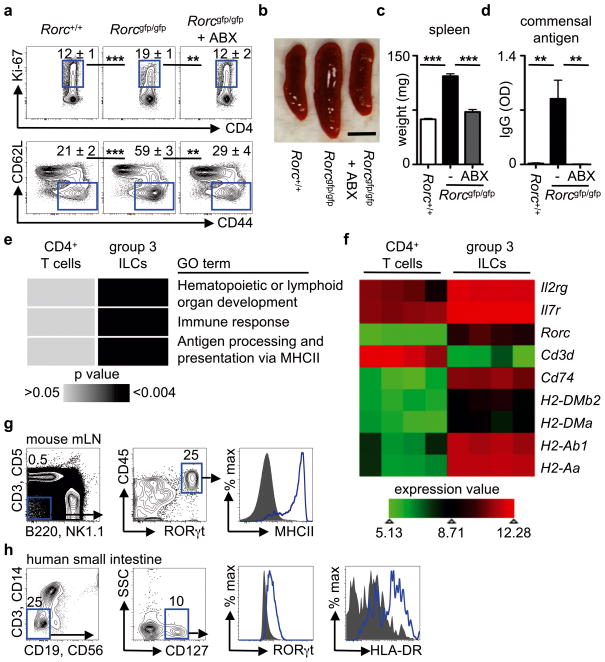
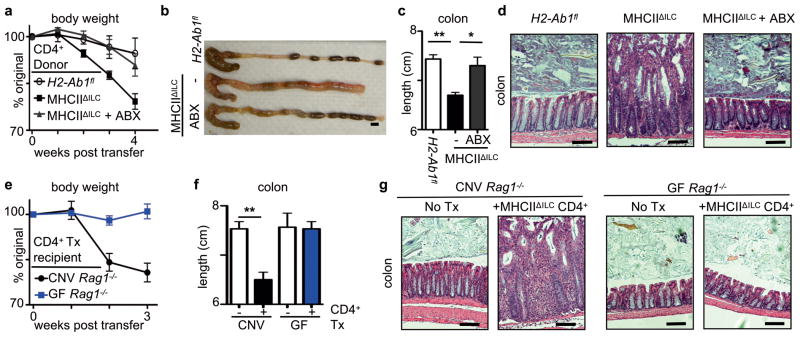
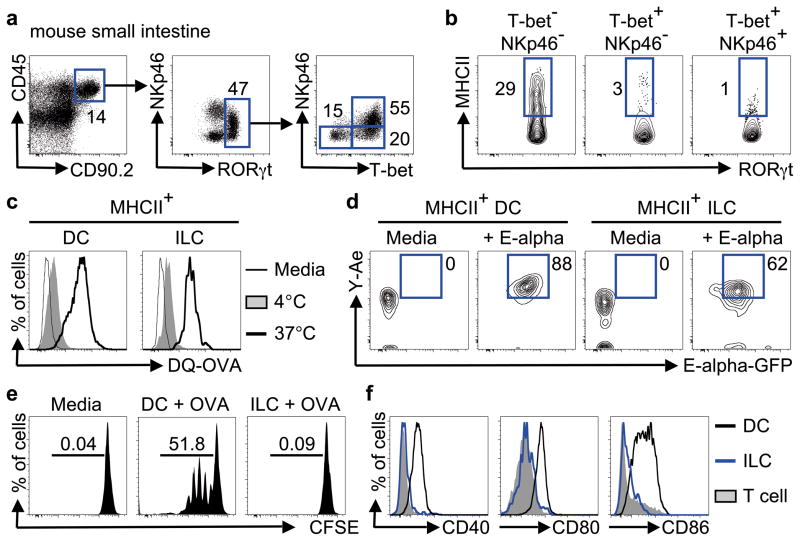
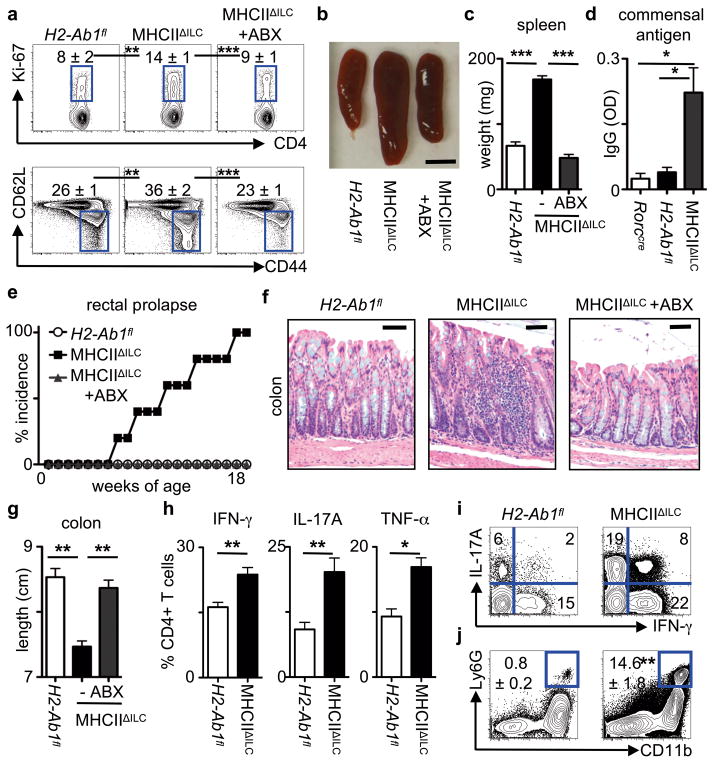
Innate lymphoid cells (ILCs) are a recently characterized family of immune cells that have critical roles in cytokine-mediated regulation of intestinal epithelial cell barrier integrity. Alterations in ILC responses are associated with multiple chronic human diseases, including inflammatory bowel disease, implicating a role for ILCs in disease pathogenesis. Owing to an inability to target ILCs selectively, experimental studies assessing ILC function have predominantly used mice lacking adaptive immune cells. However, in lymphocyte-sufficient hosts ILCs are vastly outnumbered by CD4(+) T cells, which express similar profiles of effector cytokines. Therefore, the function of ILCs in the presence of adaptive immunity and their potential to influence adaptive immune cell responses remain unknown. To test this, we used genetic or antibody-mediated depletion strategies to target murine ILCs in the presence of an adaptive immune system. We show that loss of retinoic-acid-receptor-related orphan receptor-γt-positive (RORγt(+)) ILCs was associated with dysregulated adaptive immune cell responses against commensal bacteria and low-grade systemic inflammation. Remarkably, ILC-mediated regulation of adaptive immune cells occurred independently of interleukin (IL)-17A, IL-22 or IL-23. Genome-wide transcriptional profiling and functional analyses revealed that RORγt(+) ILCs express major histocompatibility complex class II (MHCII) and can process and present antigen. However, rather than inducing T-cell proliferation, ILCs acted to limit commensal bacteria-specific CD4(+) T-cell responses. Consistent with this, selective deletion of MHCII in murine RORγt(+) ILCs resulted in dysregulated commensal bacteria-dependent CD4(+) T-cell responses that promoted spontaneous intestinal inflammation. These data identify that ILCs maintain intestinal homeostasis through MHCII-dependent interactions with CD4(+) T cells that limit pathological adaptive immune cell responses to commensal bacteria.
先天淋巴细胞(ILCs)是一类最近被描述的免疫细胞家族,它们在细胞因子介导的调节肠道上皮细胞屏障完整性方面发挥着关键作用。ILC 反应的改变与多种人类慢性疾病有关,包括炎症性肠病,这表明 ILCs 在疾病发病机制中起作用。由于无法选择性地靶向 ILCs,评估 ILC 功能的实验研究主要使用缺乏适应性免疫细胞的小鼠。然而,在淋巴细胞充足的宿主中,ILC 远远超过表达相似效应细胞因子谱的 CD4(+)T 细胞。因此,在适应性免疫存在的情况下,ILC 的功能及其对适应性免疫细胞反应的潜在影响仍然未知。为了检验这一点,我们使用遗传或抗体介导的耗竭策略,在适应性免疫系统存在的情况下靶向小鼠的 ILCs。我们发现,视黄酸受体相关孤儿受体-γt 阳性(RORγt(+))ILC 的缺失与共生菌和低水平全身炎症的适应性免疫细胞反应失调有关。值得注意的是,ILC 对适应性免疫细胞的调节独立于白细胞介素(IL)-17A、IL-22 或 IL-23。全基因组转录谱和功能分析表明,RORγt(+)ILC 表达主要组织相容性复合体 II(MHCII),并能加工和呈递抗原。然而,ILC 并没有诱导 T 细胞增殖,而是限制了共生菌特异性 CD4(+)T 细胞反应。与此一致的是,在小鼠 RORγt(+)ILC 中选择性缺失 MHCII 导致共生菌依赖性 CD4(+)T 细胞反应失调,从而促进自发性肠道炎症。这些数据表明,ILC 通过 MHCII 依赖性与 CD4(+)T 细胞的相互作用维持肠道内稳态,从而限制了对共生菌的病理性适应性免疫细胞反应。