Korn L L, Thomas H L, Hubbeling H G, Spencer S P, Sinha R, Simkins H Ma, Salzman N H, Bushman F D, Laufer T M
Department of Medicine, Perelman School of Medicine at the University of Pennsylvania, Philadelphia, Pennsylvania, USA.
1] Department of Medicine, Perelman School of Medicine at the University of Pennsylvania, Philadelphia, Pennsylvania, USA [2] Philadelphia Veterans Affairs Medical Center, Philadelphia, Pennsylvania, USA.
Mucosal Immunol. 2014 Sep;7(5):1045-57. doi: 10.1038/mi.2013.121. Epub 2014 Jan 22.
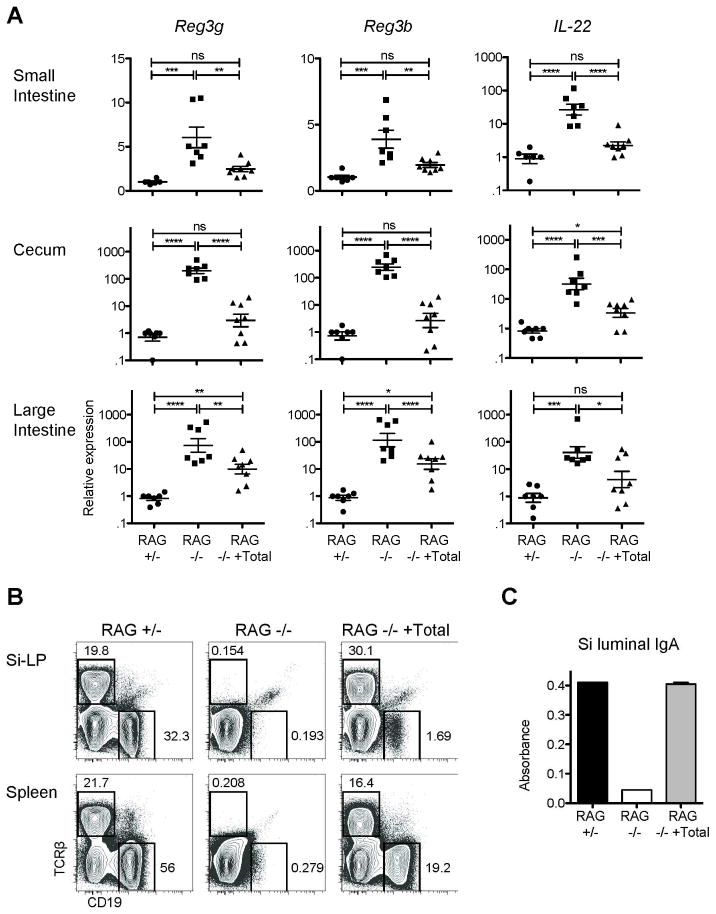
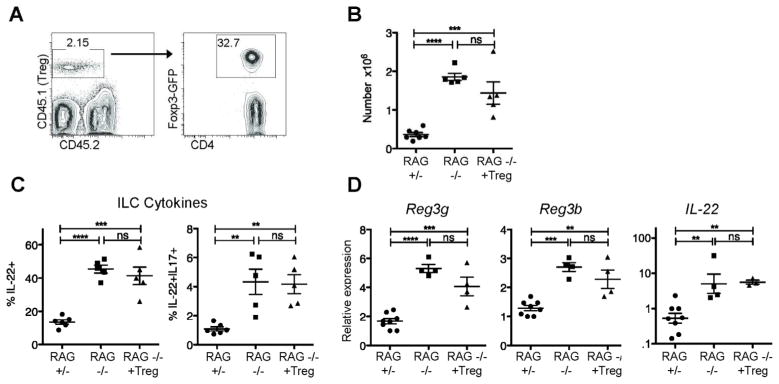
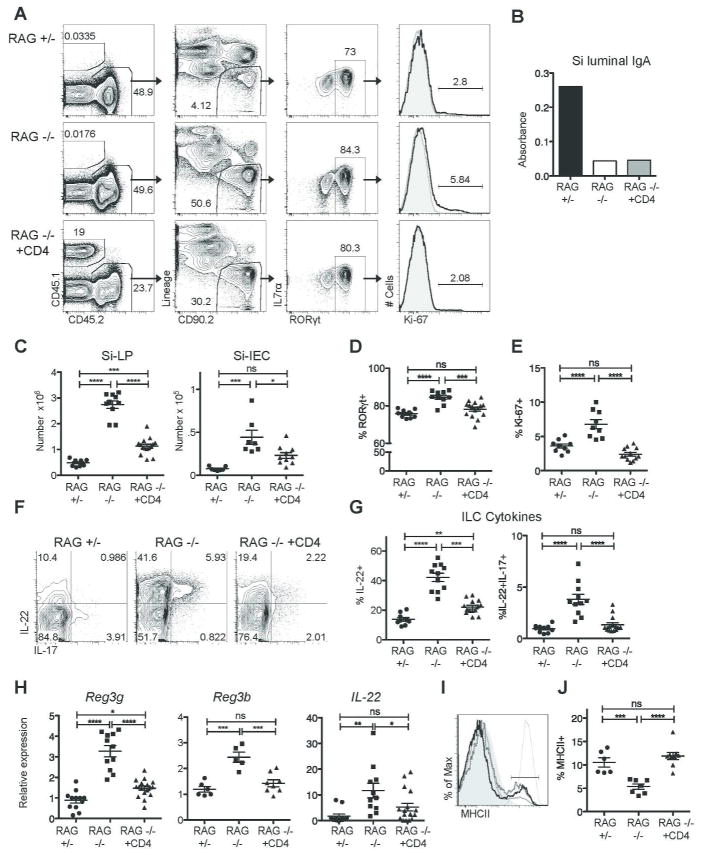
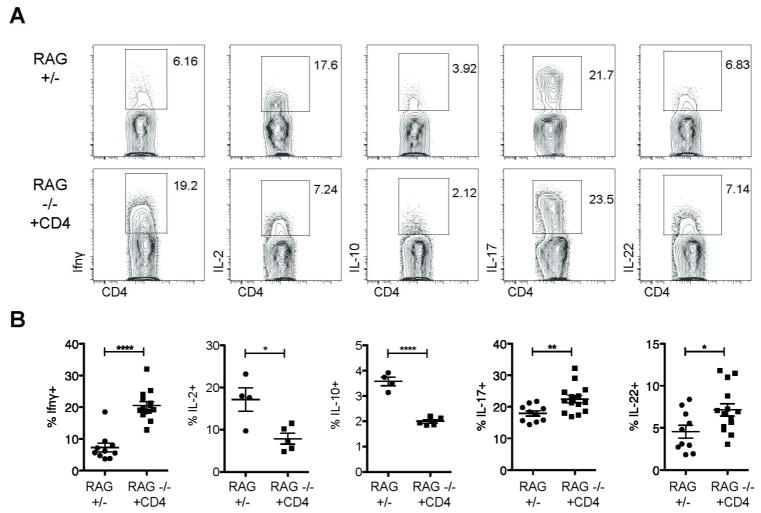
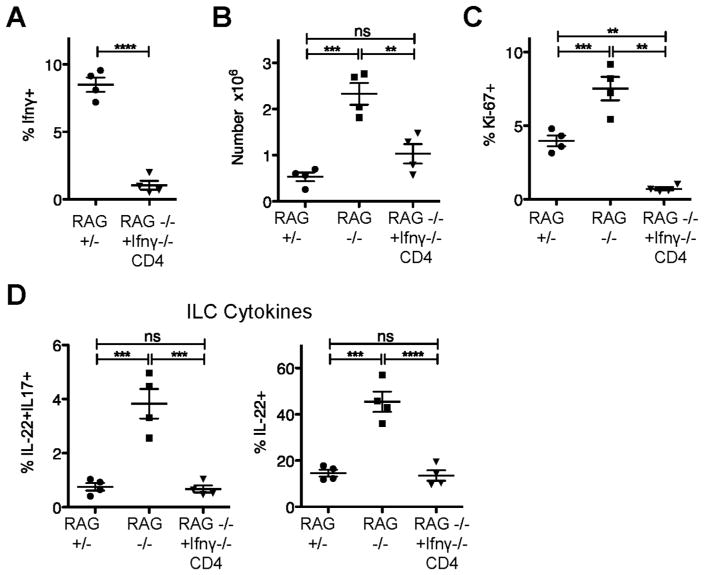
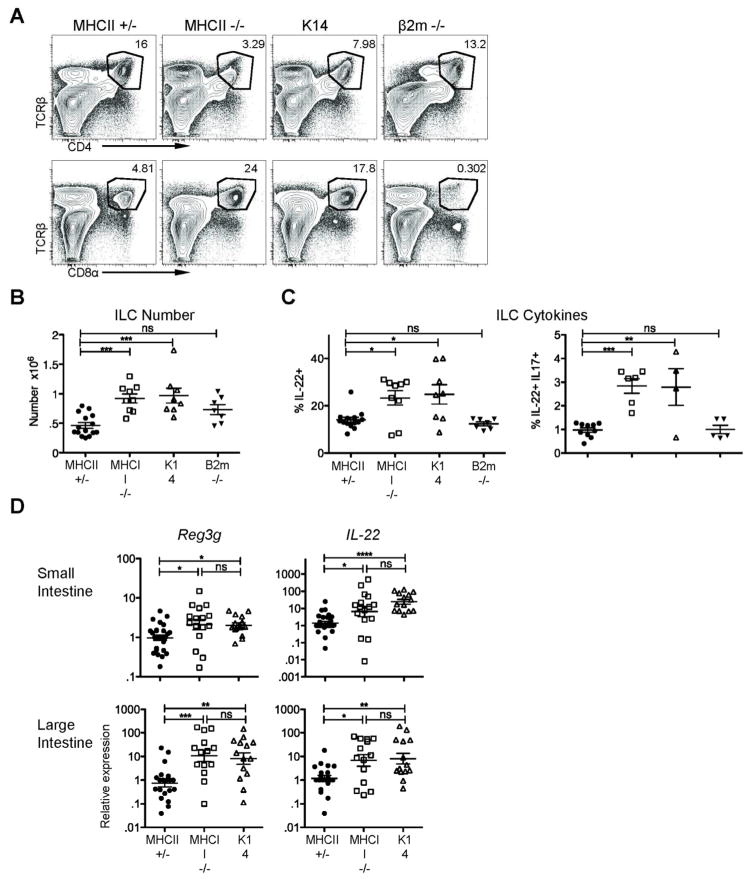
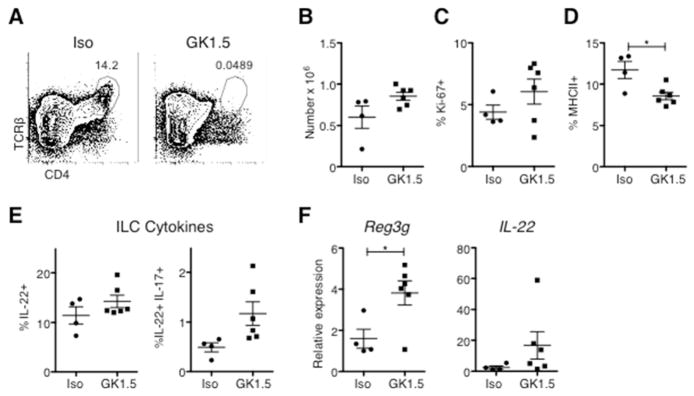
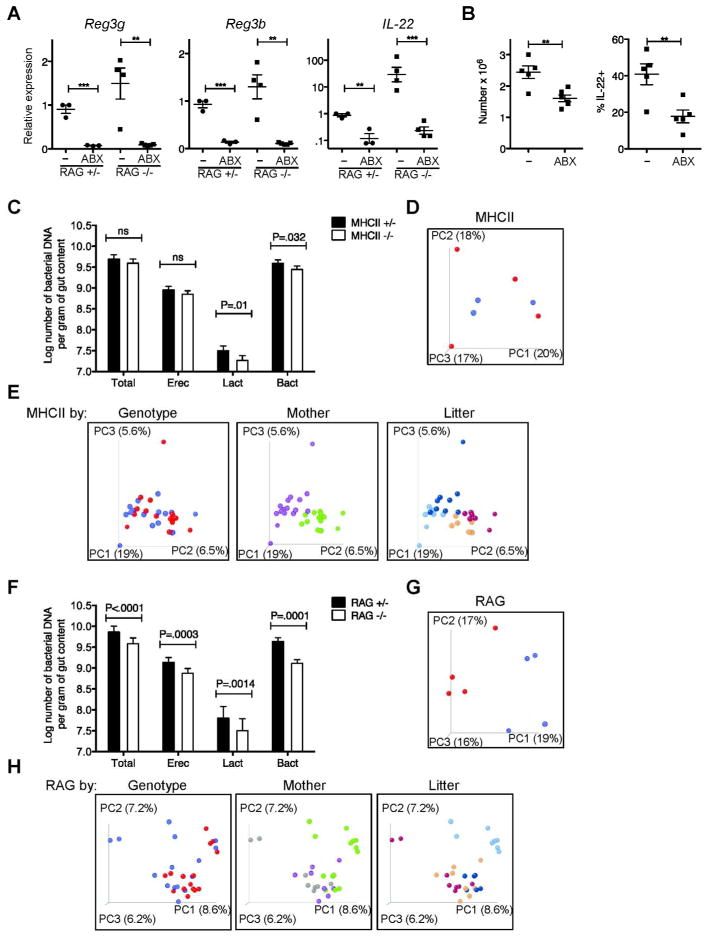
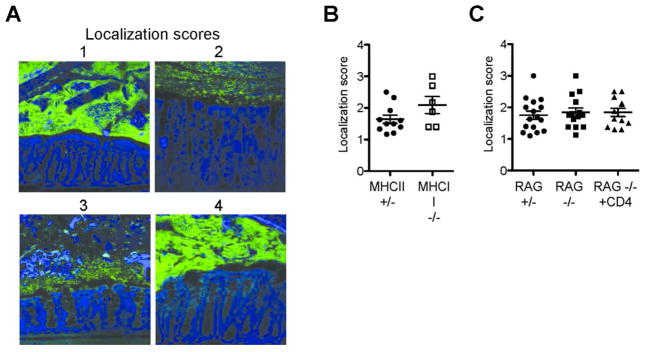
The innate and adaptive immune systems in the intestine cooperate to maintain the integrity of the intestinal barrier and to regulate the composition of the resident microbiota. However, little is known about the crosstalk between the innate and adaptive immune systems that contribute to this homeostasis. We find that CD4+ T cells regulate the number and function of barrier-protective innate lymphoid cells (ILCs), as well as production of antimicrobial peptides (AMPs), Reg3γ and Reg3β. RAG1-/- mice lacking T and B cells had elevated ILC numbers, interleukin-22 (IL-22) production, and AMP expression, which were corrected by replacement of CD4+ T cells. Major histocompatibility class II-/- (MHCII-/-) mice lacking CD4+ T cells also had increased ILCs, IL-22, and AMPs, suggesting that negative regulation by CD4+ T cells occurs at steady state. We utilized transfers and genetically modified mice to show that reduction of IL-22 is mediated by conventional CD4+ T cells and is T-cell receptor dependent. The IL-22-AMP axis responds to commensal bacteria; however, neither the bacterial repertoire nor the gross localization of commensal bacteria differed between MHCII+/- and MHCII-/- littermates. These data define a novel ability of CD4+ T cells to regulate intestinal IL-22-producing ILCs and AMPs.
肠道中的固有免疫系统和适应性免疫系统协同作用,以维持肠道屏障的完整性并调节常驻微生物群的组成。然而,对于促成这种稳态的固有免疫系统和适应性免疫系统之间的相互作用,我们却知之甚少。我们发现,CD4+ T细胞可调节屏障保护性固有淋巴细胞(ILC)的数量和功能,以及抗菌肽(AMP)Reg3γ和Reg3β的产生。缺乏T细胞和B细胞的RAG1-/-小鼠的ILC数量、白细胞介素-22(IL-22)产生及AMP表达均升高,而通过补充CD4+ T细胞可使其恢复正常。缺乏CD4+ T细胞的主要组织相容性复合体II类-/-(MHCII-/-)小鼠的ILC、IL-22和AMP也增加,这表明CD4+ T细胞在稳态时发挥负调节作用。我们利用细胞转移和基因改造小鼠表明,IL-22的减少由传统CD4+ T细胞介导且依赖于T细胞受体。IL-22-AMP轴对共生细菌有反应;然而,MHCII+/-和MHCII-/-同窝小鼠之间的细菌种类和共生细菌的总体定位均无差异。这些数据确定了CD4+ T细胞调节肠道产生IL-22的ILC和AMP的新能力。