1. Department of Immunology, Faculty of Medical Sciences, Tarbiat Modares University, Tehran, Iran.
Cell J. 2013 Spring;15(1):45-54. Epub 2013 May 5.
Macrophages influence their environment and surrounding immune cells as soon as stimulators affect them. Different sources of macrophages induce different reactions in their neighboring immune cells,which result in non-uniform immunologic outcomes. In this experimental research, we compare the behavior of peritoneal macrophages to lipopolysaccharide (LPS) stimulation from BALB/cmice as an indicator of a type 2 immune response and from C57BL/6 mice as an indicator of a type 1 immune response.
In this experimental study, peritoneal macrophages prepared from thioglycolate stimulated BALB/c and C57BL/6 micewere treated with 1µg/ml LPS. At different time points after LPS treatment, nitric oxide (NO), interferon gamma (IFN-λ), interleukin 4 (IL-4),transforming growth factor β1(TGF-β1), interleukin 17 (IL-17), and interleukin 10(IL-10) production were measured in the supernatants of all macrophage cultures. Indoleamine 2, 3 dioxygenase (IDO) and phagocytic activitywere analyzed in the different experimental groups. The supernatant effects of LPS-treated macrophages on splenocyte proliferation was assessed by the colorimetric method using a 3-(4,5-Dimethylthiazol- 2-yl)-2, 5-diphenyltetrazolium bromide (MTT) reagent.
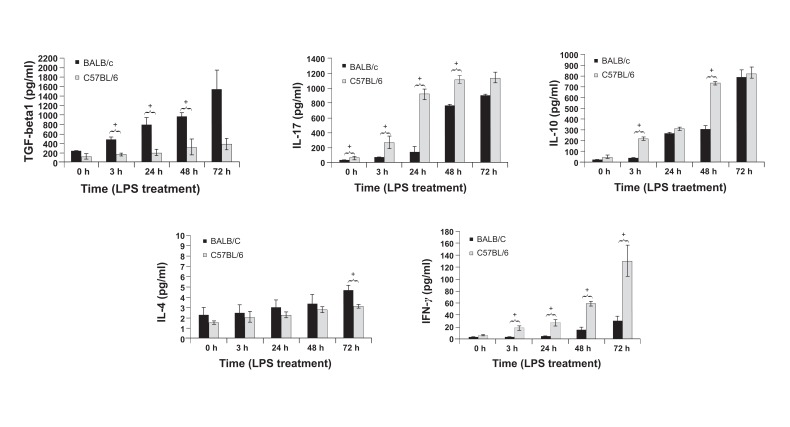
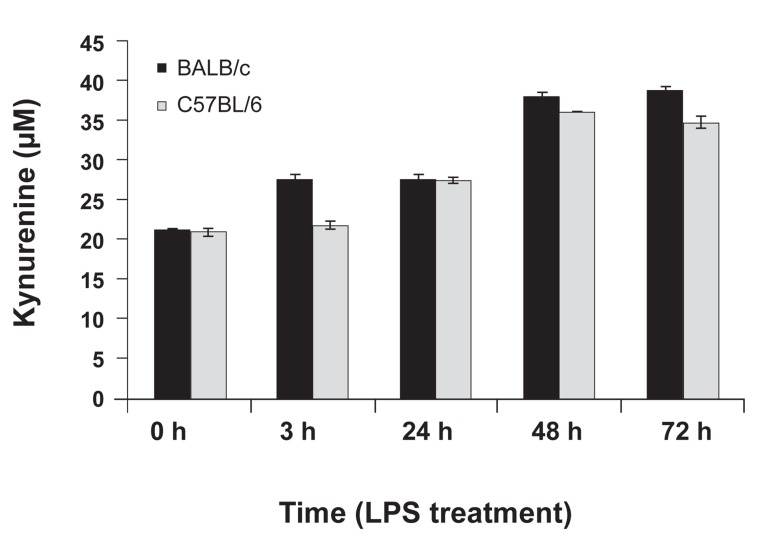
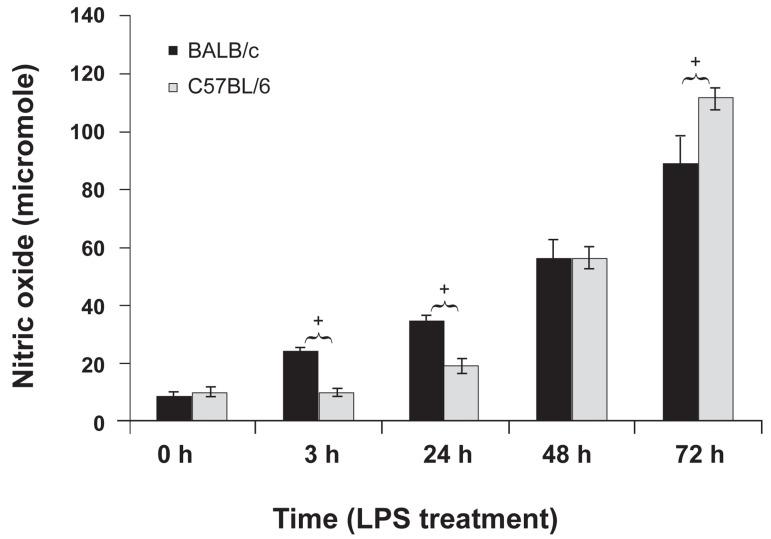
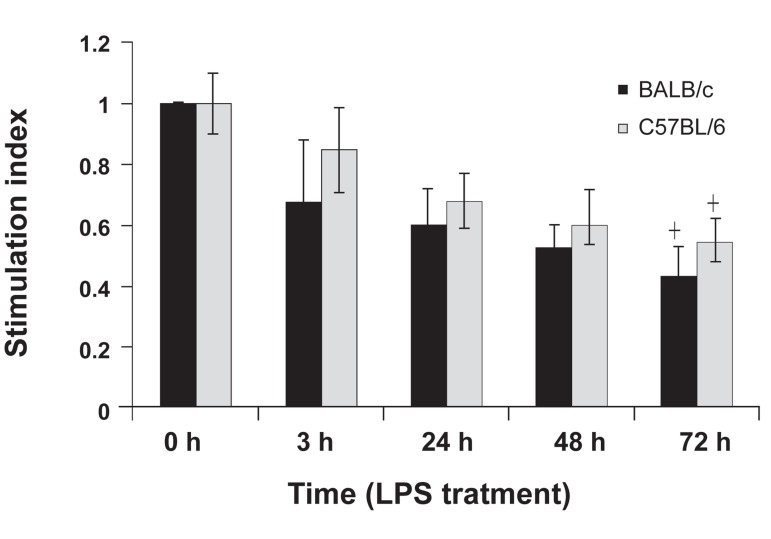
According to cytokine analysis, different mouse strains show different cytokine patterns in response to LPS. C57BL/6 macrophages produced more IL-17, IL-10, and IFN-λ, while BALB/c macrophages produced more TGF-β1 and IL-4. There was no significant difference in IDO activity between strains (p≤0.05). BALB/c mice produced more NO inthe first 24 hours after LPS treatment,but C57BL/6 produced more NO at 72 hours post-LPS treatment. Macrophages from both strains hada suppressor effect on splenocyte proliferation, but this effect was stronger in BALB/c mice.
The results show that macrophages from different genetic backgrounds respond differently to the same stimulus in aspects of type, intensity, and time of response. The consideration of these aspects will enableresearchers to use correct treatment programs for immune-regulation or immunotherapy.
巨噬细胞一旦受到刺激,就会影响其周围的环境和免疫细胞。不同来源的巨噬细胞在其邻近免疫细胞中诱导不同的反应,从而导致非均匀的免疫结果。在这项实验研究中,我们将比较腹腔巨噬细胞对脂多糖(LPS)刺激的反应,来自 BALB/c 小鼠的反应作为 2 型免疫反应的指标,来自 C57BL/6 小鼠的反应作为 1 型免疫反应的指标。
在这项实验研究中,我们从硫代乙醇酸盐刺激的 BALB/c 和 C57BL/6 小鼠中制备腹腔巨噬细胞,并用 1μg/ml LPS 处理。在 LPS 处理后的不同时间点,测量所有巨噬细胞培养物上清液中一氧化氮(NO)、干扰素 γ(IFN-λ)、白细胞介素 4(IL-4)、转化生长因子 β1(TGF-β1)、白细胞介素 17(IL-17)和白细胞介素 10(IL-10)的产生。分析不同实验组中吲哚胺 2,3 双加氧酶(IDO)和吞噬活性。通过使用 3-(4,5-二甲基噻唑-2-基)-2,5-二苯基四唑溴盐(MTT)试剂的比色法评估 LPS 处理的巨噬细胞对脾细胞增殖的上清液效应。
根据细胞因子分析,不同的小鼠品系对 LPS 的反应表现出不同的细胞因子模式。C57BL/6 巨噬细胞产生更多的 IL-17、IL-10 和 IFN-λ,而 BALB/c 巨噬细胞产生更多的 TGF-β1 和 IL-4。两种品系的 IDO 活性无显著差异(p≤0.05)。BALB/c 小鼠在 LPS 处理后前 24 小时产生更多的 NO,但 C57BL/6 小鼠在 LPS 处理后 72 小时产生更多的 NO。两种品系的巨噬细胞均对脾细胞增殖具有抑制作用,但 BALB/c 小鼠的抑制作用更强。
结果表明,来自不同遗传背景的巨噬细胞在反应类型、强度和时间方面对相同刺激的反应不同。考虑到这些方面,研究人员将能够为免疫调节或免疫治疗选择正确的治疗方案。