National Transfusion Microbiology Laboratories, NHSBT/HPA Epidemiology Unit, NHS Blood and Transplant, Colindale, London; Research Department of Infection, Division of Infection and Immunity, University College London, London; Blood Borne Virus Unit, Viral Reference Department, Centre for Infections, Health Protection Agency, Colindale, London, UK.
Transfusion. 2014 Mar;54(3 Pt 2):870-8. doi: 10.1111/trf.12256. Epub 2013 May 23.
Culture-based systems are currently the preferred means for bacterial screening of platelet (PLT) concentrates. Alternative bacterial detection techniques based on nucleic acid amplification have also been developed but these have yet to be fully evaluated. In this study we evaluate a novel 16S rDNA polymerase chain reaction (PCR) assay and compare its performance with automated culture.
A total of 2050 time-expired, 176 fresh, and 400 initial-reactive PLT packs were tested by real-time PCR using broadly reactive 16S primers and a "universal" probe (TaqMan, Invitrogen). PLTs were also tested using a microbial detection system (BacT/ALERT, bioMérieux) under aerobic and anaerobic conditions.
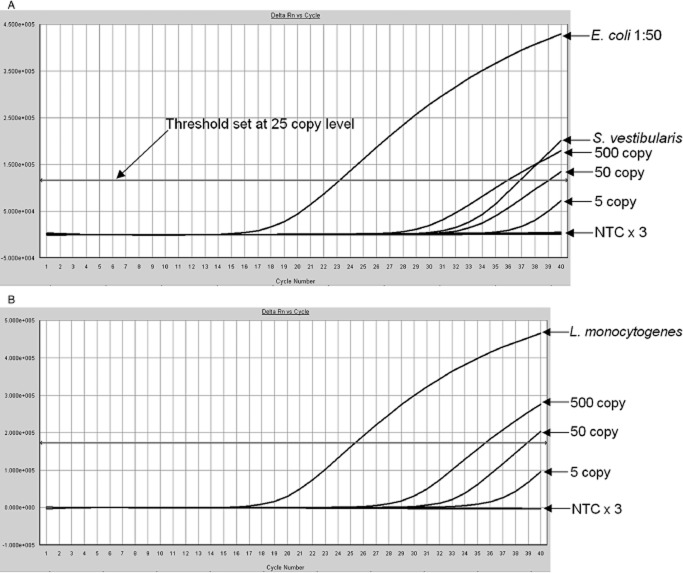
Seven of 2050 (0.34%) time-expired PLTs were found repeat reactive by PCR on the initial nucleic acid extract but none of these was confirmed positive on testing frozen second aliquots. BacT/ALERT testing also failed to confirm any time-expired PLTs positive on repeat testing, although 0.24% were reactive on the first test. Three of the 400 "initial-reactive" PLT packs were found by both PCR and BacT/ALERT to be contaminated (Escherichia coli, Listeria monocytogenes, and Streptococcus vestibularis identified) and 14 additional packs were confirmed positive by BacT/ALERT only. In 13 of these cases the contaminating organisms were identified as anaerobic skin or oral commensals and the remaining pack was contaminated with Streptococcus pneumoniae.
These results demonstrate that the 16S PCR assay is less sensitive than BacT/ALERT and inappropriate for early testing of concentrates. However, rapid PCR assays such as this may be suitable for a strategy of late or prerelease testing.
基于培养的系统目前是血小板(PLT)浓缩物细菌筛选的首选方法。基于核酸扩增的替代细菌检测技术也已开发出来,但尚未进行全面评估。在这项研究中,我们评估了一种新型的 16S rDNA 聚合酶链反应(PCR)检测方法,并将其性能与自动培养进行比较。
使用广谱反应性 16S 引物和“通用”探针(TaqMan,Invitrogen)对 2050 份过期、176 份新鲜和 400 份初始反应性 PLT 包进行实时 PCR 检测。还使用微生物检测系统(BacT/ALERT,bioMérieux)在有氧和厌氧条件下对 PLT 进行检测。
在初始核酸提取物中,有 7 份(0.34%)过期 PLT 通过 PCR 重复反应,但在冷冻第二份等分试样检测中没有发现任何阳性。BacT/ALERT 检测也未能确认任何重复检测呈阳性的过期 PLT,尽管在第一次检测中有 0.24%呈反应性。在 400 份“初始反应性”PLT 包中,有 3 份(0.75%)通过 PCR 和 BacT/ALERT 被发现受到污染(鉴定为大肠杆菌、单核细胞增生李斯特菌和前庭链球菌),另外 14 份包仅通过 BacT/ALERT 被确认阳性。在这 13 个病例中,污染的生物体被鉴定为厌氧皮肤或口腔共生菌,其余的包被污染了肺炎链球菌。
这些结果表明,16S PCR 检测方法不如 BacT/ALERT 敏感,不适合早期浓缩物检测。然而,像这样的快速 PCR 检测方法可能适合于晚期或预释放检测的策略。