Zhang Jingjing, He Yanmin, Chen Chen, Hu Wei, He Ji, Ying Yanling, Zhu Faming
Institute of Transfusion Medicine, Blood Center of Zhejiang Province, Hangzhou, China.
Can J Infect Dis Med Microbiol. 2024 Oct 16;2024:6635560. doi: 10.1155/2024/6635560. eCollection 2024.
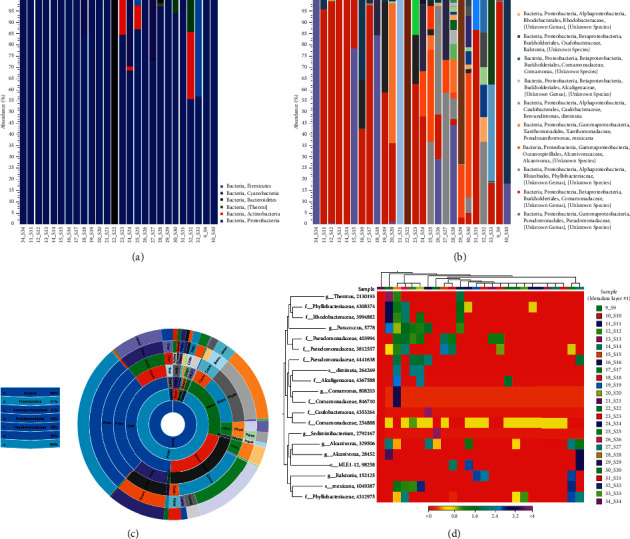
The presence of bacteria in the blood of healthy individuals remains controversial. This study explored the comprehensive bacterial profiles and specific biomarkers in different components of healthy Chinese blood donors. A total of 5230 whole blood (WB) specimens were collected. Among them, 5200 random samples were pooled into 26 mixed samples for bacterial profile analysis. The remaining 30 random samples were divided into 4 groups based on components: WB, plasma, red blood cells (RBCs), and buffy coat (BC). Subsequently, the amplicons of the bacterial 16S rDNA V3-V4 fragments were sequenced to measure the diversity and composition of the bacteria using next-generation sequencing. The bacterial DNAs in the blood primarily originated from the Proteobacteria phylum. A total of 301 species of bacterial DNA were found in blood specimens, with 46 species being present among all groups. A significantly higher abundance of bacterial DNA was found in the plasma and RBCs compared to those in BC and WB. However, the plasma and RBC groups showed significantly higher species diversity and richness compared to the BC and WB groups. In addition, the WB group had a significantly different community structure and composition compared to the plasma and RBC groups but was similar to the BC group. The presence of bacterial DNA fragments was confirmed in blood from healthy Chinese donors. The bacterial DNA fragments enriched in plasma showed the highest diversity, followed by RBC, WB, and BC. These results provide a foundation for further research on the microbiome in the blood of healthy individuals.
健康个体血液中细菌的存在仍存在争议。本研究探索了健康中国献血者不同血液成分中的综合细菌谱和特定生物标志物。共采集了5230份全血(WB)样本。其中,5200份随机样本被合并为26份混合样本用于细菌谱分析。其余30份随机样本根据成分分为4组:全血、血浆、红细胞(RBC)和 Buffy 层(BC)。随后,对细菌16S rDNA V3-V4片段的扩增子进行测序,以使用下一代测序技术测量细菌的多样性和组成。血液中的细菌DNA主要来源于变形菌门。在血液样本中总共发现了301种细菌DNA,其中46种在所有组中都存在。与BC和WB相比,血浆和RBC中细菌DNA的丰度明显更高。然而,与BC和WB组相比,血浆和RBC组显示出明显更高的物种多样性和丰富度。此外,WB组与血浆和RBC组的群落结构和组成有显著差异,但与BC组相似。在健康中国献血者的血液中证实了细菌DNA片段的存在。血浆中富集的细菌DNA片段显示出最高的多样性,其次是RBC、WB和BC。这些结果为进一步研究健康个体血液中的微生物组提供了基础。