Mary Babb Randolph Cancer Center, West Virginia University, Morgantown, WV 26505, USA.
Int J Oncol. 2013 Aug;43(2):548-60. doi: 10.3892/ijo.2013.1963. Epub 2013 May 27.
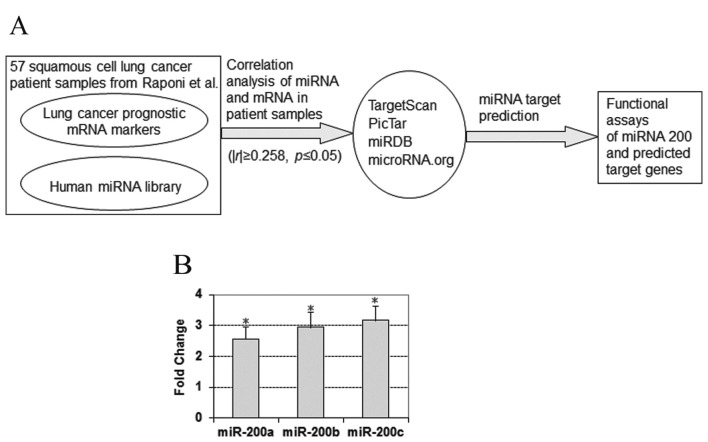
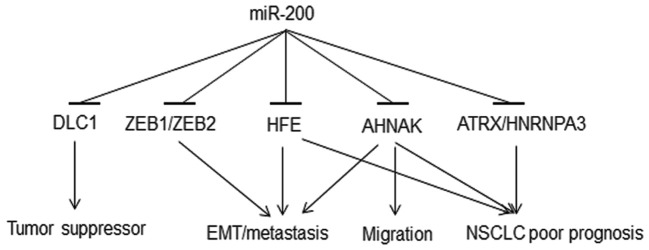
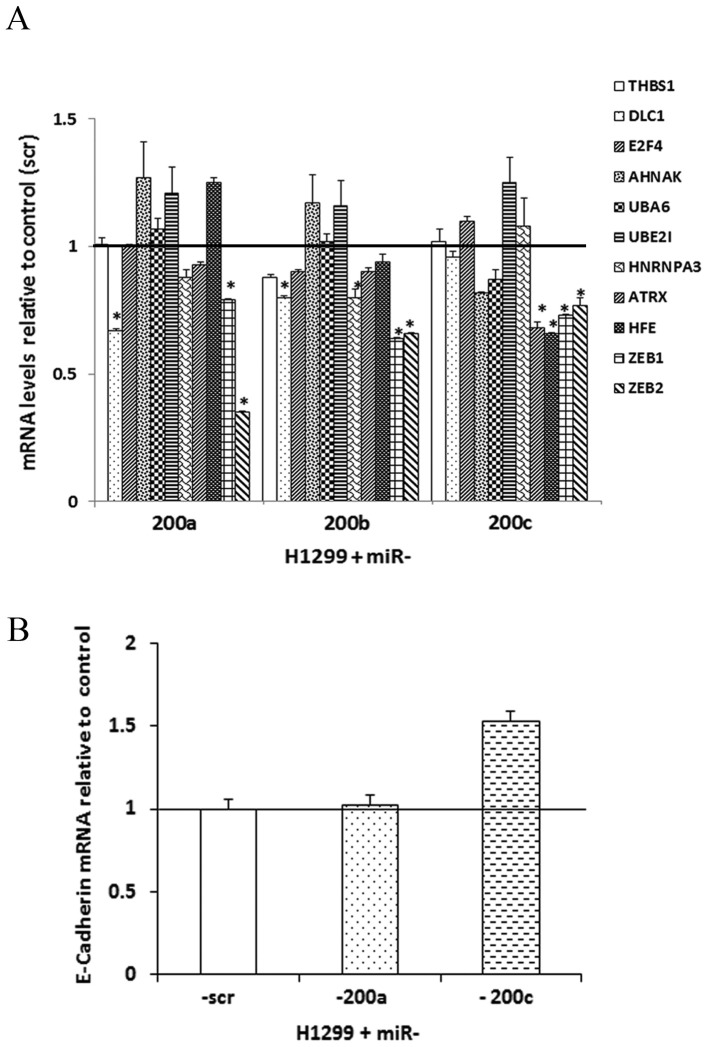
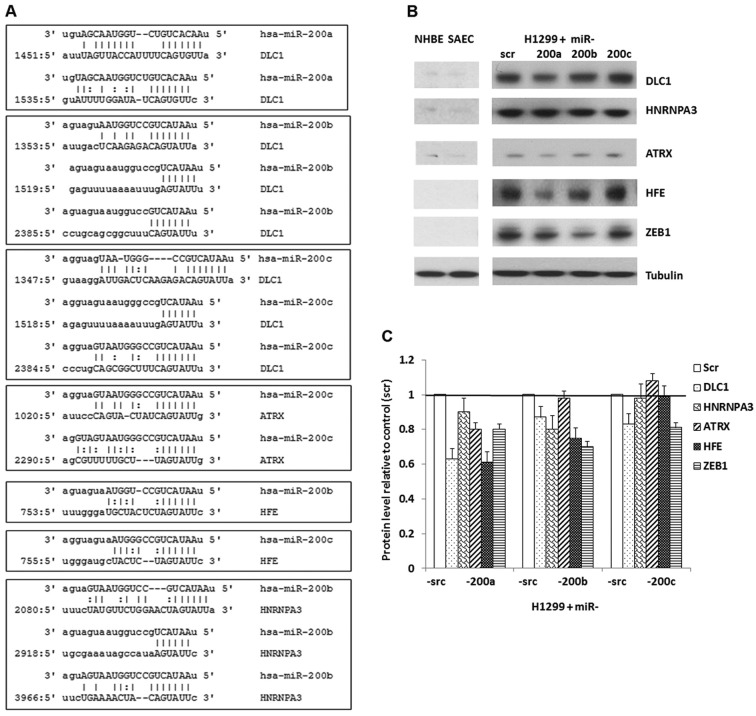
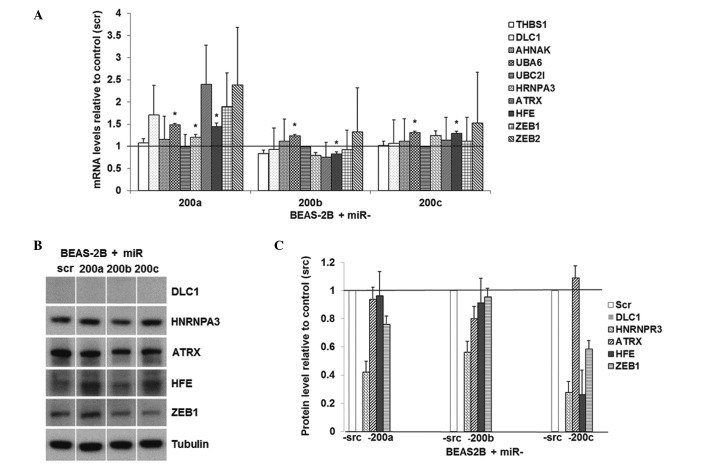
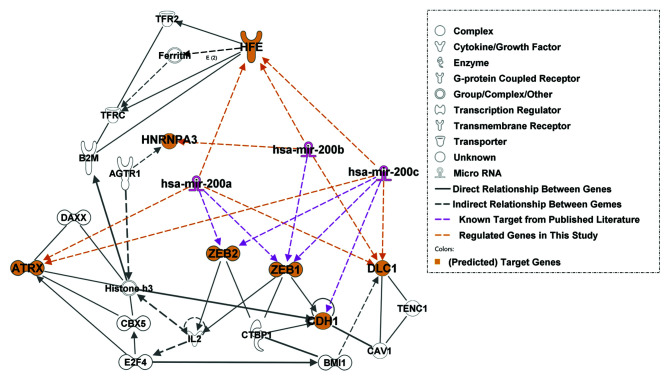
Lung cancer remains the leading cause of cancer-related mortality for both men and women. Tumor recurrence and metastasis is the major cause of lung cancer treatment failure and death. The microRNA‑200 (miR-200) family is a powerful regulator of the epithelial-mesenchymal transition (EMT) process, which is essential in tumor metastasis. Nevertheless, miR-200 family target genes that promote metastasis in non-small cell lung cancer (NSCLC) remain largely unknown. Here, we sought to investigate whether the microRNA-200 family regulates our previously identified NSCLC prognostic marker genes associated with metastasis, as potential molecular targets. Novel miRNA targets were predicted using bioinformatics tools based on correlation analyses of miRNA and mRNA expression in 57 squamous cell lung cancer tumor samples. The predicted target genes were validated with quantitative RT-PCR assays and western blot analysis following re-expression of miR-200a, -200b and -200c in the metastatic NSCLC H1299 cell line. The results show that restoring miR-200a or miR-200c in H1299 cells induces downregulation of DLC1, ATRX and HFE. Reinforced miR-200b expression results in downregulation of DLC1, HNRNPA3 and HFE. Additionally, miR-200 family downregulates HNRNPR3, HFE and ATRX in BEAS-2B immortalized lung epithelial cells in quantitative RT-PCR and western blot assays. The miR-200 family and these potential targets are functionally involved in canonical pathways of immune response, molecular mechanisms of cancer, metastasis signaling, cell-cell communication, proliferation and DNA repair in Ingenuity pathway analysis (IPA). These results indicate that re-expression of miR-200 downregulates our previously identified NSCLC prognostic biomarkers in metastatic NSCLC cells. These results provide new insights into miR-200 regulation in lung cancer metastasis and consequent clinical outcome, and may provide a potential basis for innovative therapeutic approaches for the treatment of this deadly disease.
肺癌仍然是男性和女性癌症相关死亡的主要原因。肿瘤复发和转移是肺癌治疗失败和死亡的主要原因。微小 RNA-200(miR-200)家族是上皮-间充质转化(EMT)过程的强大调节剂,在肿瘤转移中至关重要。然而,miR-200 家族促进非小细胞肺癌(NSCLC)转移的靶基因在很大程度上仍然未知。在这里,我们试图研究 miR-200 家族是否调节我们先前鉴定的与转移相关的 NSCLC 预后标志物基因,作为潜在的分子靶点。根据 57 例鳞状细胞肺癌肿瘤样本中 miRNA 和 mRNA 表达的相关性分析,使用生物信息学工具预测新的 miRNA 靶标。在转移性 NSCLC H1299 细胞系中转染 miR-200a、-200b 和 -200c 后,通过定量 RT-PCR 检测和 Western blot 分析验证预测的靶基因。结果表明,在 H1299 细胞中恢复 miR-200a 或 miR-200c 会诱导 DLC1、ATR 和 HFE 的下调。增强 miR-200b 的表达会导致 DLC1、HNRNPA3 和 HFE 的下调。此外,miR-200 家族在定量 RT-PCR 和 Western blot 分析中下调 BEAS-2B 永生化肺上皮细胞中的 HNRNPR3、HFE 和 ATRX。miR-200 家族和这些潜在靶标在 IPA 中的免疫反应、癌症分子机制、转移信号、细胞间通讯、增殖和 DNA 修复的经典途径中具有功能相关性。这些结果表明,miR-200 的重新表达会下调我们在转移性 NSCLC 细胞中先前鉴定的 NSCLC 预后生物标志物。这些结果为 miR-200 在肺癌转移和随后的临床结果中的调控提供了新的见解,并可能为治疗这种致命疾病提供创新治疗方法的潜在基础。