Sato T, Tran T H, Peck A R, Girondo M A, Liu C, Goodman C R, Neilson L M, Freydin B, Chervoneva I, Hyslop T, Kovatich A J, Hooke J A, Shriver C D, Fuchs S Y, Rui H
Department of Cancer Biology, Kimmel Cancer Center, Thomas Jefferson University, Philadelphia, PA, USA.
Division of Biostatistics, Thomas Jefferson University, Philadelphia, PA, USA.
Oncogene. 2014 Apr 24;33(17):2215-24. doi: 10.1038/onc.2013.172. Epub 2013 May 27.
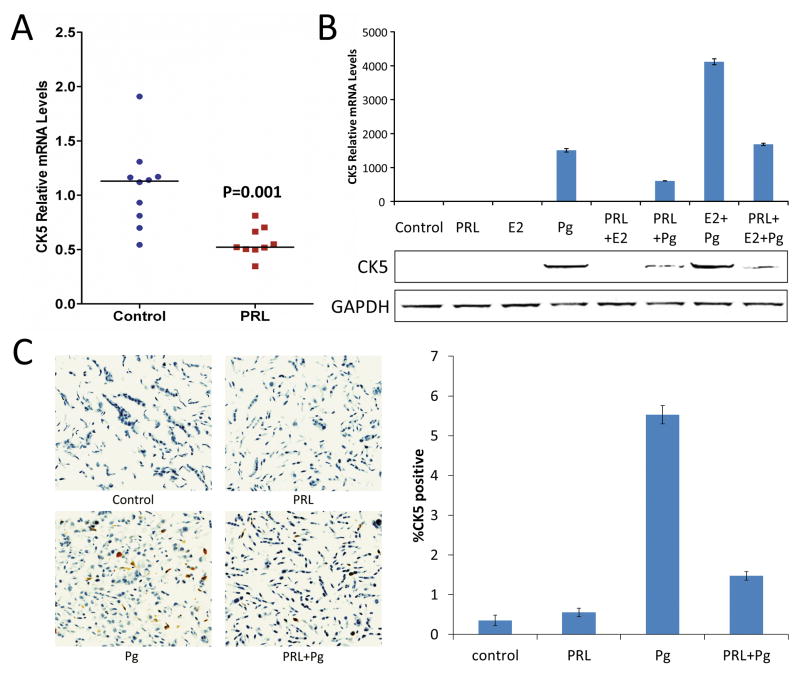
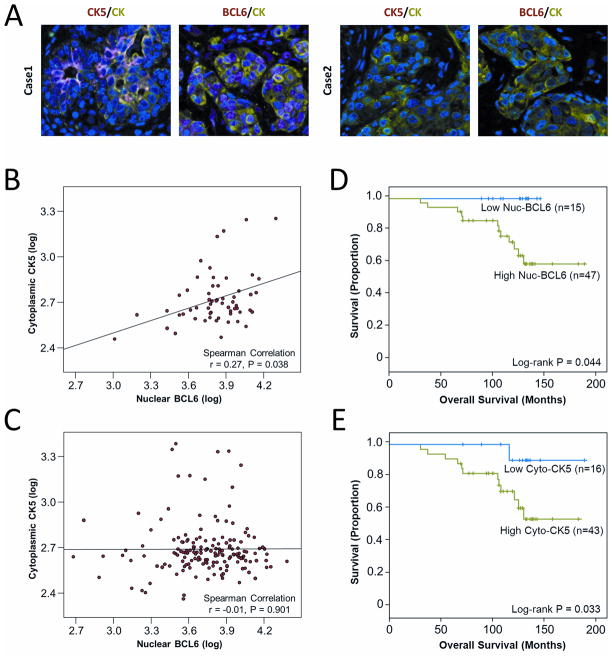
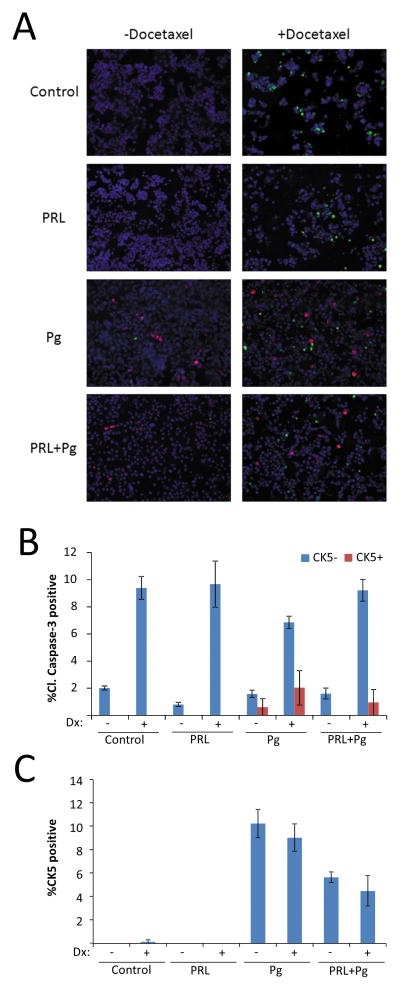
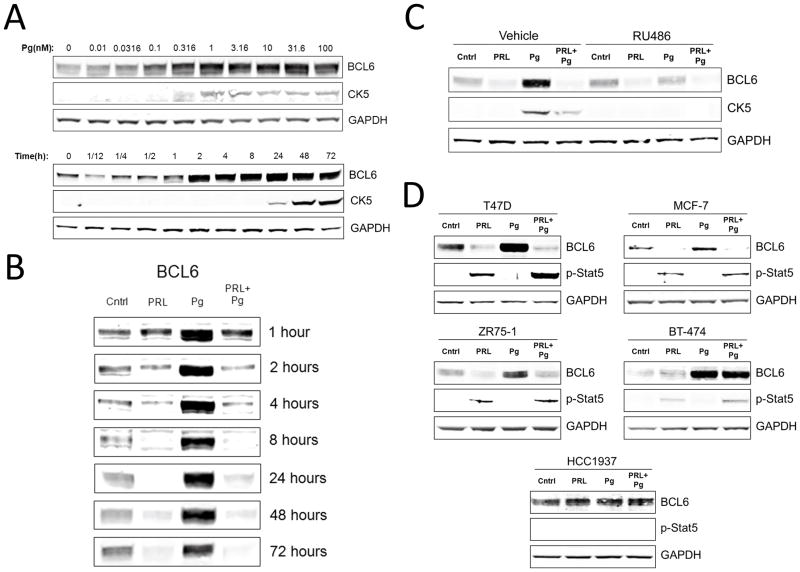
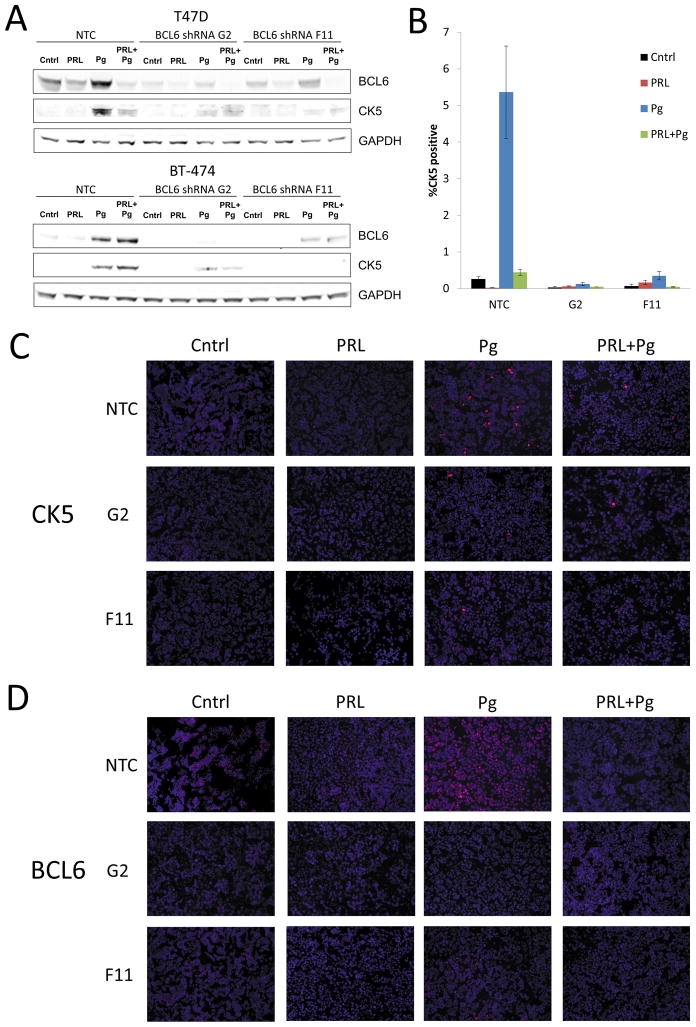
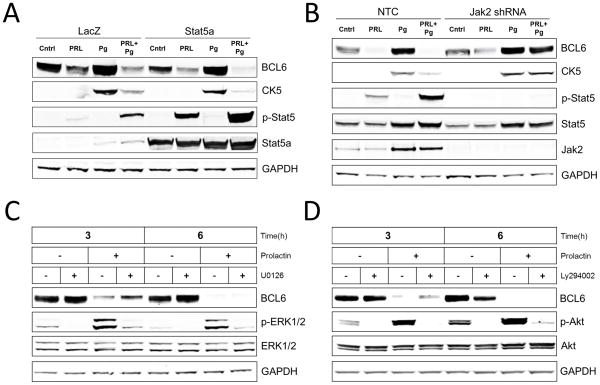
Prolactin controls the development and function of milk-producing breast epithelia but also supports growth and differentiation of breast cancer, especially luminal subtypes. A principal signaling mediator of prolactin, Stat5, promotes cellular differentiation of breast cancer cells in vitro, and loss of active Stat5 in tumors is associated with antiestrogen therapy failure in patients. In luminal breast cancer, progesterone induces a cytokeratin-5 (CK5)-positive basal cell-like population. This population possesses characteristics of tumor stem cells including quiescence, therapy resistance and tumor-initiating capacity. Here we report that prolactin counteracts induction of the CK5-positive population by the synthetic progestin (Pg) R5020 in luminal breast cancer cells both in vitro and in vivo. CK5-positive cells were chemoresistant as determined by fourfold reduced rate of apoptosis following docetaxel exposure. Pg-induction of CK5 was preceded by marked upregulation of BCL6, an oncogene and transcriptional repressor critical for the maintenance of leukemia-initiating cells. Knockdown of BCL6 prevented induction of CK5-positive cell population by Pg. Prolactin suppressed Pg-induced BCL6 through Jak2-Stat5 but not Erk- or Akt-dependent pathways. In premenopausal but not postmenopausal patients with hormone receptor-positive breast cancer, tumor protein levels of CK5 correlated positively with BCL6, and high BCL6 or CK5 protein levels were associated with unfavorable clinical outcome. Suppression of Pg-induction of CK5-positive cells represents a novel prodifferentiation effect of prolactin in breast cancer. The present progress may have direct implications for breast cancer progression and therapy as loss of prolactin receptor-Stat5 signaling occurs frequently and BCL6 inhibitors currently being evaluated for lymphomas may have value for breast cancer.
催乳素控制着产奶乳腺上皮细胞的发育和功能,但也支持乳腺癌的生长和分化,尤其是管腔亚型。催乳素的主要信号传导介质Stat5在体外促进乳腺癌细胞的细胞分化,肿瘤中活性Stat5的缺失与患者抗雌激素治疗失败有关。在管腔型乳腺癌中,孕酮诱导细胞角蛋白5(CK5)阳性的基底样细胞群。该细胞群具有肿瘤干细胞的特征,包括静止、抗治疗能力和肿瘤起始能力。在此,我们报告催乳素在体外和体内均可抵消合成孕激素(Pg)R5020对管腔型乳腺癌细胞中CK5阳性细胞群的诱导作用。通过多西他赛暴露后凋亡率降低四倍确定,CK5阳性细胞具有化疗抗性。Pg诱导CK5之前,BCL6显著上调,BCL6是一种癌基因和转录抑制因子,对白血病起始细胞的维持至关重要。敲低BCL6可阻止Pg诱导CK5阳性细胞群。催乳素通过Jak2-Stat5而非Erk或Akt依赖途径抑制Pg诱导的BCL6。在激素受体阳性乳腺癌的绝经前而非绝经后患者中,CK5的肿瘤蛋白水平与BCL6呈正相关,高BCL6或CK5蛋白水平与不良临床结局相关。抑制Pg诱导的CK5阳性细胞代表了催乳素在乳腺癌中的一种新的促分化作用。目前的进展可能对乳腺癌的进展和治疗有直接影响,因为催乳素受体-Stat5信号传导的丧失经常发生,目前正在评估的用于淋巴瘤的BCL6抑制剂可能对乳腺癌有价值。