Fernandes Luciana R, Ribeiro Ana Cecília C, Segatto Marcela, Santos Luís Felipe F F, Amaral Joana, Portugal Luciane R, Leite Jacqueline I A
Departamento de Bioquímica e Imunologia, Universidade Federal Minas Gerais, 31270-901 Belo Horizonte, MG, Brazil.
Cholesterol. 2013;2013:754580. doi: 10.1155/2013/754580. Epub 2013 Apr 28.
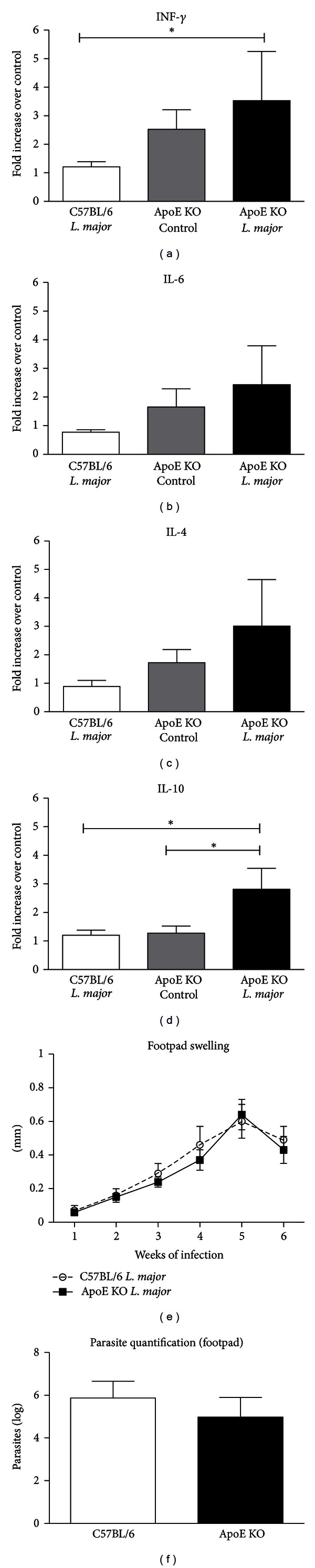
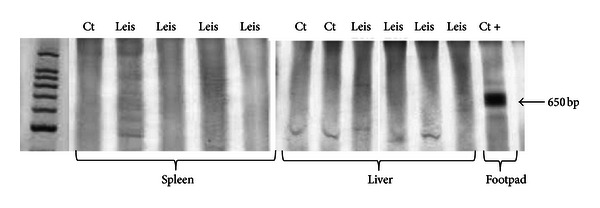
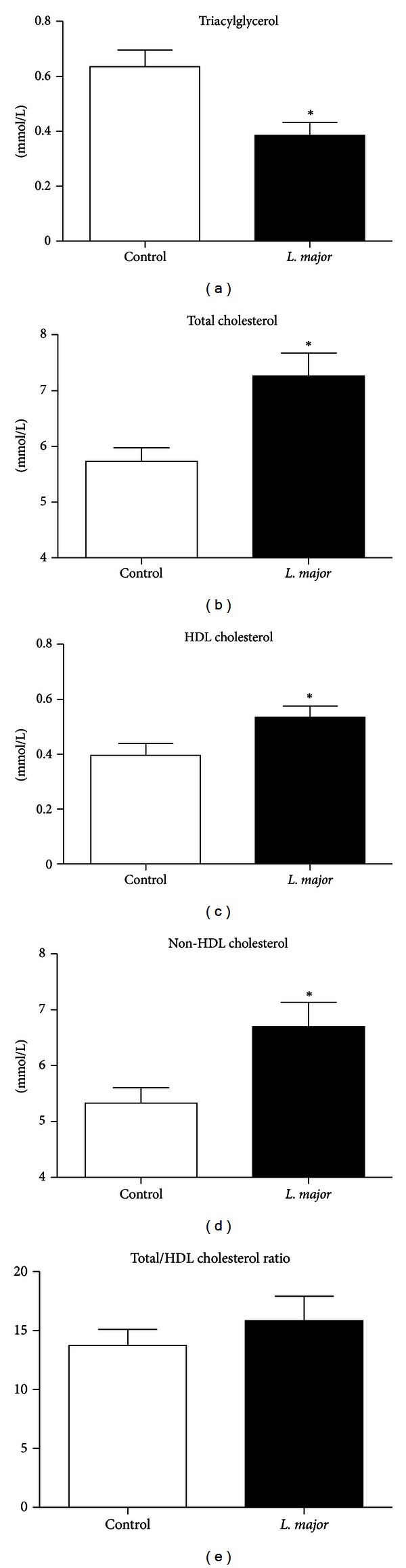
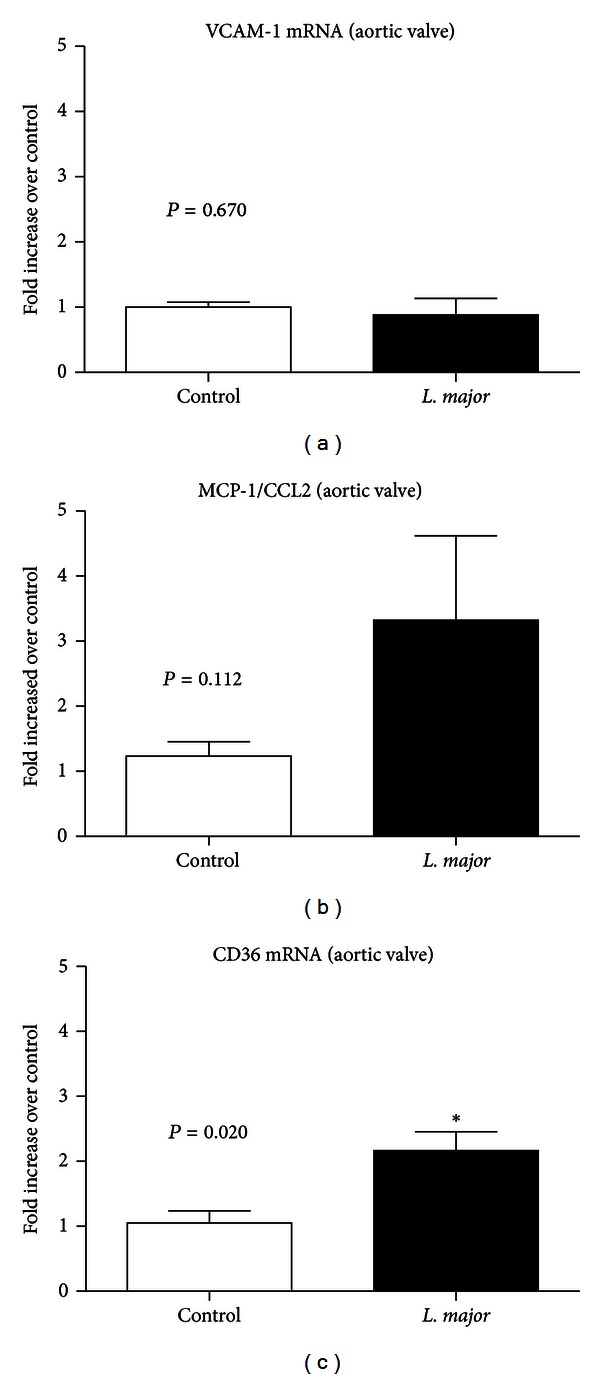
Leishmania major infection of resistant mice causes a self-limited lesion characterized by macrophage activation and a Th1 proinflammatory response. Atherosclerosis is an inflammatory disease involving hypercholesterolemia and macrophage activation. In this study, we evaluated the influence of L. major infection on the development of atherosclerosis using atherosclerosis-susceptible apolipoprotein E-deficient (apoE KO) mice. After 6 weeks of infection, apoE KO mice exhibited reduced footpad swelling and parasitemia similar to C57BL/6 controls, confirming that both strains are resistant to infection with L. major. L. major-infected mice had increased plasma cholesterol levels and reduced triacylglycerols. With regard to atherosclerosis, noninfected mice developed only fatty streak lesions, while the infected mice presented with advanced lesions containing a necrotic core and an abundant inflammatory infiltrate. CD36 expression was increased in the aortic valve of the infected mice, indicating increased macrophage activation. In conclusion, L. major infection, although localized and self-limited in resistant apoE KO mice, has a detrimental effect on the blood lipid profile, increases the inflammatory cell migration to atherosclerotic lesions, and promotes atherogenesis. These effects are consequences of the stimulation of the immune system by L. major, which promotes the inflammatory components of atherosclerosis, which are primarily the parasite-activated macrophages.
对利什曼原虫主要感染具有抗性的小鼠感染该病原体后会引发一种自限性病变,其特征为巨噬细胞活化和Th1促炎反应。动脉粥样硬化是一种涉及高胆固醇血症和巨噬细胞活化的炎症性疾病。在本研究中,我们使用易患动脉粥样硬化的载脂蛋白E缺陷(apoE KO)小鼠评估了利什曼原虫主要感染对动脉粥样硬化发展的影响。感染6周后,apoE KO小鼠的足垫肿胀和寄生虫血症降低,与C57BL/6对照相似,证实这两个品系均对利什曼原虫主要感染具有抗性。感染利什曼原虫主要的小鼠血浆胆固醇水平升高,三酰甘油降低。关于动脉粥样硬化,未感染的小鼠仅出现脂肪条纹病变,而感染的小鼠出现含有坏死核心和大量炎症浸润的晚期病变。感染小鼠的主动脉瓣中CD36表达增加,表明巨噬细胞活化增加。总之,利什曼原虫主要感染尽管在抗性apoE KO小鼠中是局部性和自限性的,但对血脂谱有不利影响,增加炎症细胞向动脉粥样硬化病变的迁移,并促进动脉粥样硬化的发生。这些影响是利什曼原虫主要感染刺激免疫系统的结果,该感染促进了动脉粥样硬化的炎症成分,主要是寄生虫激活的巨噬细胞。