Semini Geo, Paape Daniel, Paterou Athina, Schroeder Juliane, Barrios-Llerena Martin, Aebischer Toni
Mycotic and Parasitic Agents and Mycobacteria, Department of Infectious Diseases, Robert Koch-Institute, Berlin, Germany.
Institute of Immunology and Infection Research, The University of Edinburgh, Edinburgh, UK.
Microbiologyopen. 2017 Aug;6(4). doi: 10.1002/mbo3.469. Epub 2017 Mar 27.
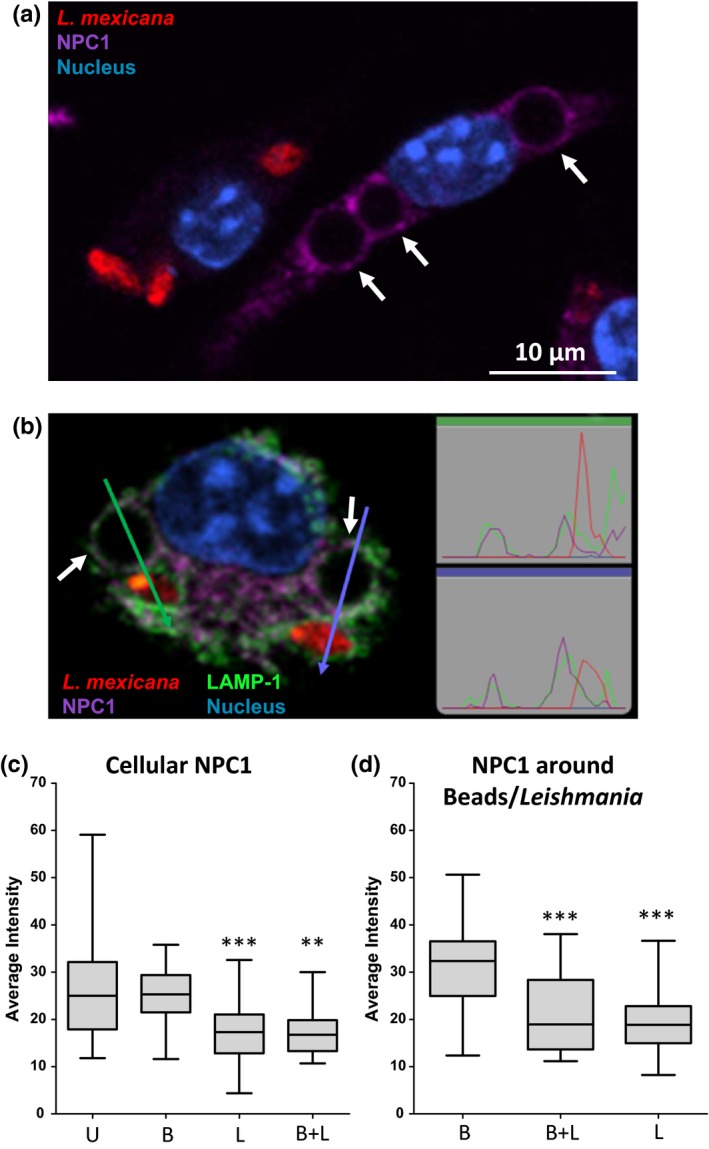
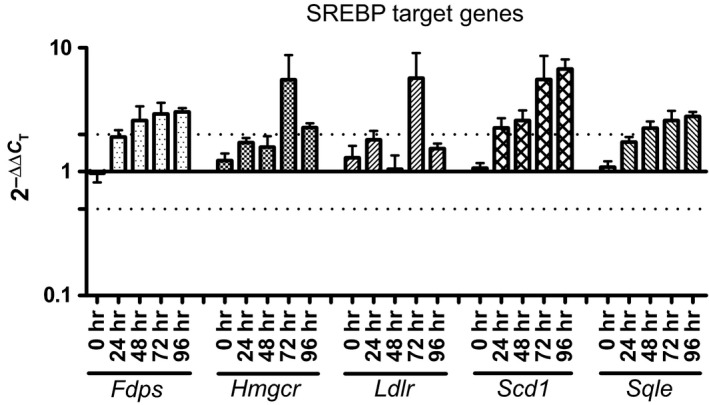
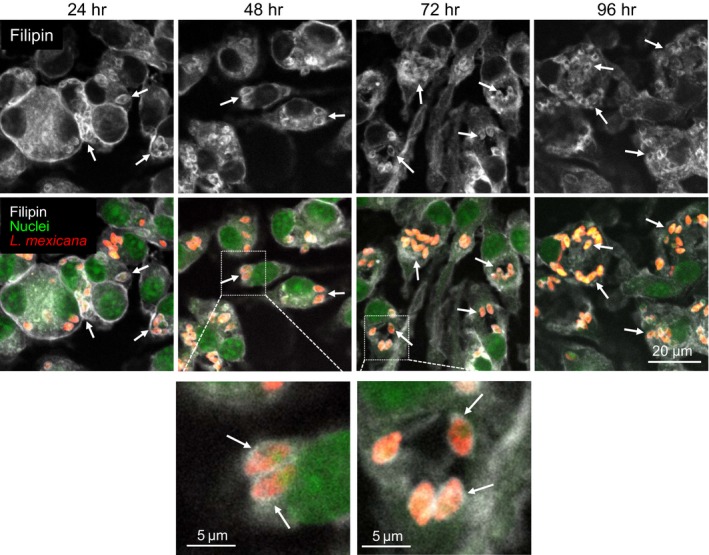
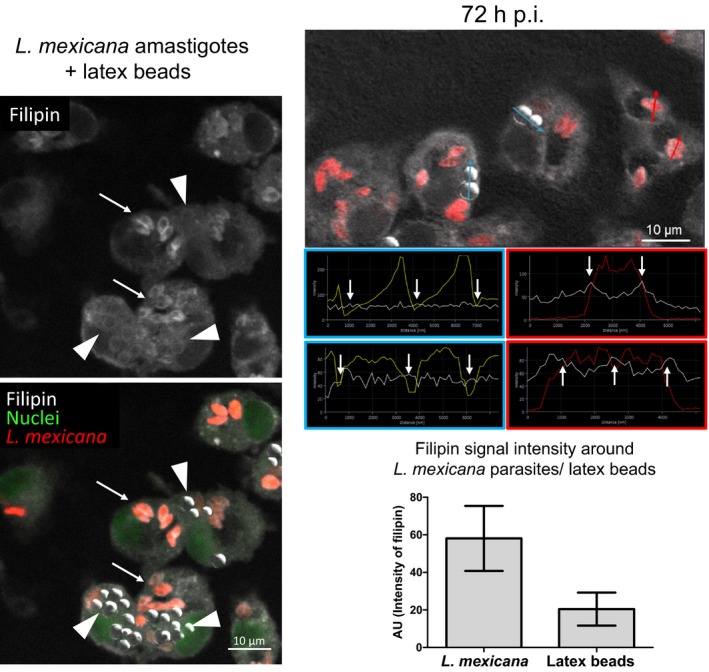
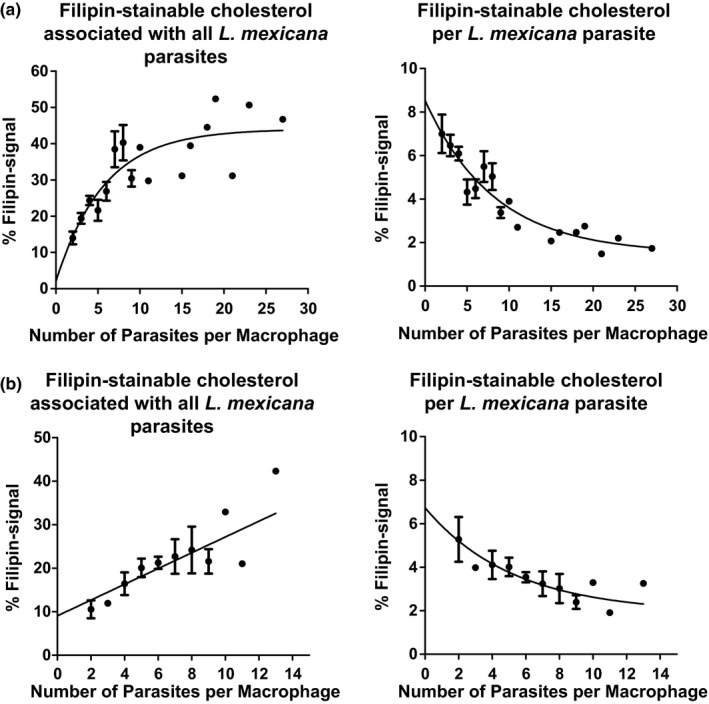
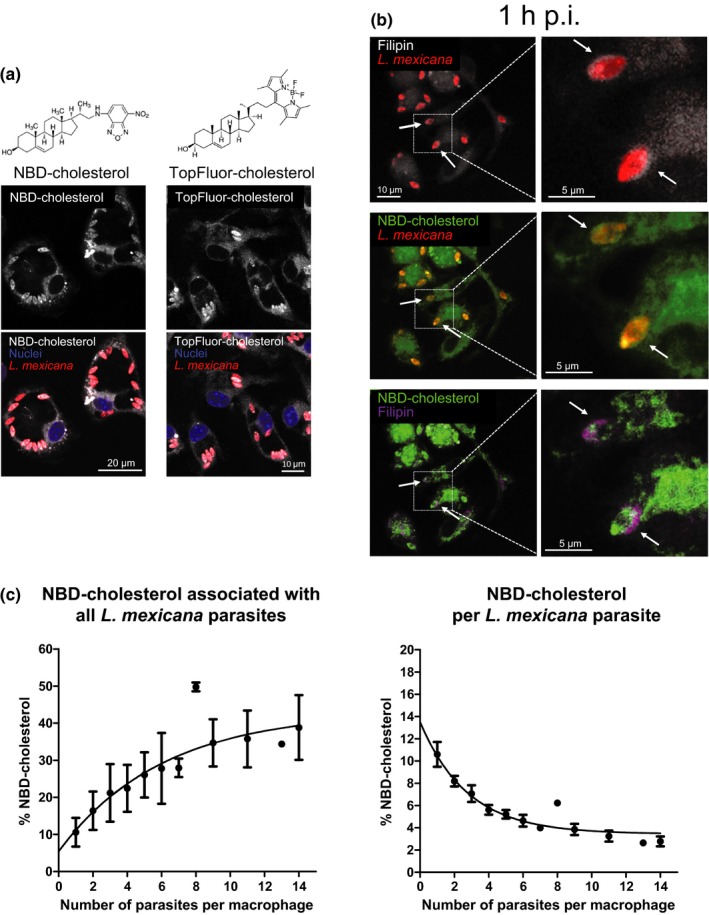
Leishmania spp. are protozoan parasites that are transmitted by sandfly vectors during blood sucking to vertebrate hosts and cause a spectrum of diseases called leishmaniases. It has been demonstrated that host cholesterol plays an important role during Leishmania infection. Nevertheless, little is known about the intracellular distribution of this lipid early after internalization of the parasite. Here, pulse-chase experiments with radiolabeled cholesteryl esterified to fatty acids bound to low-density lipoproteins indicated that retention of this source of cholesterol is increased in parasite-containing subcellular fractions, while uptake is unaffected. This is correlated with a reduction or absence of detectable NPC1 (Niemann-Pick disease, type C1), a protein responsible for cholesterol efflux from endocytic compartments, in the Leishmania mexicana habitat and infected cells. Filipin staining revealed a halo around parasites within parasitophorous vacuoles (PV) likely representing free cholesterol accumulation. Labeling of host cell membranous cholesterol by fluorescent cholesterol species before infection revealed that this pool is also trafficked to the PV but becomes incorporated into the parasites' membranes and seems not to contribute to the halo detected by filipin. This cholesterol sequestration happened early after infection and was functionally significant as it correlated with the upregulation of mRNA-encoding proteins required for cholesterol biosynthesis. Thus, sequestration of cholesterol by Leishmania amastigotes early after infection provides a basis to understand perturbation of cholesterol-dependent processes in macrophages that were shown previously by others to be necessary for their proper function in innate and adaptive immune responses.
利什曼原虫属是原生动物寄生虫,在吸血过程中通过白蛉媒介传播给脊椎动物宿主,并引发一系列称为利什曼病的疾病。已经证明宿主胆固醇在利什曼原虫感染过程中起着重要作用。然而,关于寄生虫内化后早期这种脂质在细胞内的分布情况却知之甚少。在这里,用与低密度脂蛋白结合的脂肪酸酯化的放射性标记胆固醇进行脉冲追踪实验表明,含寄生虫的亚细胞组分中这种胆固醇来源的保留增加,而摄取不受影响。这与墨西哥利什曼原虫栖息地和受感染细胞中可检测到的NPC1(尼曼-匹克病C1型)减少或缺失相关,NPC1是一种负责从内吞小室中排出胆固醇的蛋白质。制霉菌素染色显示,在寄生泡(PV)内的寄生虫周围有一个晕圈,可能代表游离胆固醇的积累。感染前用荧光胆固醇类似物标记宿主细胞膜胆固醇,结果显示该胆固醇池也被转运到PV,但随后被整合到寄生虫膜中,似乎对制霉菌素检测到的晕圈没有贡献。这种胆固醇隔离在感染后早期发生,并且在功能上具有重要意义,因为它与胆固醇生物合成所需的mRNA编码蛋白的上调相关。因此,感染后早期利什曼无鞭毛体对胆固醇的隔离为理解巨噬细胞中胆固醇依赖性过程的扰动提供了基础,此前其他人已证明这些过程对巨噬细胞在先天和适应性免疫反应中的正常功能是必要的。