Wang Xiao-Yang, Yu Huina, Linnoila R Ilona, Li Laodong, Li Dangyu, Mo Biwen, Okano Hideyuki, Penalva Luiz O F, Glazer Robert I
Cell and Cancer Biology Branch, Center for Cancer Research, National Cancer Institute, National Institutes of Health, Bethesda, MD, USA.
Oncotarget. 2013 May;4(5):739-50. doi: 10.18632/oncotarget.1034.
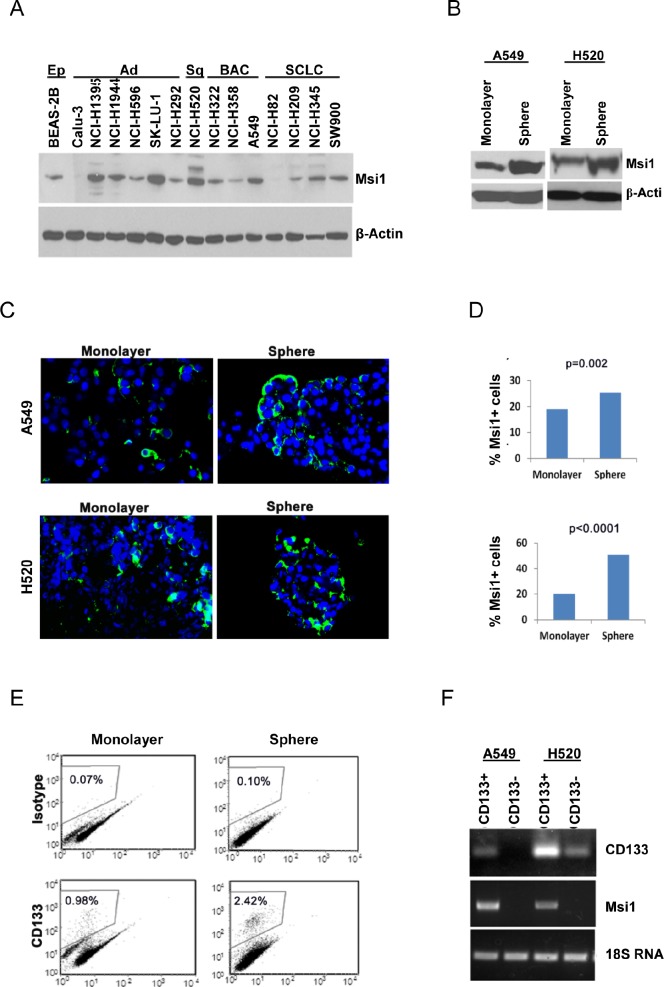
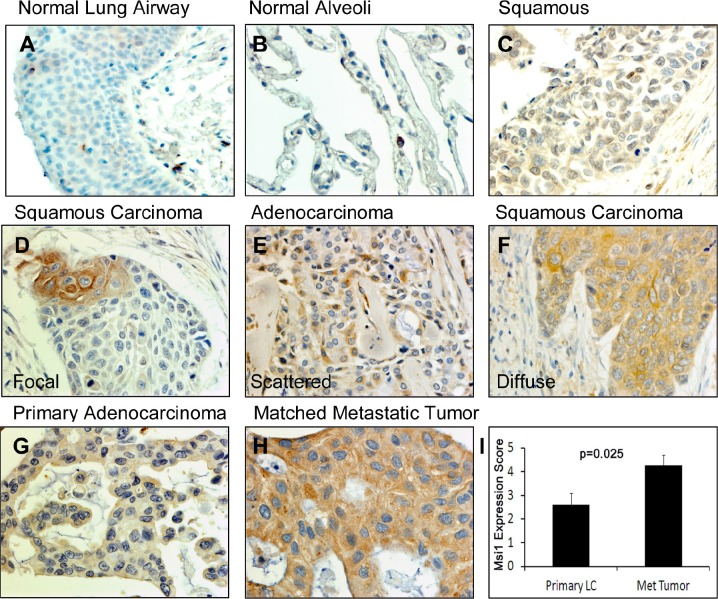
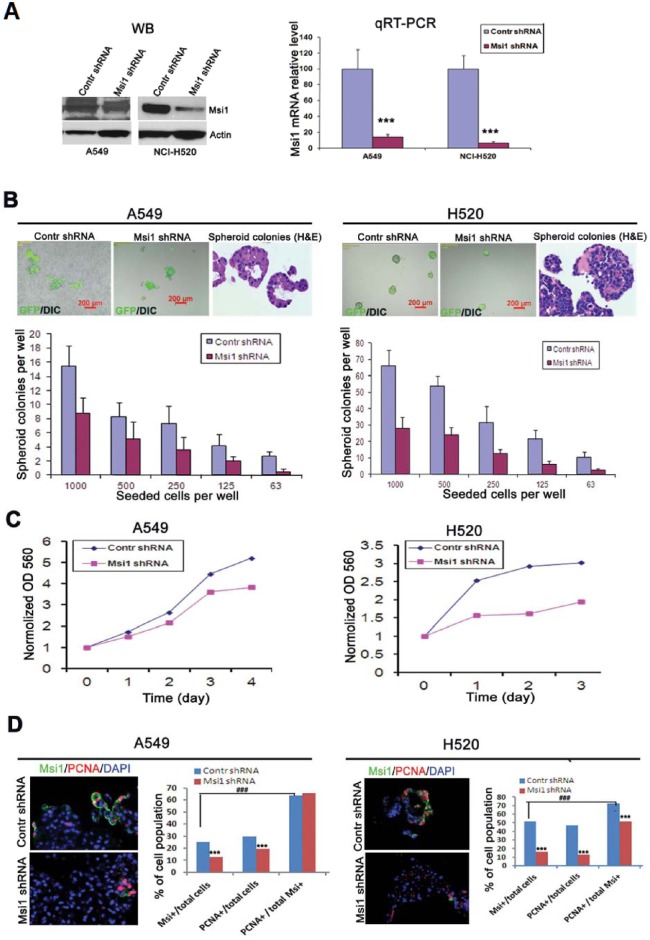
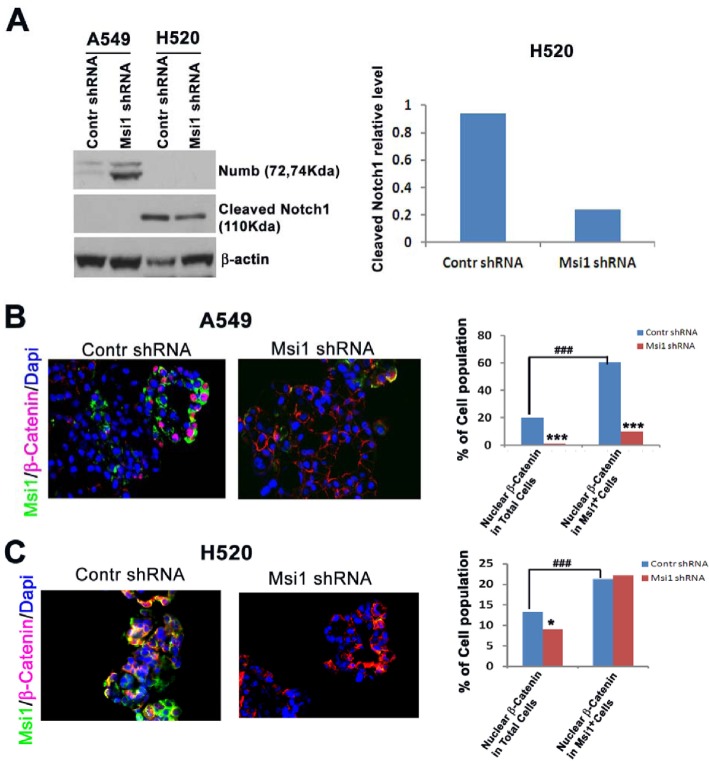
Lung cancer remains one of the leading causes of cancer-related deaths worldwide with a 5-year survival rate of less than 20%. One approach to improving survival is the identification of biomarkers to detect early stage disease. In this study, we investigated the potential of the stem cell and progenitor cell marker, Musashi1 (Msi1), as a diagnostic marker and potential therapeutic target for lung cancer. Functional studies in A549 bronchioalveolar carcinoma and NCI-H520 squamous cell carcinoma cells revealed that Msi1 was enriched in spheroid cultures of tumor cells and in the CD133+ cell population. Downregulation of Msi1 by lentivirus-mediated expression of an Msi1 shRNA reduced spheroid colony proliferation. Growth inhibition was associated with reduced nuclear localization of β-catenin and inhibition of the processing of intracellular Notch. In primary lung cancer, Msi1 protein expression was elevated in 86% of 202 tissue microarray specimens, and Msi1 mRNA was increased in 80% of 118 bronchoscopic biopsies, including metastatic disease, but was rarely detected in adjacent normal lung tissue and in non-malignant diseased tissue. Msi1 was expressed in a diffuse pattern in most tumor subtypes, except in squamous cell carcinomas, where it appeared in a focal pattern in 50% of specimens. Thus, Msi1 is a sensitive and specific diagnostic marker for all lung cancer subtypes.
肺癌仍然是全球癌症相关死亡的主要原因之一,其5年生存率低于20%。提高生存率的一种方法是识别生物标志物以检测早期疾病。在本研究中,我们调查了干细胞和祖细胞标志物Musashi1(Msi1)作为肺癌诊断标志物和潜在治疗靶点的潜力。在A549细支气管肺泡癌和NCI-H520鳞状细胞癌细胞中的功能研究表明,Msi1在肿瘤细胞的球状体培养物和CD133+细胞群体中富集。通过慢病毒介导的Msi1 shRNA表达下调Msi1可减少球状体集落增殖。生长抑制与β-连环蛋白核定位减少和细胞内Notch加工抑制有关。在原发性肺癌中,202个组织微阵列标本中有86%的Msi1蛋白表达升高,118个支气管镜活检标本(包括转移性疾病)中有80%的Msi1 mRNA增加,但在相邻正常肺组织和非恶性病变组织中很少检测到。除鳞状细胞癌外,Msi1在大多数肿瘤亚型中呈弥漫性表达,在50%的鳞状细胞癌标本中呈局灶性表达。因此,Msi1是所有肺癌亚型敏感且特异的诊断标志物。