Bley Nadine, Hmedat Ali, Müller Simon, Rolnik Robin, Rausch Alexander, Lederer Marcell, Hüttelmaier Stefan
Department for Molecular Cell Biology, Institute for Molecular Medicine, Martin Luther University Halle/Wittenberg, Charles Tanford Protein Center, Kurt-Mothes-Str. 3A, 06120 Halle, Germany.
Core Facility Imaging, Institute for Molecular Medicine, Martin Luther University Halle-Wittenberg, Charles Tanford Protein Center, Kurt-Mothes-Str. 3A, 06120 Halle, Germany.
Biology (Basel). 2021 May 5;10(5):407. doi: 10.3390/biology10050407.
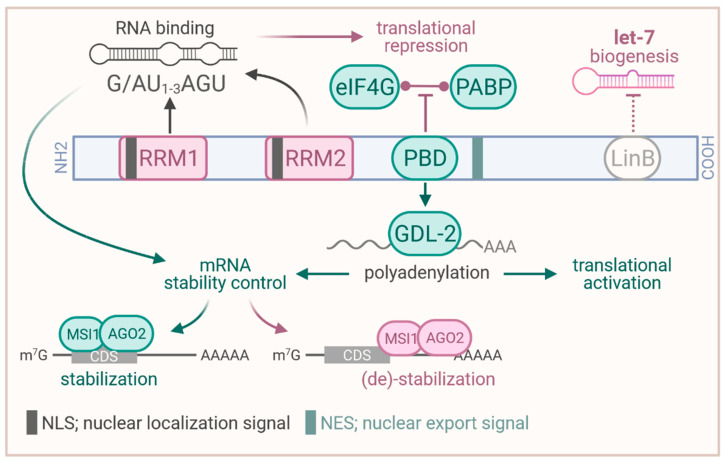
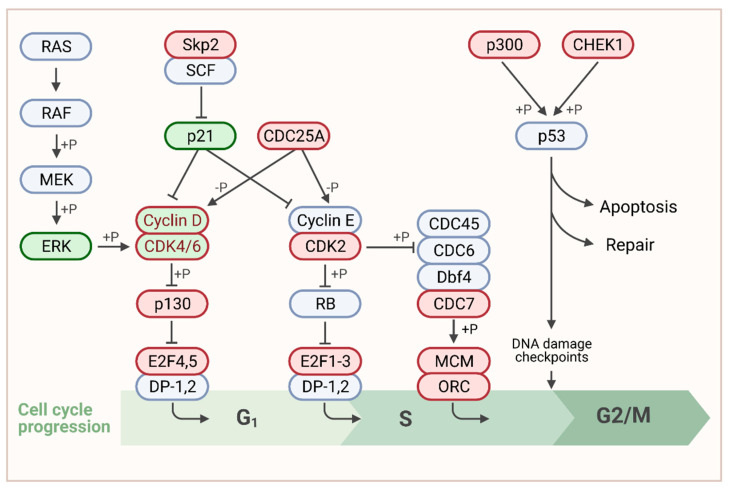
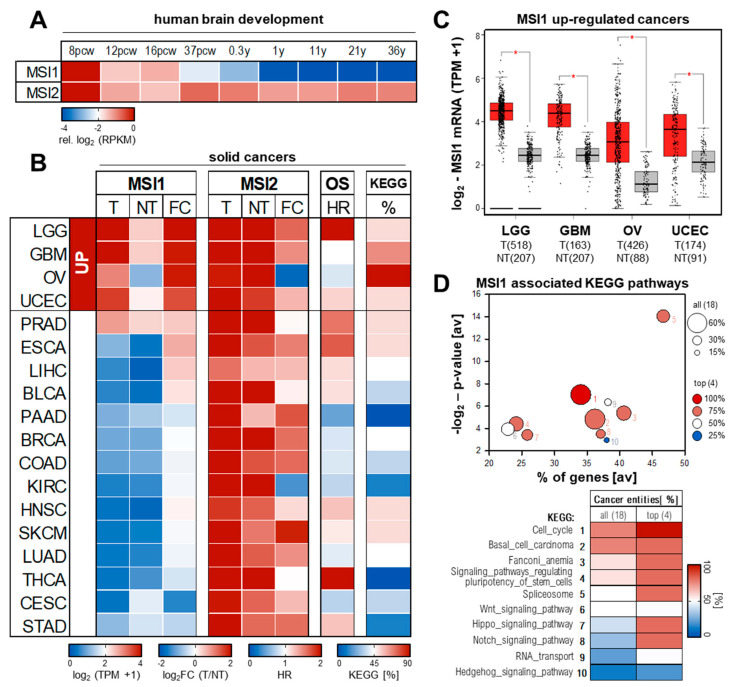
The RNA-binding protein Musashi-1 (MSI1) promotes stemness during development and cancer. By controlling target mRNA turnover and translation, MSI1 is implicated in the regulation of cancer hallmarks such as cell cycle or Notch signaling. Thereby, the protein enhanced cancer growth and therapy resistance to standard regimes. Due to its specific expression pattern and diverse functions, MSI1 represents an interesting target for cancer therapy in the future. In this review we summarize previous findings on MSI1's implications in developmental processes of other organisms. We revisit MSI1's expression in a set of solid cancers, describe mechanistic details and implications in MSI1 associated cancer hallmark pathways and highlight current research in drug development identifying the first MSI1-directed inhibitors with anti-tumor activity.
RNA结合蛋白Musashi-1(MSI1)在发育和癌症过程中促进干性。通过控制靶mRNA的周转和翻译,MSI1参与细胞周期或Notch信号等癌症标志的调控。因此,该蛋白增强了癌症生长和对标准治疗方案的耐药性。由于其特定的表达模式和多样的功能,MSI1是未来癌症治疗中一个有趣的靶点。在本综述中,我们总结了先前关于MSI1在其他生物体发育过程中的影响的研究结果。我们重新审视了MSI1在一组实体癌中的表达,描述了MSI1相关癌症标志途径的机制细节和影响,并强调了当前药物开发研究中鉴定出的首个具有抗肿瘤活性的MSI1定向抑制剂。