Molecular Inflammation Research Center for Aging Intervention (MRCA), College of Pharmacy, Pusan National University, Busan 609-735, Korea.
J Ginseng Res. 2013 Mar;37(1):54-63. doi: 10.5142/jgr.2013.37.54.
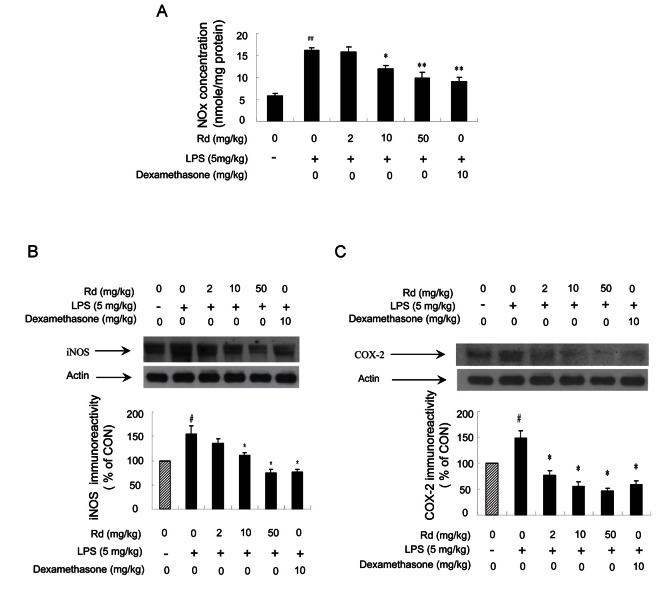
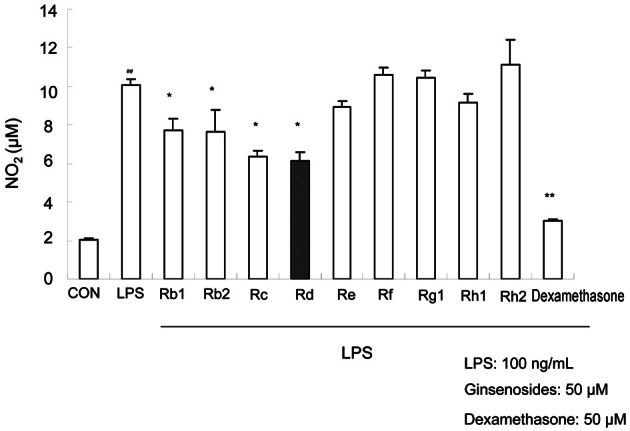
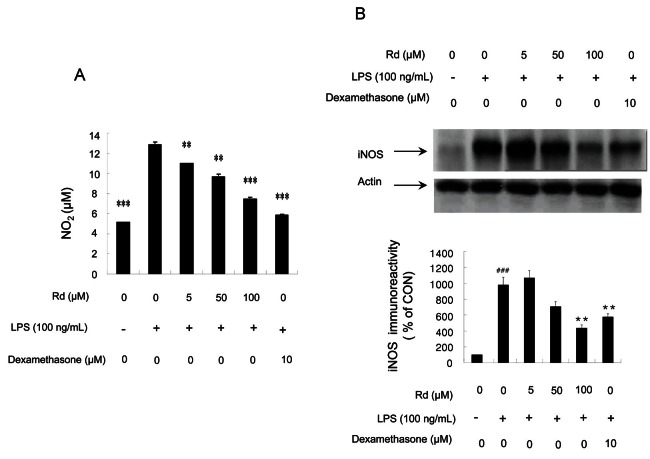
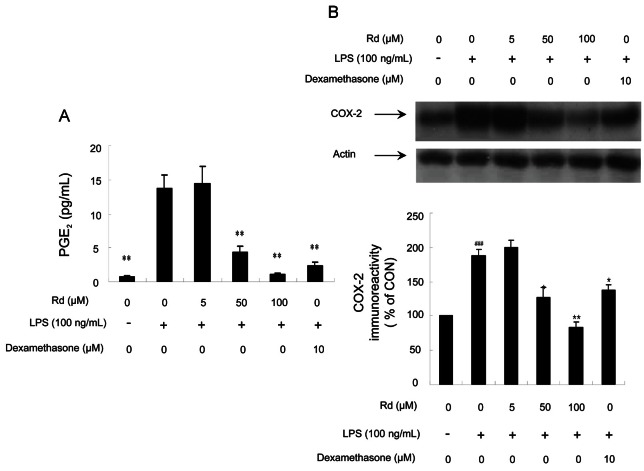
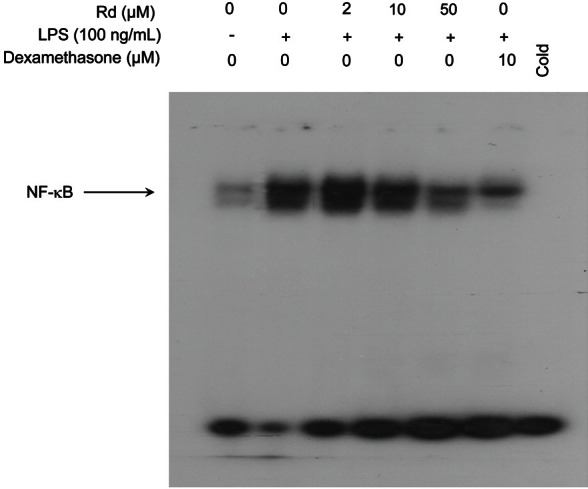
Ginsenoside Rd is a primary constituent of the ginseng rhizome and has been shown to participate in the regulation of diabetes and in tumor formation. Reports also show that ginsenoside Rd exerts anti-oxidative effects by activating anti-oxidant enzymes. Treatment with ginsenoside Rd decreased nitric oxide and prostaglandin E2 (PGE2) in lipopolysaccharides (LPS)-challenged RAW264.7 cells and in ICR mouse livers (5 mg/kg LPS; LPS + ginsenoside Rd [2, 10, and 50 mg/kg]). Furthermore, these decreases were associated with the down-regulations of inducible nitric oxide synthase (iNOS) and cyclooxygenase (COX)-2 and of nuclear factor (NF)-κB activity in vitro and in vivo. Our results indicate that ginsenoside Rd treatment decreases; 1) nitric oxide production (40% inhibition); 2) PGE2 synthesis (69% to 93% inhibition); 3) NF-κB activity; and 4) the NF-κB-regulated expressions of iNOS and COX-2. Taken together, our results suggest that the anti-inflammatory effects of ginsenoside Rd are due to the down-regulation of NF-κB and the consequent expressional suppressions of iNOS and COX-2.
人参皂苷 Rd 是人参根茎的主要成分之一,已被证明参与糖尿病和肿瘤形成的调节。报告还表明,人参皂苷 Rd 通过激活抗氧化酶发挥抗氧化作用。用人参皂苷 Rd 治疗可降低脂多糖(LPS)刺激的 RAW264.7 细胞和 ICR 小鼠肝脏中的一氧化氮和前列腺素 E2(PGE2)(5mg/kg LPS;LPS+人参皂苷 Rd[2、10 和 50mg/kg])。此外,这些降低与诱导型一氧化氮合酶(iNOS)和环加氧酶(COX)-2的下调以及体外和体内核因子(NF)-κB 活性有关。我们的结果表明,人参皂苷 Rd 处理可降低:1)一氧化氮的产生(抑制 40%);2)PGE2 合成(抑制 69%至 93%);3)NF-κB 活性;4)NF-κB 调节的 iNOS 和 COX-2 的表达。总之,我们的结果表明,人参皂苷 Rd 的抗炎作用是由于 NF-κB 的下调以及随后的 iNOS 和 COX-2 的表达抑制所致。