Institute of Parasitology, Vetsuisse Faculty, University of Berne, Berne, Switzerland.
PLoS Negl Trop Dis. 2013 May 23;7(5):e2235. doi: 10.1371/journal.pntd.0002235. Print 2013.
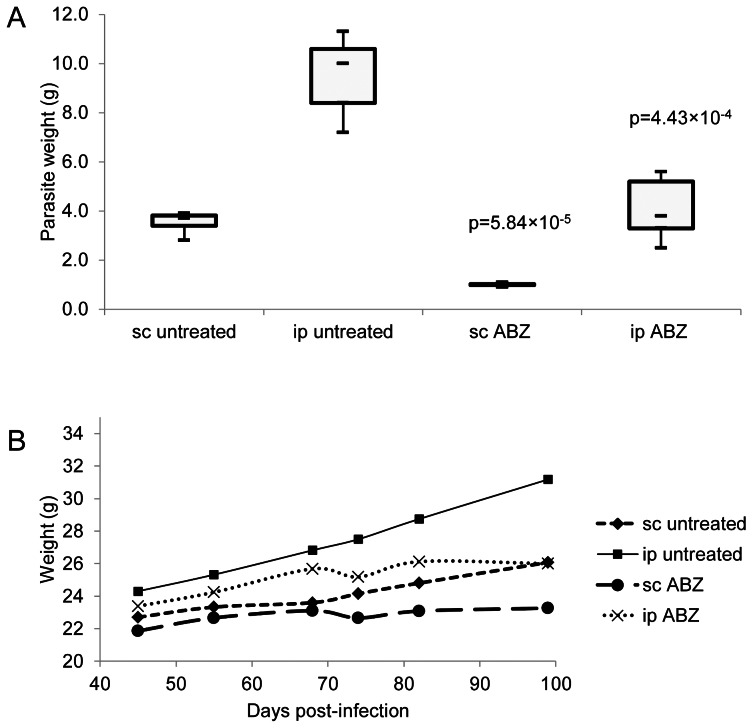
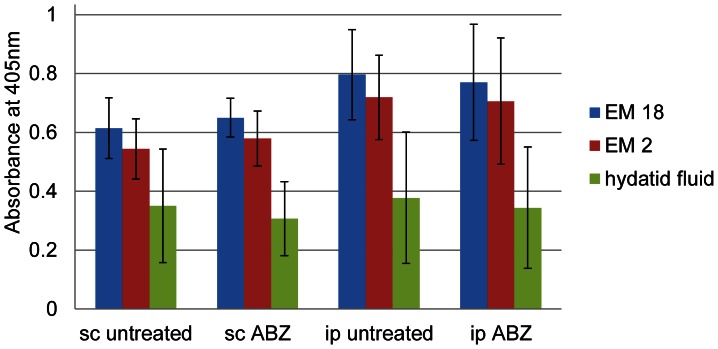
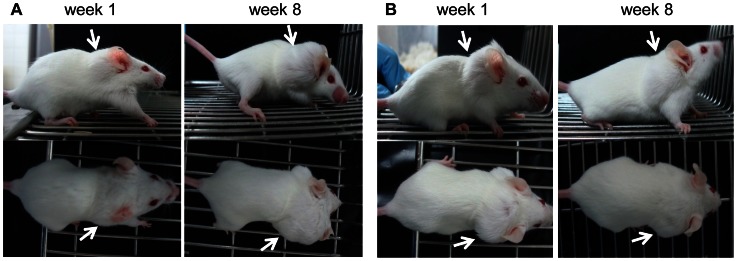
Alveolar echinococcosis (AE) in humans is a parasitic disease characterized by severe damage to the liver and occasionally other organs. AE is caused by infection with the metacestode (larval) stage of the fox tapeworm Echinococcus multilocularis, usually infecting small rodents as natural intermediate hosts. Conventionally, human AE is chemotherapeutically treated with mebendazole or albendazole. There is, however still the need for improved chemotherapeutical options. Primary in vivo studies on drugs of interest are commonly performed in small laboratory animals such as mice and Mongolian jirds, and in most cases, a secondary infection model is used, whereby E. multilocularis metacestodes are directly injected into the peritoneal cavity or into the liver. Disadvantages of this methodological approach include risk of injury to organs during the inoculation and, most notably, a limitation in the macroscopic (visible) assessment of treatment efficacy. Thus, in order to monitor the efficacy of chemotherapeutical treatment, animals have to be euthanized and the parasite tissue dissected. In the present study, mice were infected with E. multilocularis metacestodes through the subcutaneous route and were then subjected to chemotherapy employing albendazole. Serological responses to infection were comparatively assessed in mice infected by the conventional intraperitoneal route. We demonstrate that the subcutaneous infection model for secondary AE facilitates the assessment of the progress of infection and drug treatment in the live animal.
人体泡型包虫病(AE)是一种寄生虫病,其特征为肝脏严重受损,偶尔也会累及其他器官。AE 是由狐绦虫多房棘球蚴的囊尾蚴(幼虫)阶段感染引起的,通常以小型啮齿动物为天然中间宿主。传统上,人类 AE 采用苯并咪唑或阿苯达唑进行化学治疗。然而,仍然需要改进的化学治疗选择。对有兴趣的药物的初步体内研究通常在小型实验动物(如小鼠和蒙古沙鼠)中进行,在大多数情况下,使用二次感染模型,即将多房棘球蚴囊尾蚴直接注射到腹腔或肝脏中。这种方法的缺点包括接种过程中对器官造成损伤的风险,以及最显著的是,对治疗效果的宏观(可见)评估存在限制。因此,为了监测化学治疗的效果,必须对动物进行安乐死并解剖寄生虫组织。在本研究中,通过皮下途径感染小鼠多房棘球蚴囊尾蚴,然后用阿苯达唑进行化疗。通过比较感染的传统腹腔途径,评估了感染的血清学反应。我们证明,继发性 AE 的皮下感染模型有助于在活体动物中评估感染的进展和药物治疗。