Center for Musculoskeletal Regeneration, Houston Methodist Research Institute, 6670 Bertner Ave, Houston, TX 77030, USA.
Orthopedics and Sports Medicine, Houston Methodist Hospital, 6445 Main St., Houston, TX 77030, USA.
Int J Mol Sci. 2021 Sep 18;22(18):10098. doi: 10.3390/ijms221810098.
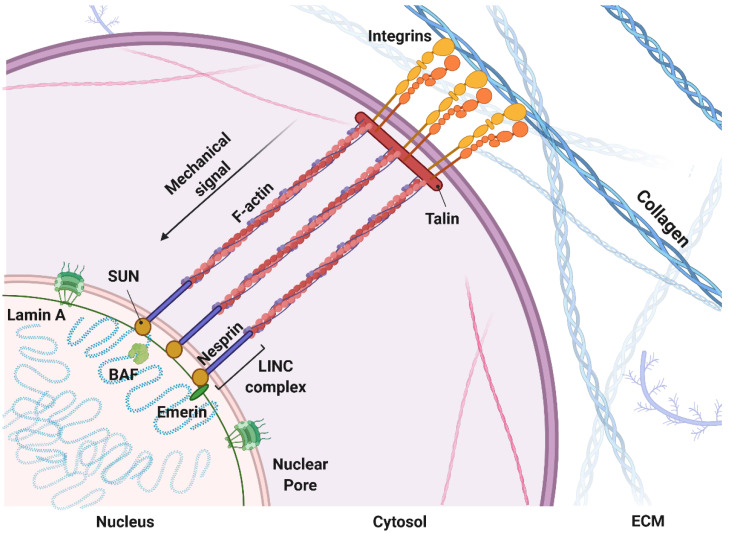
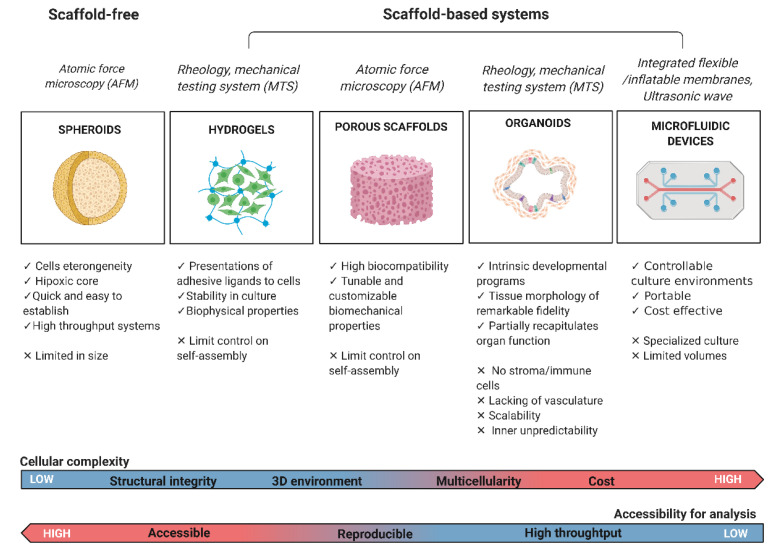
From the development of self-aggregating, scaffold-free multicellular spheroids to the inclusion of scaffold systems, 3D models have progressively increased in complexity to better mimic native tissues. The inclusion of a third dimension in cancer models allows researchers to zoom out from a significant but limited cancer cell research approach to a wider investigation of the tumor microenvironment. This model can include multiple cell types and many elements from the extracellular matrix (ECM), which provides mechanical support for the tissue, mediates cell-microenvironment interactions, and plays a key role in cancer cell invasion. Both biochemical and biophysical signals from the extracellular space strongly influence cell fate, the epigenetic landscape, and gene expression. Specifically, a detailed mechanistic understanding of tumor cell-ECM interactions, especially during cancer invasion, is lacking. In this review, we focus on the latest achievements in the study of ECM biomechanics and mechanosensing in cancer on 3D scaffold-based and scaffold-free models, focusing on each platform's level of complexity, up-to-date mechanical tests performed, limitations, and potential for further improvements.
从自聚集、无支架的多细胞球体的发展到支架系统的纳入,3D 模型的复杂性逐渐增加,以更好地模拟天然组织。在癌症模型中纳入第三个维度可以使研究人员从一种重要但有限的癌症细胞研究方法扩展到更广泛地研究肿瘤微环境。该模型可以包括多种细胞类型和细胞外基质(ECM)中的许多元素,为组织提供机械支撑,介导细胞-微环境相互作用,并在癌细胞浸润中发挥关键作用。细胞外空间的生化和生物物理信号强烈影响细胞命运、表观遗传景观和基因表达。具体来说,在癌症浸润过程中,肿瘤细胞-ECM 相互作用的详细机制理解还很缺乏。在这篇综述中,我们重点介绍了在基于支架和无支架 3D 模型上研究 ECM 生物力学和机械感受在癌症中的最新进展,重点介绍了每个平台的复杂程度、最新进行的力学测试、局限性以及进一步改进的潜力。