Patanjali Research Foundation, Haridwar, India.
Biopsychosoc Med. 2013 May 31;7(1):11. doi: 10.1186/1751-0759-7-11.
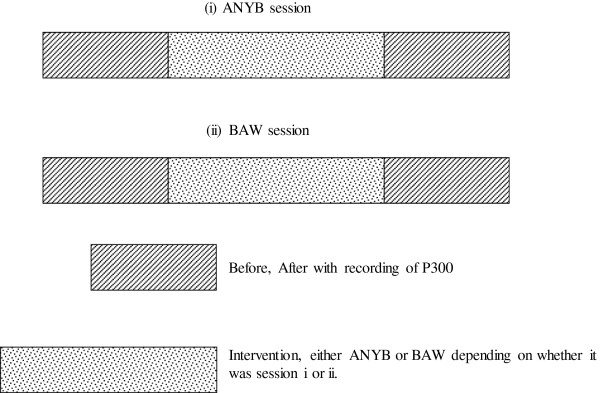
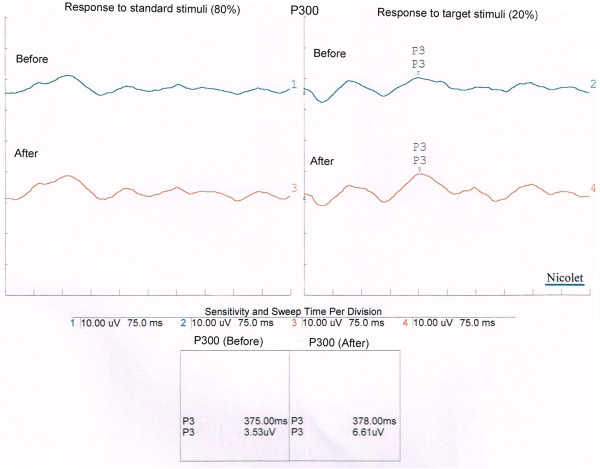
This study assessed the effect of alternate nostril yoga breathing (nadisuddhi pranayama) on P300 auditory evoked potentials compared to a session of breath awareness of equal duration, in 20 male adult volunteers who had an experience of yoga breathing practices for more than three months. Peak amplitudes and peak latencies of the P300 were assessed before and after the respective sessions. There was a significant increase in the P300 peak amplitudes at Fz, Cz, and Pz and a significant decrease in the peak latency at Fz alone following alternate nostril yoga breathing. Following breath awareness there was a significant increase in the peak amplitude of P300 at Cz. This suggests that alternate nostril yoga breathing positively influences cognitive processes which are required for sustained attention at different scalp sites (frontal, vertex and parietal), whereas breath awareness brings about changes at the vertex alone.
这项研究评估了交替鼻孔瑜伽呼吸(nadi shuddhi pranayama)对 P300 听觉诱发电位的影响,与持续时间相等的呼吸意识训练进行了比较,共有 20 名成年男性志愿者参与,他们都有三个月以上的瑜伽呼吸练习经验。在各自的训练前后评估 P300 的峰值幅度和潜伏期。在进行交替鼻孔瑜伽呼吸后,Fz、Cz 和 Pz 处的 P300 峰值幅度显著增加,而仅 Fz 处的峰值潜伏期显著缩短。在进行呼吸意识训练后,Cz 处的 P300 峰值幅度显著增加。这表明,交替鼻孔瑜伽呼吸可以积极影响认知过程,这些过程对于不同头皮部位(额叶、顶叶和顶叶)的持续注意力是必需的,而呼吸意识仅会引起顶点的变化。