Department of Psychology, Florida Atlantic University, Boca Raton, FL, 33431-0991, USA,
Mem Cognit. 2013 Nov;41(8):1144-58. doi: 10.3758/s13421-013-0334-5.
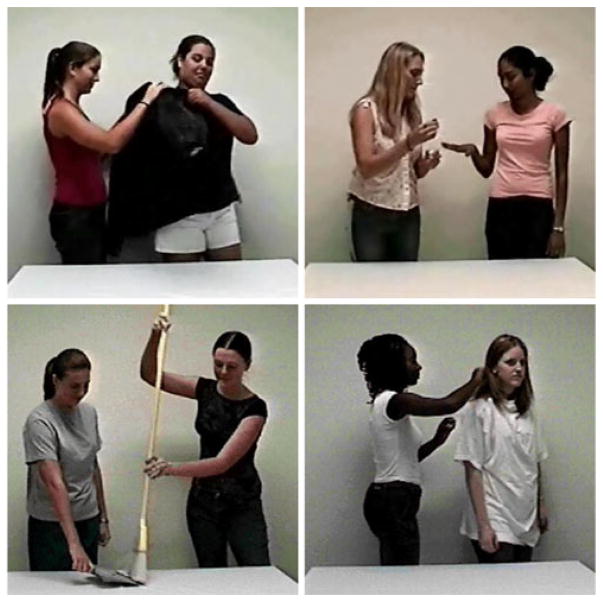
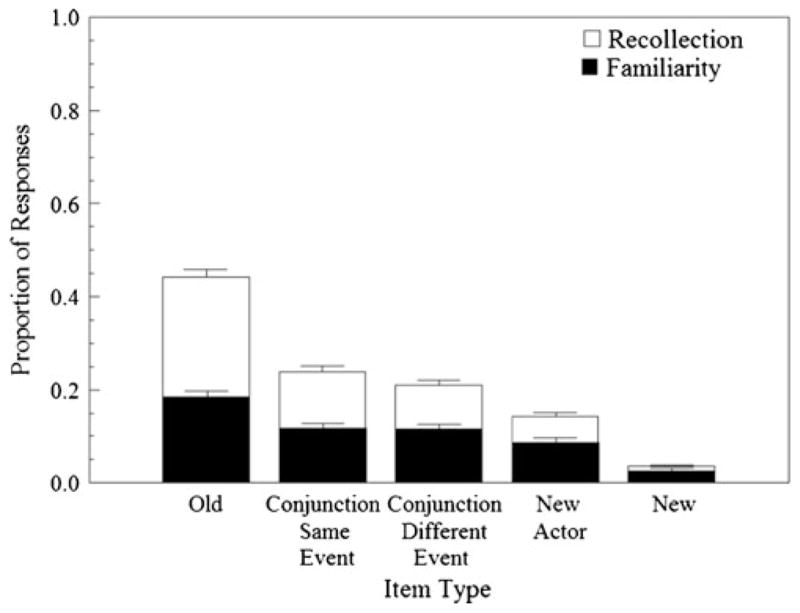
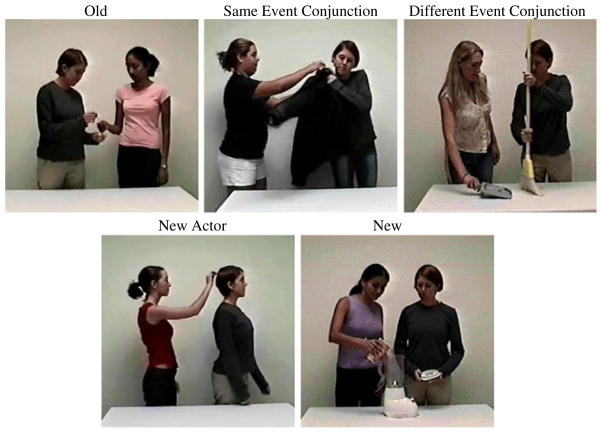
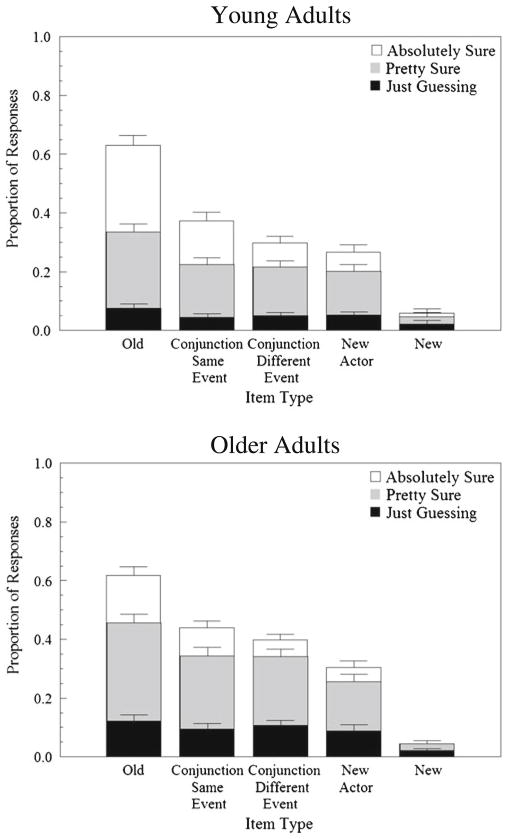
Two experiments demonstrated that eyewitnesses more frequently associate an actor with the actions of another person when those two people had appeared together in the same event, rather than in different events. This greater likelihood of binding an actor with the actions of another person from the same event was associated with high-confidence recognition judgments and "remember" responses in a remember-know task, suggesting that viewing an actor together with the actions of another person led participants to falsely recollect having seen that actor perform those actions. An analysis of age differences provided evidence that familiarity also contributed to false recognition independently of a false-recollection mechanism. In particular, older adults were more likely than young adults to falsely recognize a novel conjunction of a familiar actor and action, regardless of whether that actor and action were from the same or from different events. Older adults' elevated rate of false recognition was associated with intermediate confidence levels, suggesting that it stemmed from increased reliance on familiarity rather than from false recollection. The implications of these results are discussed for theories of conjunction errors in memory and of unconscious transference in eyewitness testimony.
两项实验表明,当两个人出现在同一个事件中,而不是不同的事件中时,目击者更频繁地将一个演员与另一个人的行为联系起来。这种将演员与同一事件中的另一个人的行为联系起来的可能性更高,与在记住-知道任务中高置信度的识别判断和“记得”反应有关,这表明观看一个演员与另一个人的行为会导致参与者错误地回忆起曾经看到该演员执行这些行为。对年龄差异的分析提供了证据,表明熟悉度也独立于错误回忆机制对错误识别有贡献。特别是,老年人比年轻人更容易错误地识别出一个熟悉的演员和动作的新组合,而不管该演员和动作是来自同一个事件还是不同的事件。老年人错误识别的发生率较高与中等置信度水平有关,这表明这是由于对熟悉度的依赖增加,而不是由于错误回忆。这些结果对记忆中结合错误的理论以及目击者证词中的无意识转移的理论具有启示意义。