Earles Julie L, Kersten Alan W, Vernon Laura L, Starkings Rachel
a Department of Psychology, Wilkes Honors College , Florida Atlantic University , Jupiter , FL , USA.
b Department of Psychology, Schmidt College of Science , Florida Atlantic University , Boca Raton , FL , USA.
Cogn Emot. 2016;30(2):378-88. doi: 10.1080/02699931.2014.996530. Epub 2015 Jan 26.
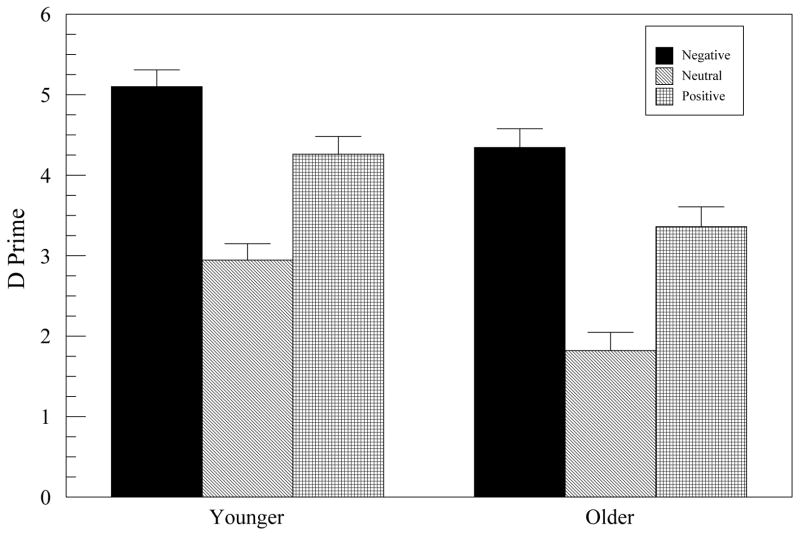
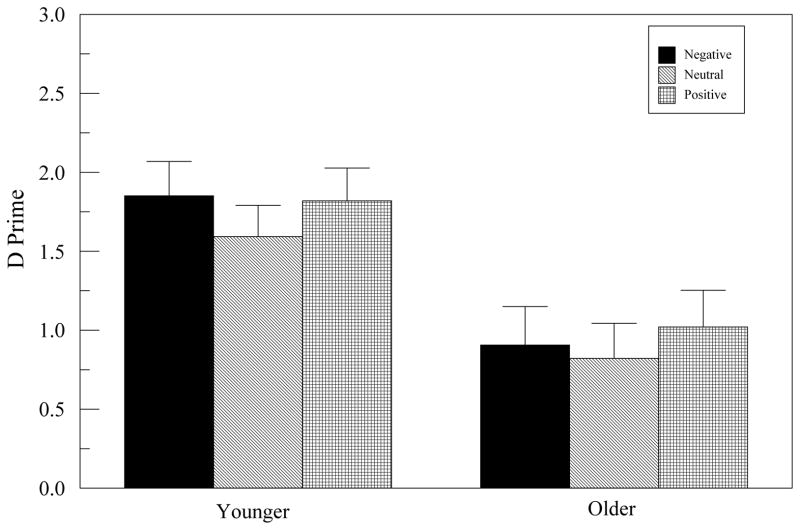
When remembering an event, it is important to remember both the features of the event (e.g., a person and an action) and the connections among features (e.g., who performed which action). Emotion often enhances memory for stimulus features, but the relationship between emotion and the binding of features in memory is unclear. Younger and older adults attempted to remember events in which a person performed a negative, positive or neutral action. Memory for the action was enhanced by emotion, but emotion did not enhance the ability of participants to remember which person performed which action. Older adults were more likely than younger adults to make binding errors in which they incorrectly remembered a familiar actor performing a familiar action that had actually been performed by someone else, and this age-related associative deficit was found for both neutral and emotional actions. Emotion not only increased correct recognition of old events for older and younger adults but also increased false recognition of events in which a familiar actor performed a familiar action that had been performed by someone else. Thus, although emotion may enhance memory for the features of an event, it does not increase the accuracy of remembering who performed which action.
在回忆一件事情时,记住事件的特征(例如,一个人和一个动作)以及特征之间的联系(例如,谁做了哪个动作)很重要。情绪通常会增强对刺激特征的记忆,但情绪与记忆中特征的绑定之间的关系尚不清楚。年轻人和老年人试图回忆一个人做出消极、积极或中性动作的事件。情绪增强了对动作的记忆,但情绪并没有提高参与者记住谁做了哪个动作的能力。老年人比年轻人更容易出现绑定错误,即他们错误地记住一个熟悉的演员做了一个实际上是别人做过的熟悉动作,并且这种与年龄相关的联想缺陷在中性和情绪动作中都存在。情绪不仅增加了老年人和年轻人对旧事件的正确识别,还增加了对熟悉演员做了别人做过的熟悉动作的事件的错误识别。因此,尽管情绪可能会增强对事件特征的记忆,但它不会提高记住谁做了哪个动作的准确性。