Hishikawa Nozomi, Takahashi Yoriko, Amakusa Yoshinobu, Tanno Yuhei, Tuji Yoshitake, Niwa Hisayoshi, Murakami Nobuyuki, Krishna U K
Chief Physician, Department of Neurology, Kariya Toyota General Hospital, Kariya City, Aichi, Japan.
Ayu. 2012 Oct;33(4):499-504. doi: 10.4103/0974-8520.110524.
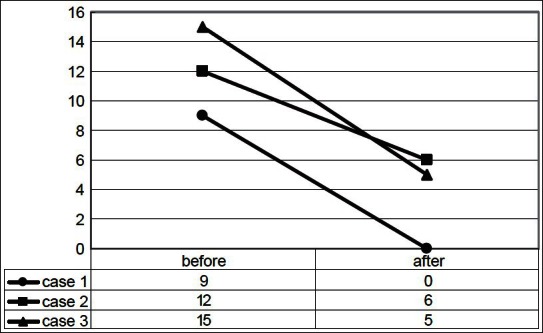
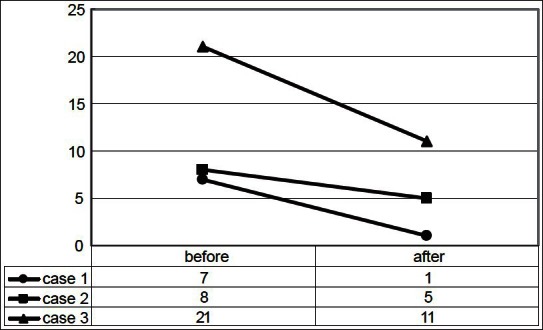
We describe here three patients with the Alzheimer's Disease (AD) whose behavioral symptoms were improved remarkably as a result of the turmeric treatment, which is the traditional Indian medicine. Their cognitive decline and Behavioral and Psychological Symptoms of Dementia (BPSD) were very severe. All three patients exhibited irritability, agitation, anxiety, and apathy, two patients suffer from urinary incontinence and wonderings. They were prescribed turmeric powder capsules and started recovering from these symptoms without any adverse reaction in the clinical symptom and laboratory data. After 12 weeks of the treatment, total score of the Neuro-Psychiatric Inventory-brief questionnaire decreased significantly in both acuity of symptoms and burden of caregivers. In one case, the Mini-Mental State Examination (MMSE) score was up five points, from 12/30 to 17/30. In the other two cases, no significant change was seen in the MMSE; however, they came to recognize their family within 1 year treatment. All cases have been taking turmeric for more than 1 year, re-exacerbation of BPSD was not seen. The present cases suggest a significant improvement of the behavioral symptoms in the AD with the turmeric treatment, leading to probable benefit of the use of turmeric in individuals with the AD with BPSD.
我们在此描述三位阿尔茨海默病(AD)患者,他们的行为症状因采用传统印度药物姜黄治疗而显著改善。他们的认知衰退以及痴呆的行为和心理症状(BPSD)非常严重。所有三位患者均表现出易怒、烦躁、焦虑和冷漠,两位患者存在尿失禁和徘徊症状。他们被开具了姜黄粉胶囊,且在临床症状和实验室数据方面均未出现任何不良反应的情况下开始从这些症状中恢复。治疗12周后,神经精神科问卷简表的总分在症状严重程度和照料者负担方面均显著下降。在一个病例中,简易精神状态检查表(MMSE)评分提高了5分,从12/30升至17/30。在另外两个病例中,MMSE未出现显著变化;然而,他们在1年的治疗期内开始认出自己的家人。所有病例服用姜黄均超过1年,未出现BPSD再次恶化的情况。目前的病例表明,姜黄治疗可显著改善AD患者的行为症状,这可能有益于AD合并BPSD的个体使用姜黄。