Department of Crop Science, Chungnam National University, Daejeon, Republic of Korea.
PLoS One. 2013 May 28;8(5):e64199. doi: 10.1371/journal.pone.0064199. Print 2013.
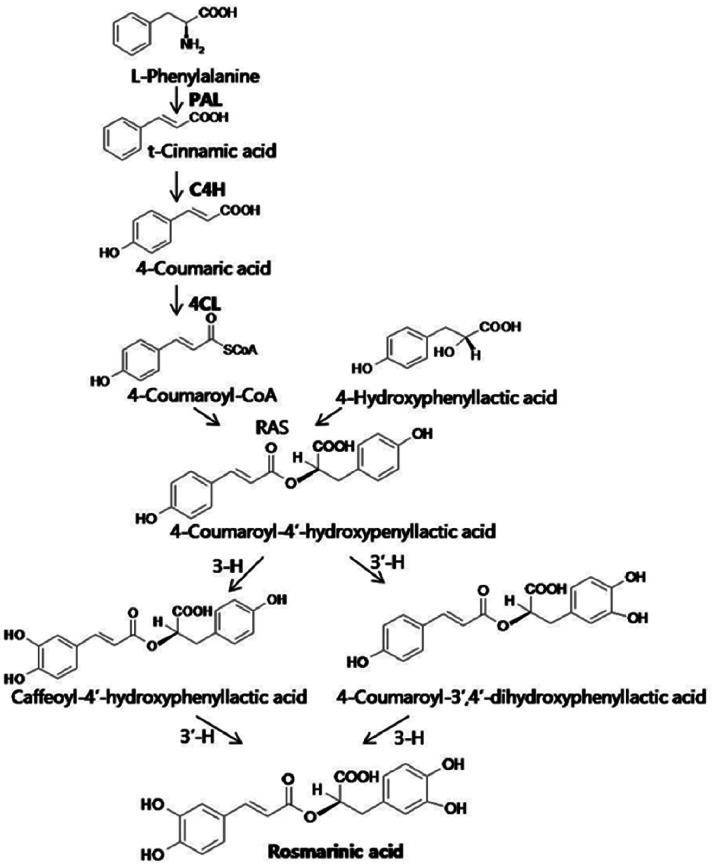
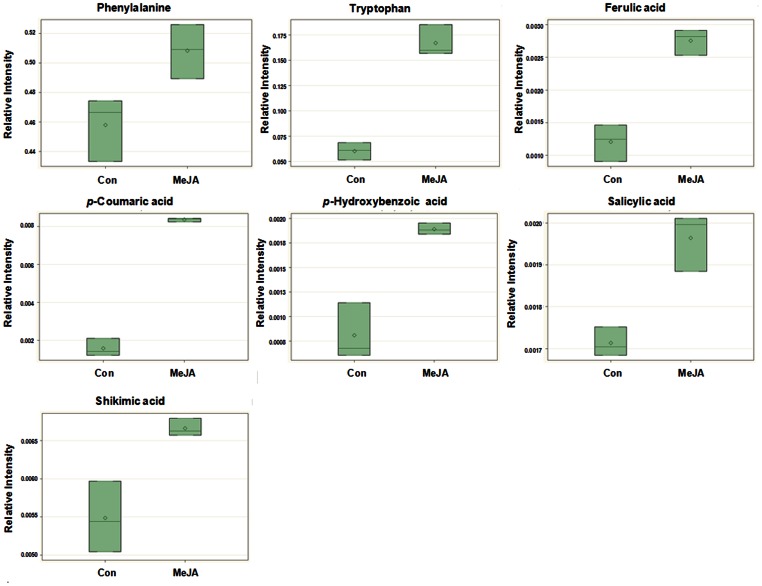
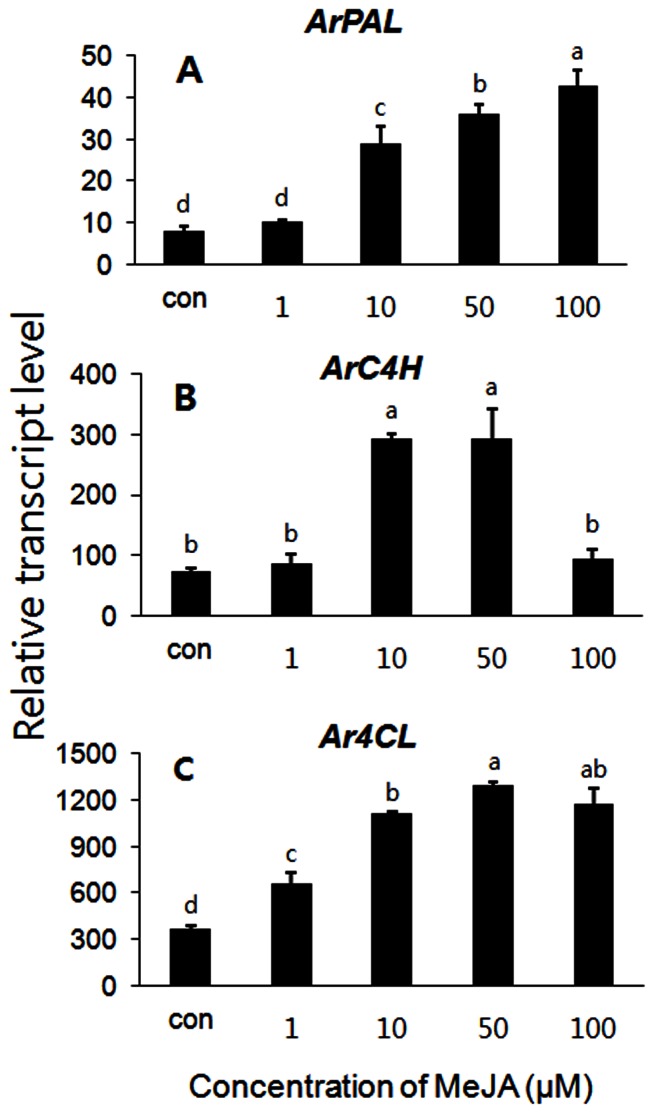
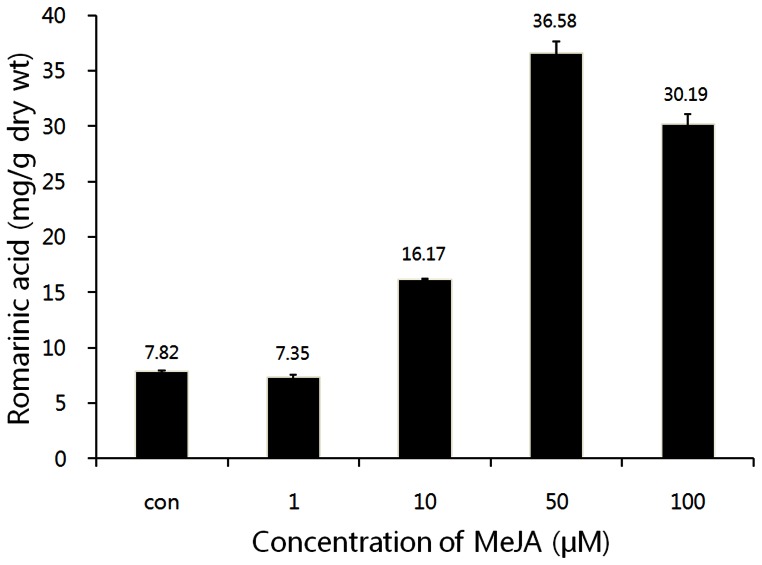
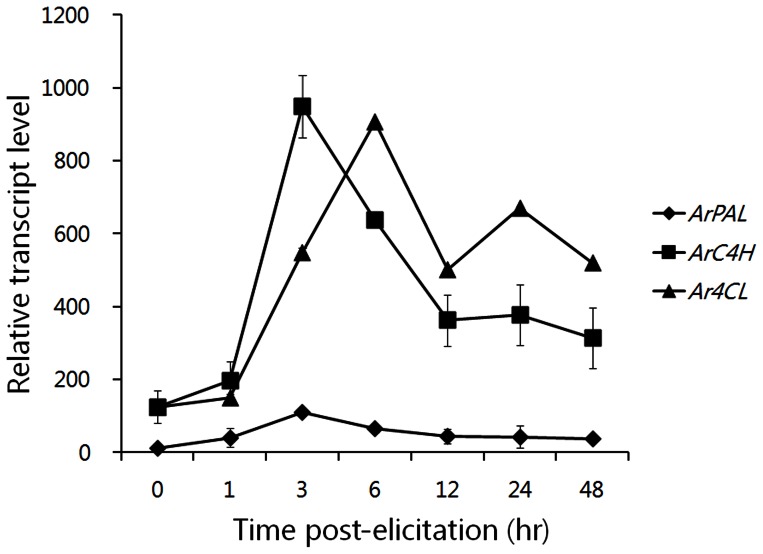
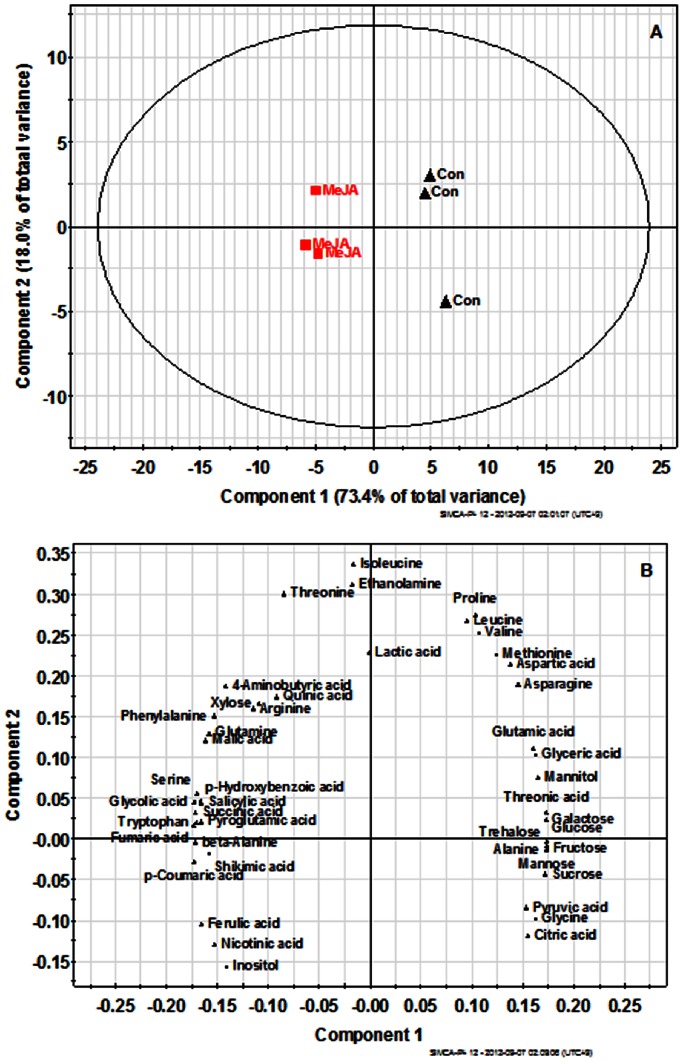
This study investigated the effect of methyl jasmonate (MeJA) on metabolic profiles and rosmarinic acid (RA) biosynthesis in cell cultures of Agastache rugosa Kuntze. Transcript levels of phenylpropanoid biosynthetic genes, i.e., ArPAL, Ar4CL, and ArC4H, maximally increased 4.5-fold, 3.4-fold, and 3.5-fold, respectively, compared with the untreated controls, and the culture contained relatively high amounts of RA after exposure of cells to 50 µM MeJA. RA levels were 2.1-, 4.7-, and 3.9-fold higher after exposure to 10, 50, and 100 µM MeJA, respectively, than those in untreated controls. In addition, the transcript levels of genes attained maximum levels at different time points after the initial exposure. The transcript levels of ArC4H and Ar4CL were transiently induced by MeJA, and reached a maximum of up to 8-fold at 3 hr and 6 hr, respectively. The relationships between primary metabolites and phenolic acids in cell cultures of A. rugosa treated with MeJA were analyzed by gas chromatography coupled with time-of-flight mass spectrometry. In total, 45 metabolites, including 41 primary metabolites and 4 phenolic acids, were identified from A. rugosa. Metabolite profiles were subjected to partial least square-discriminate analysis to evaluate the effects of MeJA. The results indicate that both phenolic acids and precursors for the phenylpropanoid biosynthetic pathway, such as aromatic amino acids and shikimate, were induced as a response to MeJA treatment. Therefore, MeJA appears to have an important impact on RA accumulation, and the increased RA accumulation in the treated cells might be due to activation of the phenylpropanoid genes ArPAL, ArC4H, and Ar4CL.
本研究探讨了茉莉酸甲酯(MeJA)对阿魏酸(RA)生物合成的代谢谱和细胞培养物中 Agastache rugosa Kuntze 的影响。与未经处理的对照相比,苯丙素生物合成基因的转录水平分别最大增加了 4.5 倍、3.4 倍和 3.5 倍,而细胞暴露于 50μM MeJA 后,培养物中含有相对较高量的 RA。暴露于 10、50 和 100μM MeJA 后,RA 水平分别比未经处理的对照高 2.1 倍、4.7 倍和 3.9 倍。此外,基因的转录水平在初始暴露后不同时间点达到最大值。ArC4H 和 Ar4CL 的转录水平被 MeJA 短暂诱导,分别在 3 小时和 6 小时达到最高,高达 8 倍。通过气相色谱与飞行时间质谱联用分析阿魏酸甲酯处理的阿魏酸细胞培养物中初级代谢物与酚酸之间的关系。从阿魏酸中总共鉴定出 45 种代谢物,包括 41 种初级代谢物和 4 种酚酸。代谢物图谱通过偏最小二乘判别分析进行评估,以评估 MeJA 的影响。结果表明,MeJA 处理后,酚酸和苯丙素生物合成途径的前体,如芳香族氨基酸和莽草酸,均被诱导。因此,MeJA 似乎对 RA 积累有重要影响,处理细胞中 RA 积累的增加可能是由于苯丙素基因 ArPAL、ArC4H 和 Ar4CL 的激活。