
利用茉莉酸甲酯处理对伊朗香蜂草生态型中次生代谢产物及迷迭香酸相关关键基因表达模式的影响
Change in Secondary Metabolites and Expression Pattern of Key Rosmarinic Acid Related Genes in Iranian Lemon Balm ( L.) Ecotypes Using Methyl Jasmonate Treatments.
作者信息
Kianersi Farzad, Amin Azarm Davood, Pour-Aboughadareh Alireza, Poczai Peter
机构信息
Department of Agronomy and Plant Breeding, Faculty of Agriculture, Bu-Ali Sina University, Hamedan P.O. Box 6517838695, Iran.
Department of Horticulture Crop Research, Isfahan Agricultural and Natural Resources Research and Education Center, AREEO, Isfahan P.O. Box 81785199, Iran.
出版信息
Molecules. 2022 Mar 6;27(5):1715. doi: 10.3390/molecules27051715.
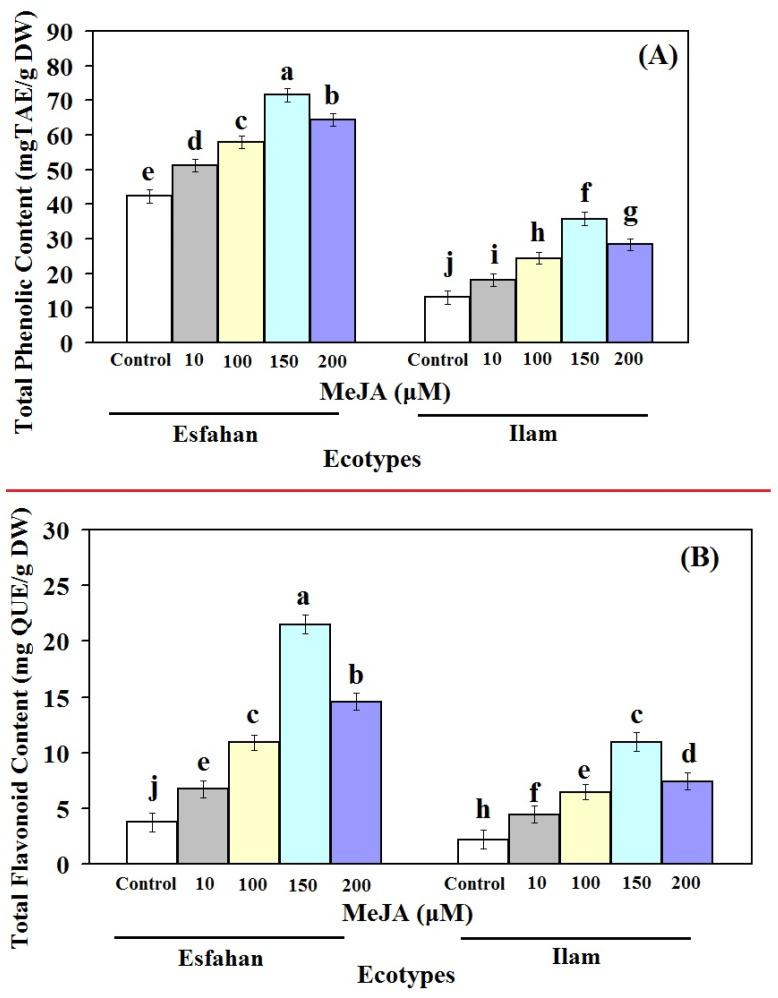
The medicinal herb, lemon balm ( L.), which is high in rosmarinic acid (RA), has well-known therapeutic value. The goals of this study were to investigate the effects of methyl jasmonate (MeJA) on RA content, total phenolic content (TPC), and total flavonoid content (TFC), as well as changes in expression of their biosynthesis-related key genes (, , and ) in Iranian lemon balm ecotypes, as first reported. Our results revealed that MeJA doses significantly increase the RA content, TPC, and TFC in both ecotypes compared with the control samples. Additionally, the higher expression levels of , , and following treatment were linked to RA accumulation in all treatments for both Iranian lemon balm ecotypes. After 24 h of exposure to 150 µM MeJA concentration, HPLC analysis showed that MeJA significantly increased RA content in Esfahan and Ilam ecotypes, which was about 4.18- and 7.43-fold higher than untreated plants. Our findings suggested that MeJA has a considerable influence on RA, TPC, and TFC accumulation in MeJA-treated Iranian , which might be the result of gene activation from the phenylpropanoid pathway. As a result of our findings, we now have a better understanding of the molecular processes behind RA production in lemon balm plants.
药草柠檬香脂(唇形科)富含迷迭香酸(RA),具有众所周知的治疗价值。本研究的目的是首次报道茉莉酸甲酯(MeJA)对伊朗柠檬香脂生态型中RA含量、总酚含量(TPC)和总黄酮含量(TFC)的影响,以及它们生物合成相关关键基因(、和)表达的变化。我们的结果表明,与对照样品相比,MeJA剂量显著增加了两种生态型中的RA含量、TPC和TFC。此外,处理后、和的较高表达水平与两种伊朗柠檬香脂生态型所有处理中的RA积累有关。在暴露于150 µM MeJA浓度24小时后,HPLC分析表明,MeJA显著增加了伊斯法罕和伊拉姆生态型中的RA含量,分别比未处理植物高约4.18倍和7.43倍。我们的研究结果表明,MeJA对经MeJA处理的伊朗柠檬香脂中RA、TPC和TFC的积累有相当大的影响,这可能是苯丙烷途径基因激活的结果。我们的研究结果使我们对柠檬香脂植物中RA产生背后的分子过程有了更好的理解。


 Zotero 插件