Neurochemistry Research Unit Laboratory, Department of Biochemistry, University of Karachi, Karachi, Pakistan.
Clin Proteomics. 2013 Jun 1;10(1):6. doi: 10.1186/1559-0275-10-6.
Complex molecular events lead to development and progression of liver cirrhosis to HCC. Differentially expressed nuclear membrane associated proteins are responsible for the functional and structural alteration during the progression from cirrhosis to carcinoma. Although alterations/ post translational modifications in protein expression have been extensively quantified, complementary analysis of nuclear membrane proteome changes have been limited. Deciphering the molecular mechanism that differentiate between normal and disease state may lead to identification of biomarkers for carcinoma.
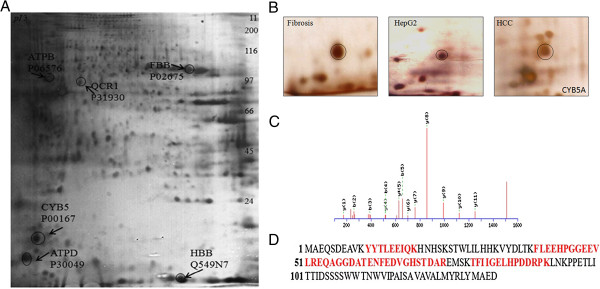
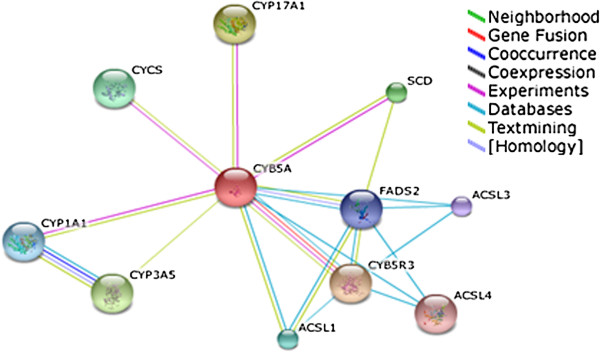
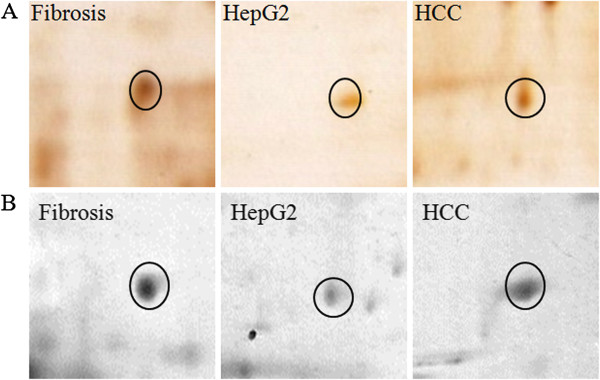
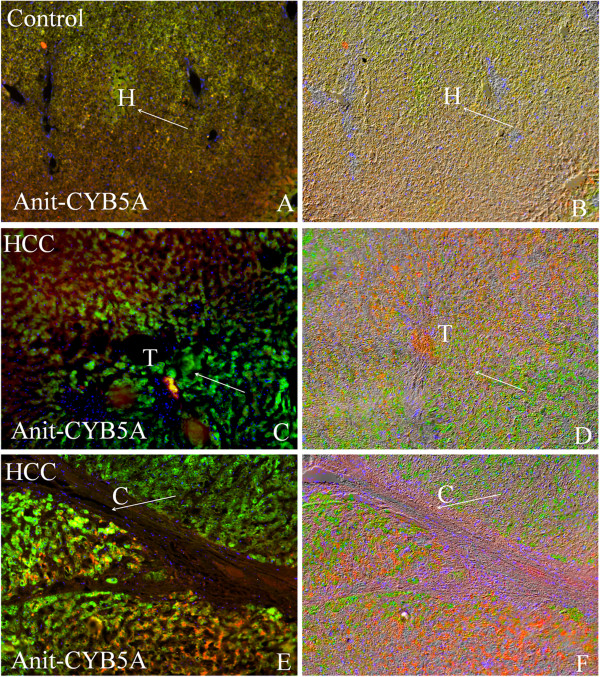
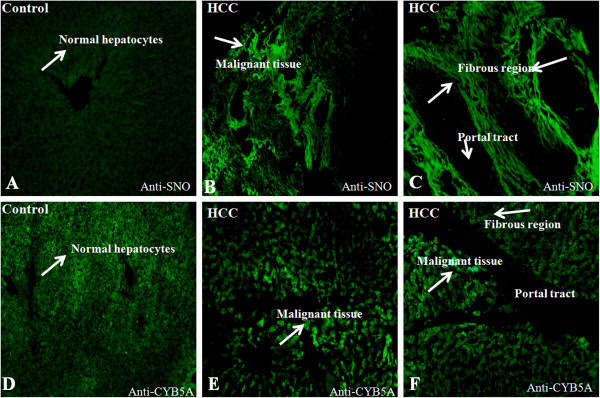
Many proteins displayed differential expression when nuclear membrane proteome of hepatocellular carcinoma (HCC), fibrotic liver, and HepG2 cell line were assessed using 2-DE and ESI-Q-TOF MS/MS. From the down regulated set in HCC, we have identified for the first time a 15 KDa cytochrome b5A (CYB5A), ATP synthase subunit delta (ATPD) and Hemoglobin subunit beta (HBB) with 11, 5 and 22 peptide matches respectively. Furthermore, nitrosylation studies with S-nitrosocysteine followed by immunoblotting with anti SNO-cysteine demonstrated a novel and biologically relevant post translational modification of thiols of CYB5A in HCC specimens only. Immunofluorescence images demonstrated increased protein S-nitrosylation signals in the tumor cells and fibrotic region of HCC tissues. The two other nuclear membrane proteins which were only found to be nitrosylated in case of HCC were up regulated ATP synthase subunit beta (ATPB) and down regulated HBB. The decrease in expression of CYB5A in HCC suggests their possible role in disease progression. Further insight of the functional association of the identified proteins was obtained through KEGG/ REACTOME pathway analysis databases. String 8.3 interaction network shows strong interactions with proteins at high confidence score, which is helpful in characterization of functional abnormalities that may be a causative factor of liver pathology.
These findings may have broader implications for understanding the mechanism of development of carcinoma. However, large scale studies will be required for further verification of their critical role in development and progression of HCC.
复杂的分子事件导致肝硬化向肝癌的发展和进展。核膜相关蛋白的差异表达负责在从肝硬化到癌的进展过程中发生功能和结构改变。尽管已经广泛量化了蛋白质表达的改变/翻译后修饰,但对核膜蛋白质组变化的互补分析却受到限制。阐明区分正常状态和疾病状态的分子机制可能会导致鉴定出癌的生物标志物。
使用 2-DE 和 ESI-Q-TOF MS/MS 评估肝细胞癌 (HCC)、纤维化肝脏和 HepG2 细胞系的核膜蛋白质组时,许多蛋白质显示出差异表达。在 HCC 的下调组中,我们首次鉴定出一种 15 kDa 细胞色素 b5A (CYB5A)、ATP 合酶亚基 delta (ATPD) 和血红蛋白亚基β (HBB),分别有 11、5 和 22 个肽匹配。此外,用 S-亚硝基半胱氨酸进行的亚硝基化研究,随后用抗 SNO-半胱氨酸进行免疫印迹,仅在 HCC 标本中证明了 CYB5A 巯基的一种新的和生物学上相关的翻译后修饰。免疫荧光图像显示 HCC 组织中的肿瘤细胞和纤维化区域的蛋白质 S-亚硝基化信号增加。仅在 HCC 中发现亚硝基化的另外两种核膜蛋白是 ATP 合酶亚基β (ATPB)上调和 HBB 下调。CYB5A 在 HCC 中的表达降低表明它们在疾病进展中可能具有潜在作用。通过 KEGG/REACTOME 途径分析数据库获得了对鉴定出的蛋白质的功能关联的进一步深入了解。String 8.3 相互作用网络显示与高置信度评分的蛋白质具有强烈的相互作用,这有助于表征可能是肝病理学病因的功能异常。
这些发现可能对理解癌发展的机制具有更广泛的意义。然而,需要进行大规模研究以进一步验证它们在 HCC 的发展和进展中的关键作用。