Centre d'Ecologie Fonctionnelle et Evolutive (CEFE), UMR CNRS 5175, Montpellier, France.
Malar J. 2013 Jun 3;12:179. doi: 10.1186/1475-2875-12-179.
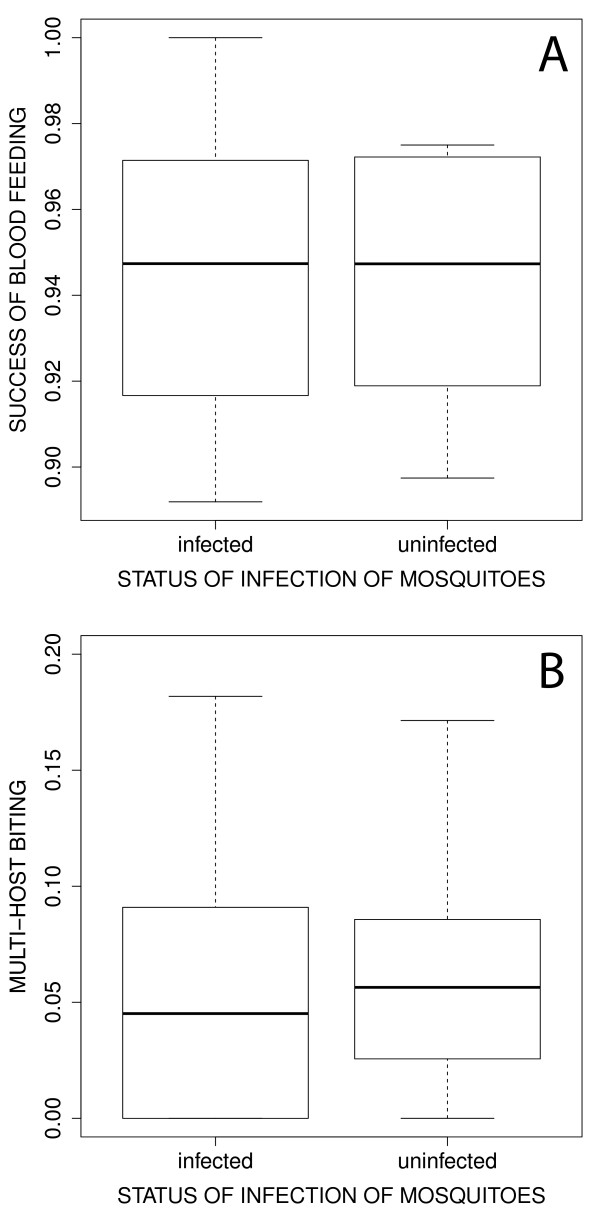
The biting behaviour of mosquitoes is crucial for the transmission of malaria parasites. This study focuses on the feeding behaviour of Culex pipiens mosquitoes with regard to the infection status by the avian malaria parasite Plasmodium relictum (lineage SGS1).
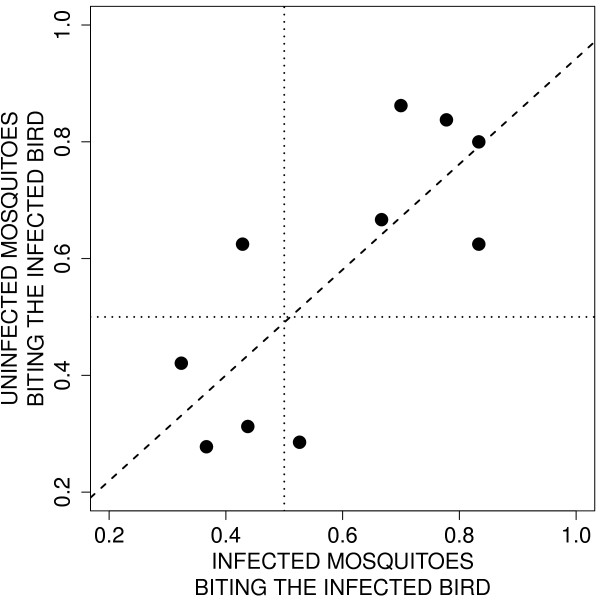
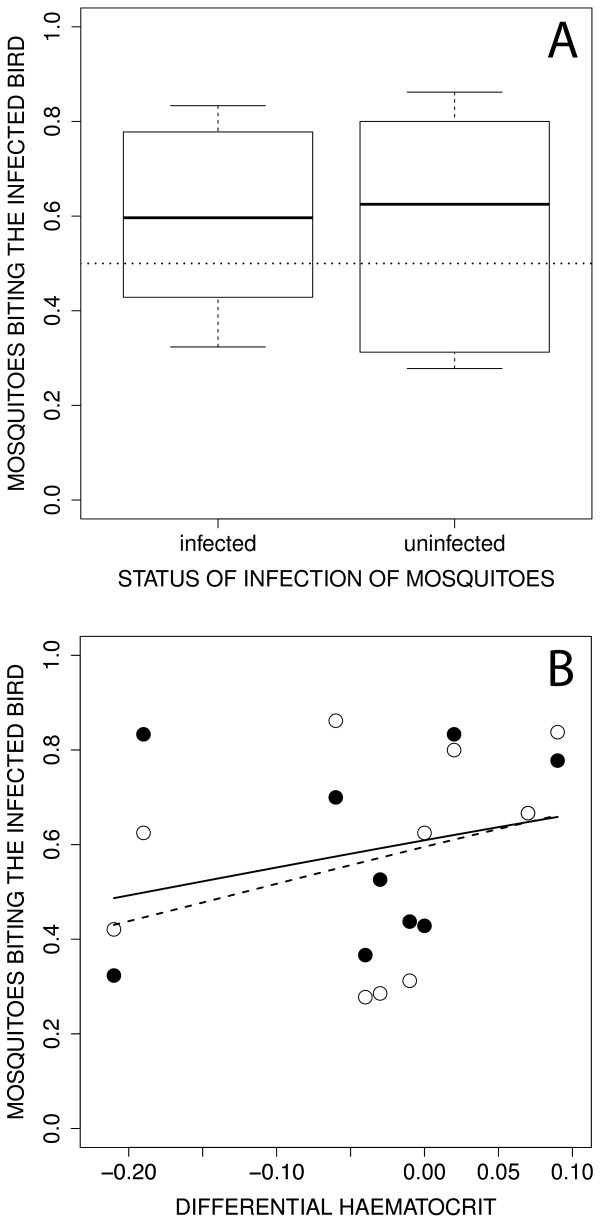
Uninfected and sporozoite-infected mosquitoes were provided with a choice between an uninfected bird and a bird undergoing a chronic P. relictum infection. Mosquito choice is assessed by microsatellite typing of the ingested blood.
Chronically infected birds are more attractive to mosquitoes. This choice is not altered by the infection status of the mosquitoes: both infected and uninfected mosquitoes have similar host choice behaviours and are more attracted towards infected birds.
These results support some, but not all predictions derived from the hypothesis that malaria parasites can manipulate the behaviour of their mosquito vectors to enhance their transmission. The possible mechanisms driving this manipulation, the evolutionary dynamics leading to the modification of the biting behaviour of mosquitoes by Plasmodium sp. as well as the implications for malaria epidemiology are discussed.
蚊子的叮咬行为对于疟疾寄生虫的传播至关重要。本研究关注携带鸟类疟原虫 Plasmodium relictum(SGS1 谱系)感染状态的库蚊的摄食行为。
为未感染和孢子感染的蚊子提供了在未感染的鸟类和正在经历慢性 P. relictum 感染的鸟类之间的选择。通过摄入血液的微卫星分型来评估蚊子的选择。
慢性感染的鸟类对蚊子更具吸引力。这种选择不受蚊子感染状态的影响:感染和未感染的蚊子都有类似的宿主选择行为,并且对感染的鸟类更有吸引力。
这些结果支持了一些但不是全部从疟疾寄生虫可以操纵其蚊子媒介的行为来增强传播的假设中得出的预测。讨论了驱动这种操纵的可能机制、导致疟原虫改变蚊子叮咬行为的进化动态以及对疟疾流行病学的影响。