Department of Dermatology, Kyoto University Graduate School of Medicine, Kyoto, Japan.
Sci Rep. 2013;3:1932. doi: 10.1038/srep01932.
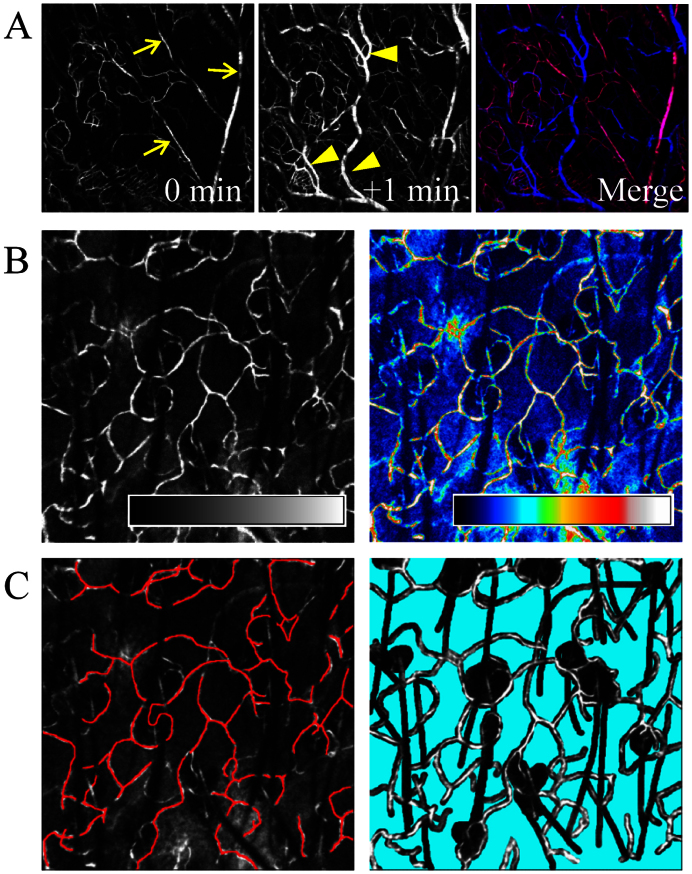
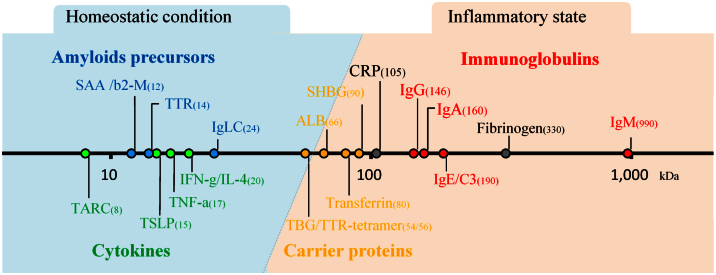
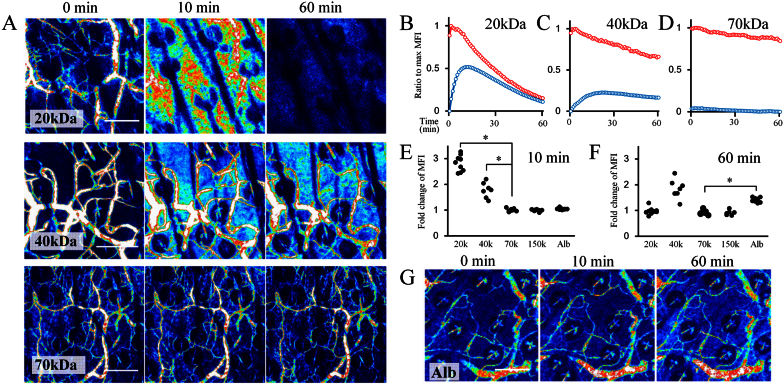
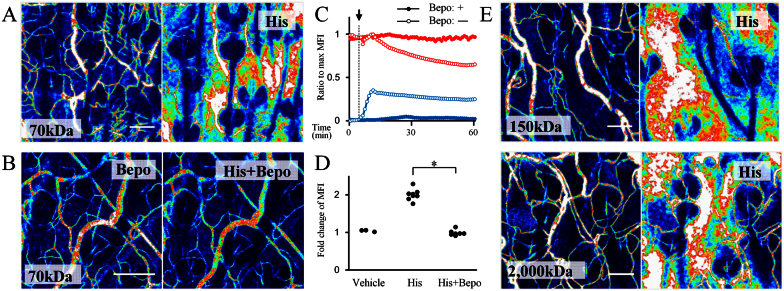
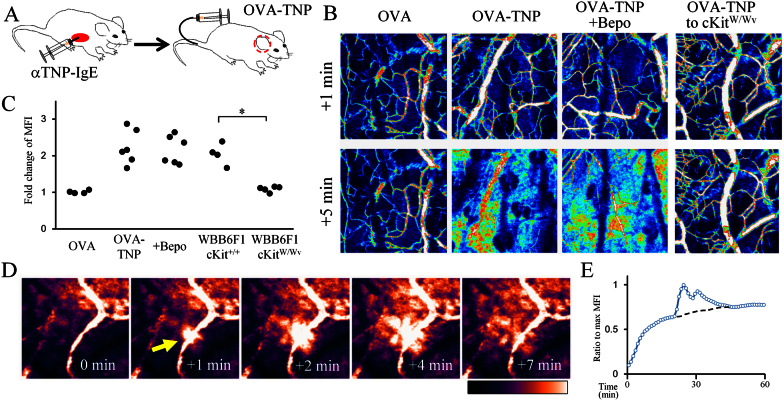
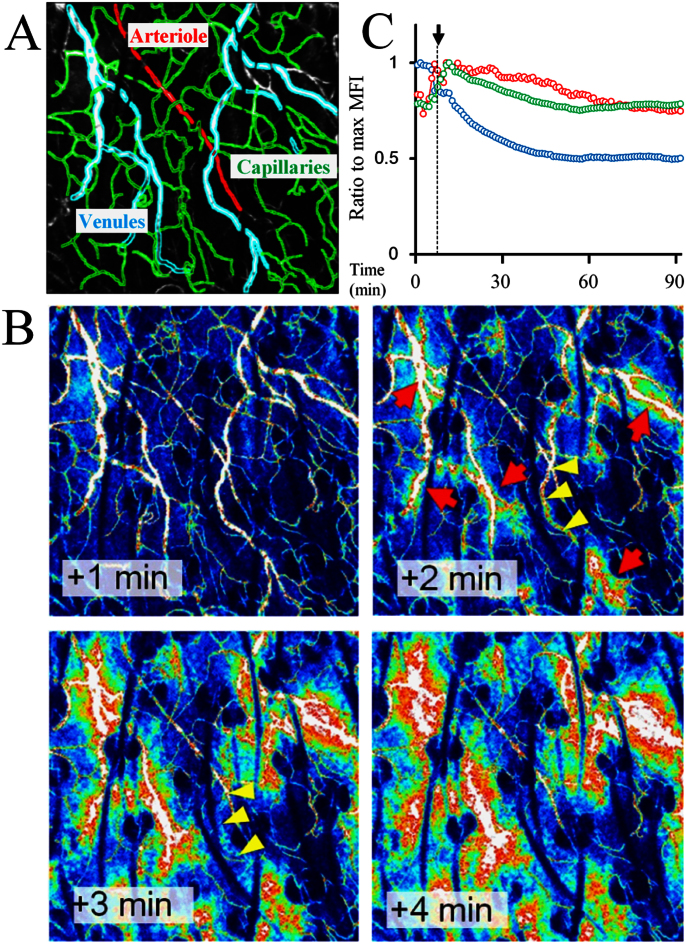
Blood vessel endothelium forms a semi-permeable barrier and its permeability controls the traffics of plasma contents. Here we report an intravital evaluation system for vascular permeability in mice using two-photon microscopy. We used various sizes of fluorescein-conjugated dextran as a tracer and its efflux was quantified by measuring the changes of fluorescent intensity both on the blood vessel area and the interstitial space. Using this system, we demonstrated that skin blood vessels limited the passage of dextran larger than 70 kDa under homeostatic conditions. We evaluated the kinetics of vascular permeability in histamine- or IgE-induced type I allergic models and a hapten-induced type IV allergic model. In such inflammatory conditions, the hyperpermeability was selectively induced in the postcapillary venules and dextran as large as 2000-kDa leaked from the bloods. Taken together, our study provides a convenient method to characterize the skin blood vessels as a traffic barrier in physiological conditions.
血管内皮形成半透性屏障,其通透性控制着血浆成分的运输。在这里,我们报告了一种使用双光子显微镜对小鼠血管通透性进行活体评估的系统。我们使用不同大小的荧光素结合葡聚糖作为示踪剂,并通过测量血管区域和细胞间隙中荧光强度的变化来定量其流出。使用该系统,我们证明在生理条件下,皮肤血管限制了大于 70 kDa 的葡聚糖的通过。我们评估了组胺或 IgE 诱导的 I 型过敏模型和半抗原诱导的 IV 型过敏模型中血管通透性的动力学。在这种炎症条件下,后微静脉选择性地发生高通透性,血液中大至 2000 kDa 的葡聚糖漏出。总之,我们的研究提供了一种方便的方法来描述皮肤血管作为生理条件下的交通屏障的特征。