Department of Kampo Diagnostics, Institute of Natural Medicine, University of Toyama, Toyama 930-0194, Japan ; Department of Biopharmacy, Faculty of Pharmacy, Srinakharinwirot University, Nakhonnayok 26120, Thailand.
Evid Based Complement Alternat Med. 2013;2013:148297. doi: 10.1155/2013/148297. Epub 2013 Apr 22.
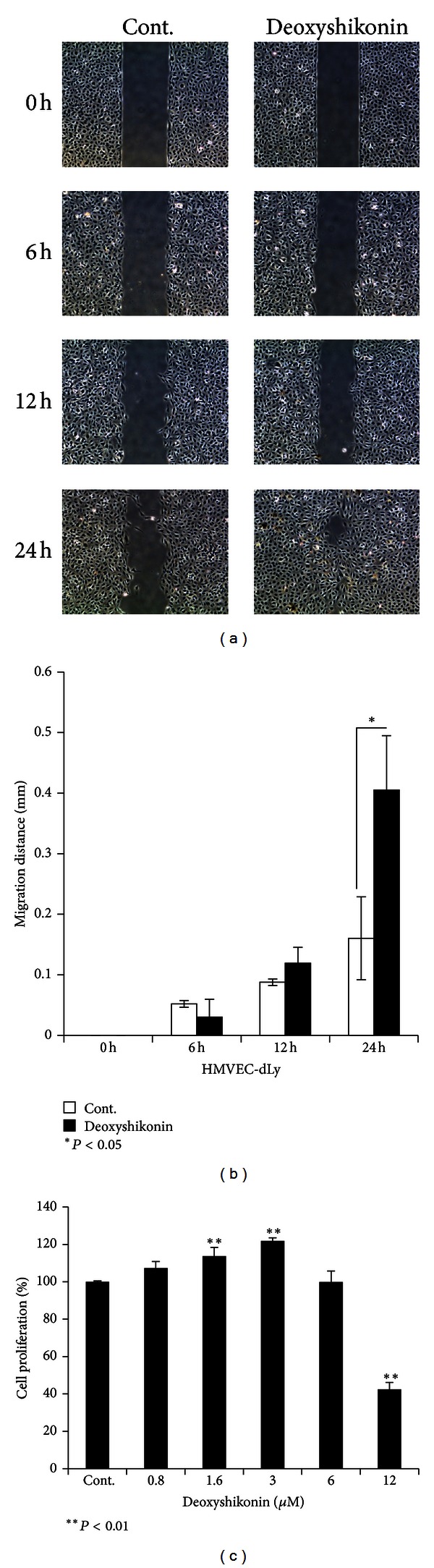
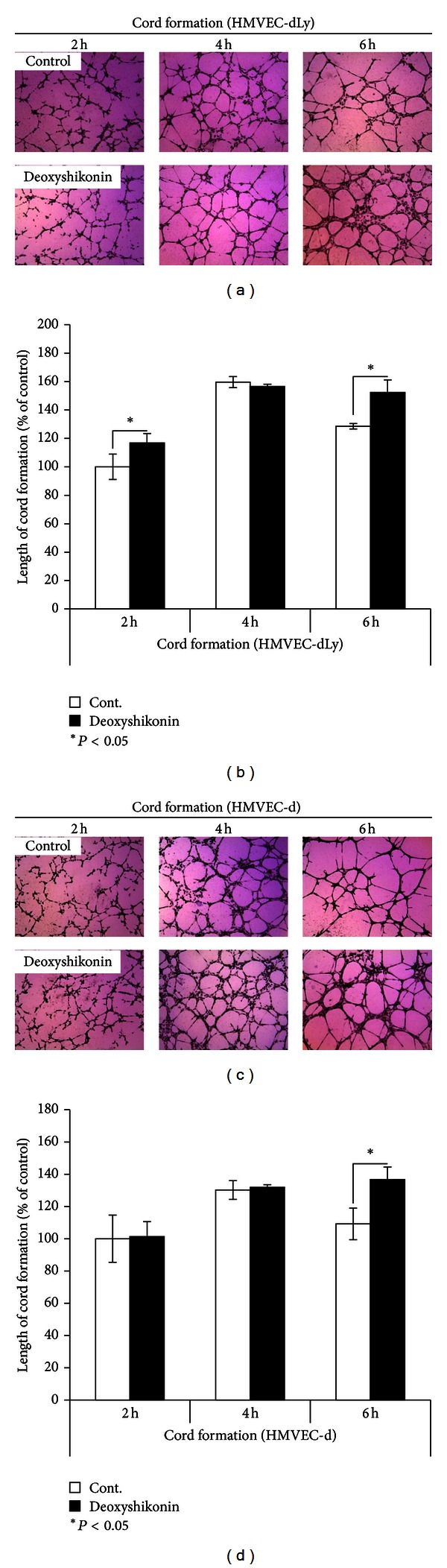
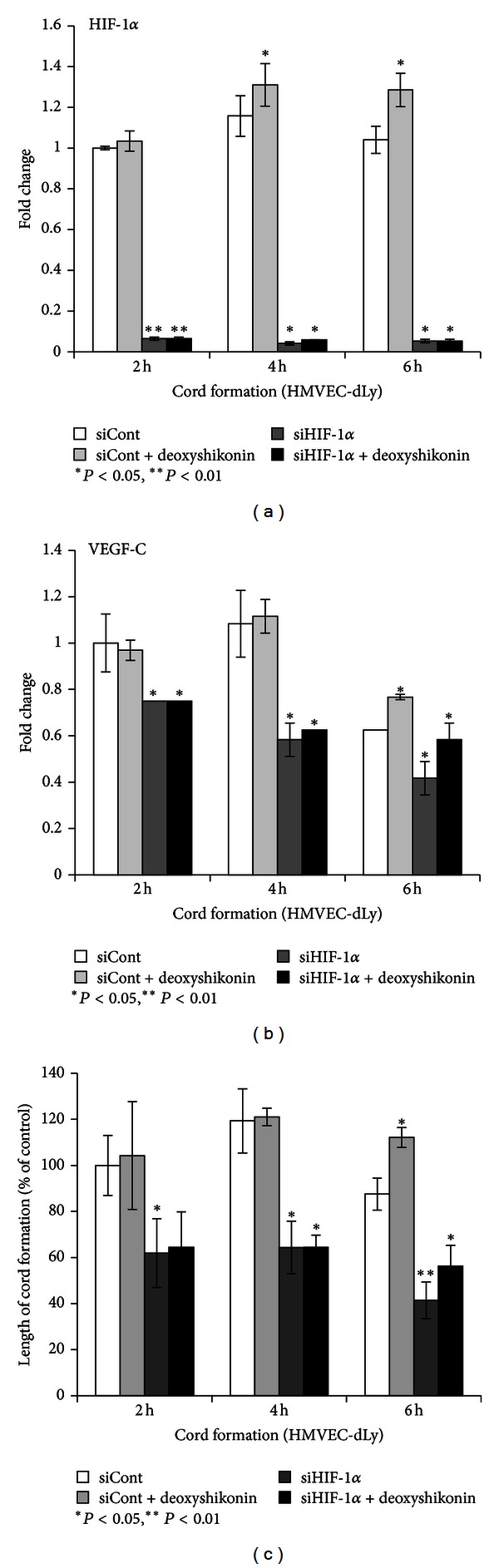
The objectives of this study were to determine the effects of deoxyshikonin on lymphangiogenesis. Deoxyshikonin enhanced the ability of human dermal lymphatic microvascular endothelial cells (HMVEC-dLy) to undergo time-dependent in vitro cord formation. Interestingly, an opposite result was observed in cells treated with shikonin. The increased cord formation ability following deoxyshikonin treatment correlated with increased VEGF-C mRNA expression to higher levels than seen for VEGF-A and VEGF-D mRNA expression. We also found that deoxyshikonin regulated cord formation of HMVEC-dLy by increasing the HIF-1 α mRNA level, HIF-1 α protein level, and the accumulation of HIF-1 α in the nucleus. Knockdown of the HIF-1 α gene by transfection with siHIF-1 α decreased VEGF-C mRNA expression and cord formation ability in HMVEC-dLy. Deoxyshikonin treatment could not recover VEGF-C mRNA expression and cord formation ability in HIF-1 α knockdown cells. This indicated that deoxyshikonin induction of VEGF-C mRNA expression and cord formation in HMVEC-dLy on Matrigel occurred mainly via HIF-1 α regulation. We also found that deoxyshikonin promoted wound healing in vitro by the induction of HMVEC-dLy migration into the wound gap. This study describes a new effect of deoxyshikonin, namely, the promotion of cord formation by human endothelial cells via the regulation of HIF-1 α . The findings suggest that deoxyshikonin may be a new drug candidate for wound healing and treatment of lymphatic diseases.
本研究旨在探讨去氧鬼臼毒素对淋巴管生成的影响。去氧鬼臼毒素可增强人真皮淋巴微血管内皮细胞(HMVEC-dLy)体外呈时间依赖性的管样结构形成能力。有趣的是,在用鬼臼毒素处理的细胞中观察到相反的结果。与 VEGF-A 和 VEGF-D mRNA 表达相比,去氧鬼臼毒素处理后细胞的管样结构形成能力增强,与 VEGF-C mRNA 表达增加相关。我们还发现,去氧鬼臼毒素通过增加 HIF-1αmRNA 水平、HIF-1α蛋白水平和 HIF-1α在核内的积累来调节 HMVEC-dLy 的管样结构形成。用 siHIF-1α 转染敲低 HIF-1α 基因可降低 HMVEC-dLy 中的 VEGF-C mRNA 表达和管样结构形成能力。去氧鬼臼毒素处理不能恢复 HIF-1α 敲低细胞中的 VEGF-C mRNA 表达和管样结构形成能力。这表明去氧鬼臼毒素在 Matrigel 上诱导 HMVEC-dLy 的 VEGF-C mRNA 表达和管样结构形成主要通过 HIF-1α 调节。我们还发现,去氧鬼臼毒素通过诱导 HMVEC-dLy 迁移到伤口间隙来促进体外伤口愈合。本研究描述了去氧鬼臼毒素的一种新作用,即通过调节 HIF-1α促进人内皮细胞的管样结构形成。研究结果表明,去氧鬼臼毒素可能是一种新的用于伤口愈合和治疗淋巴疾病的药物候选物。