Turan Janet M, Hatcher Abigail M, Odero Merab, Onono Maricianah, Kodero Jannes, Romito Patrizia, Mangone Emily, Bukusi Elizabeth A
Department of Health Care Organization and Policy, School of Public Health, University of Alabama at Birmingham, Birmingham, AL 35294, USA.
AIDS Res Treat. 2013;2013:736926. doi: 10.1155/2013/736926. Epub 2013 Apr 29.
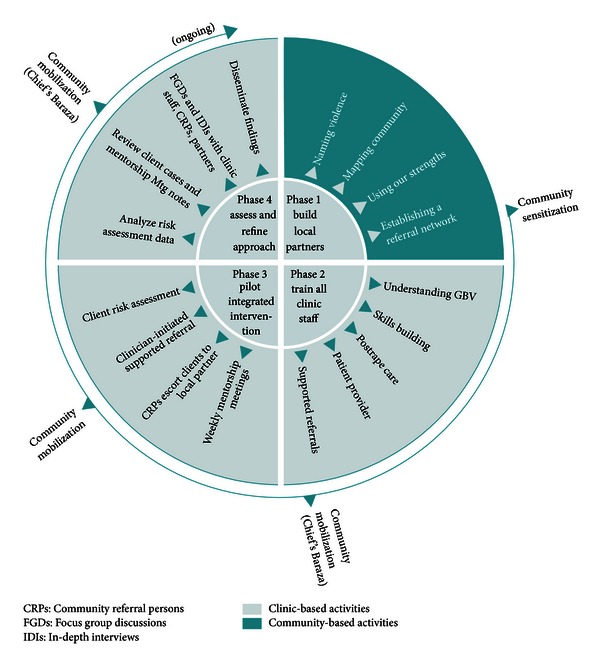
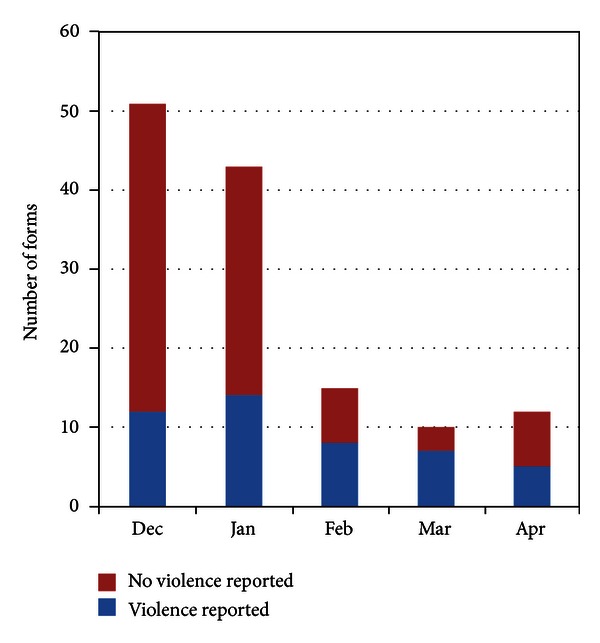
Objective. Pregnant women are especially vulnerable to adverse outcomes related to HIV infection and gender-based violence (GBV). We aimed at developing a program for prevention and mitigation of the effects of GBV among pregnant women at an antenatal clinic in rural Kenya. Methods. Based on formative research with pregnant women, male partners, and service providers, we developed a GBV program including comprehensive clinic training, risk assessments in the clinic, referrals supported by community volunteers, and community mobilization. To evaluate the program, we analyzed data from risk assessment forms and conducted focus groups (n = 2 groups) and in-depth interviews (n = 25) with healthcare workers and community members. Results. A total of 134 pregnant women were assessed during a 5-month period: 49 (37%) reported violence and of those 53% accepted referrals to local support resources. Qualitative findings suggested that the program was acceptable and feasible, as it aided pregnant women in accessing GBV services and raised awareness of GBV. Community collaboration was crucial in this low-resource setting. Conclusion. Integrating GBV programs into rural antenatal clinics has potential to contribute to both primary and secondary GBV prevention. Following further evaluation, this model may be deemed applicable for rural communities in Kenya and elsewhere in East Africa.
目的。孕妇特别容易受到与艾滋病毒感染和性别暴力(GBV)相关的不良后果影响。我们旨在为肯尼亚农村一家产前诊所的孕妇制定一项预防和减轻性别暴力影响的计划。方法。基于对孕妇、男性伴侣和服务提供者的形成性研究,我们制定了一项性别暴力计划,包括全面的诊所培训、诊所内的风险评估、由社区志愿者支持的转诊以及社区动员。为了评估该计划,我们分析了风险评估表中的数据,并对医护人员和社区成员进行了焦点小组访谈(n = 2组)和深入访谈(n = 25)。结果。在5个月的时间里,共对134名孕妇进行了评估:49名(37%)报告遭受暴力,其中53%接受了转介到当地支持资源的服务。定性研究结果表明,该计划是可接受且可行的,因为它帮助孕妇获得性别暴力服务并提高了对性别暴力的认识。在这种资源匮乏的环境中,社区合作至关重要。结论。将性别暴力计划纳入农村产前诊所有可能有助于初级和二级性别暴力预防。经过进一步评估后,该模式可能被认为适用于肯尼亚及东非其他地区的农村社区。