Gender Violence and Health Centre, London School of Hygiene and Tropical Medicine, 15-17 Tavistock Place, London, WC1H 9SH, UK.
Trials. 2012 Jun 29;13:96. doi: 10.1186/1745-6215-13-96.
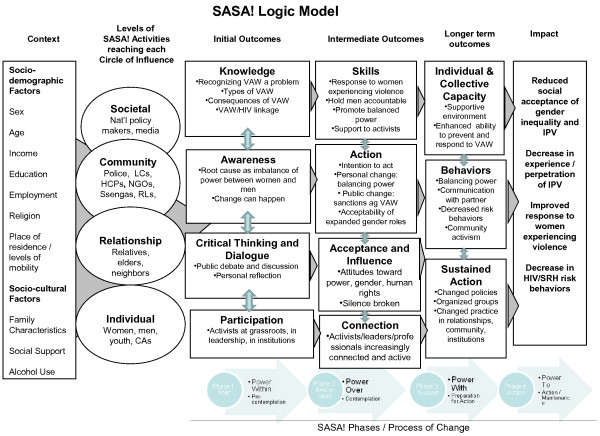
Gender based violence, including violence by an intimate partner, is a major global human rights and public health problem, with important connections with HIV risk. Indeed, the elimination of sexual and gender based violence is a core pillar of HIV prevention for UNAIDS. Integrated strategies to address the gender norms, relations and inequities that underlie both violence against women and HIV/AIDS are needed. However there is limited evidence about the potential impact of different intervention models. This protocol describes the SASA!
an evaluation of a community mobilisation intervention to prevent violence against women and reduce HIV/AIDS risk in Kampala, Uganda.
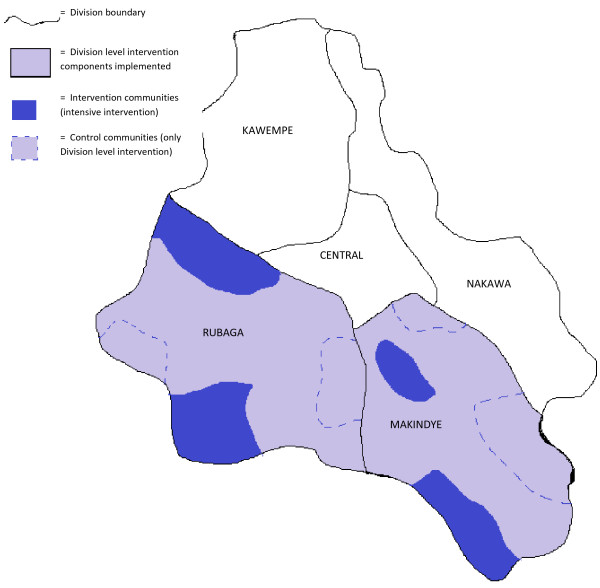
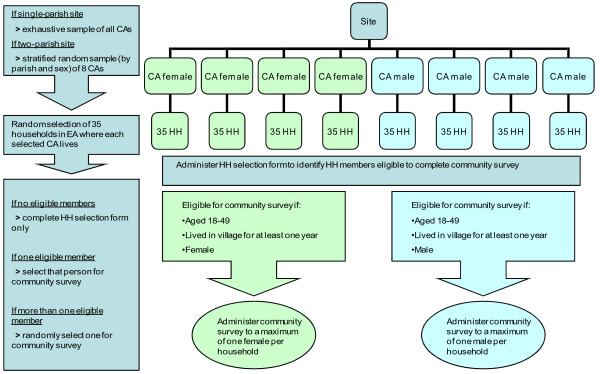
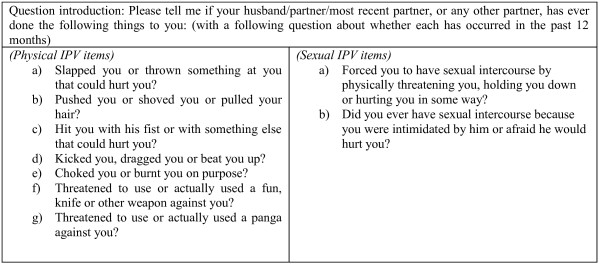
METHODS/DESIGN: The SASA! STUDY is a pair-matched cluster randomised controlled trial being conducted in eight communities in Kampala. It is designed to assess the community-level impact of the SASA! intervention on the following six primary outcomes: attitudes towards the acceptability of violence against women and the acceptability of a woman refusing sex (among male and female community members); past year experience of physical intimate partner violence and sexual intimate partner violence (among females); community responses to women experiencing violence (among women reporting past year physical/sexual partner violence); and past year concurrency of sexual partners (among males). 1583 women and men (aged 18-49 years) were surveyed in intervention and control communities prior to intervention implementation in 2007/8. A follow-up cross-sectional survey of community members will take place in 2012. The primary analysis will be an adjusted cluster-level intention to treat analysis, comparing outcomes in intervention and control communities at follow-up. Complementary monitoring and evaluation and qualitative research will be used to explore and describe the process of intervention implementation and the pathways through which change is achieved.
This is one of few cluster randomised trials globally to assess the impact of a gender-focused community mobilisation intervention. The multi-disciplinary research approach will enable us to address questions of intervention impact and mechanisms of action, as well as its feasibility, acceptability and transferability to other contexts. The results will be of importance to researchers, policy makers and those working on the front line to prevent violence against women and HIV.
ClinicalTrials.Gov NCT00790959.
性别暴力,包括亲密伴侣的暴力行为,是一个严重的全球人权和公共卫生问题,与艾滋病毒风险有重要联系。事实上,消除性暴力和性别暴力是艾滋病规划署艾滋病毒预防的核心支柱。需要采取综合战略来解决性别规范、关系和不平等问题,这些问题是暴力侵害妇女和艾滋病毒/艾滋病的基础。然而,关于不同干预模式潜在影响的证据有限。本方案描述了 SASA!
在乌干达坎帕拉评估一项动员社区干预措施,以预防暴力侵害妇女和减少艾滋病毒/艾滋病风险。
方法/设计:SASA!研究是在坎帕拉的八个社区中进行的配对集群随机对照试验。它旨在评估 SASA!干预对以下六个主要结果的社区层面影响:对暴力侵害妇女行为可接受性和妇女拒绝性行为可接受性的态度(在男性和女性社区成员中);过去一年中身体亲密伴侣暴力和性亲密伴侣暴力的经历(在女性中);社区对经历暴力的妇女的反应(在过去一年中报告身体/性伴侣暴力的妇女中);以及过去一年中性伴侣的并发情况(在男性中)。2007/8 年干预实施前,在干预和对照社区中对 1583 名 18-49 岁的男女进行了调查。2012 年将对社区成员进行一次后续横断面调查。主要分析将是调整后的集群水平意向治疗分析,比较干预和对照社区在随访时的结果。将使用补充监测和评价以及定性研究来探索和描述干预实施的过程以及实现变革的途径。
这是全球为数不多的评估以性别为重点的社区动员干预措施影响的集群随机试验之一。多学科研究方法将使我们能够解决干预影响和作用机制的问题,以及其可行性、可接受性和在其他情况下的可转移性。结果对研究人员、政策制定者和在预防暴力侵害妇女和艾滋病毒的第一线工作的人将非常重要。
ClinicalTrials.Gov NCT00790959。