Division of Infectious Diseases, Duke University School of Medicine, Durham, NC, USA.
Malar J. 2013 Jun 5;12:186. doi: 10.1186/1475-2875-12-186.
Households in sub-Saharan Africa are highly reliant on the retail sector for obtaining treatment for malaria fevers and other illnesses. As donors and governments seek to promote the use of artemisinin combination therapy in malaria-endemic areas through subsidized anti-malarials offered in the retail sector, understanding the stocking and pricing decisions of retail outlets is vital.
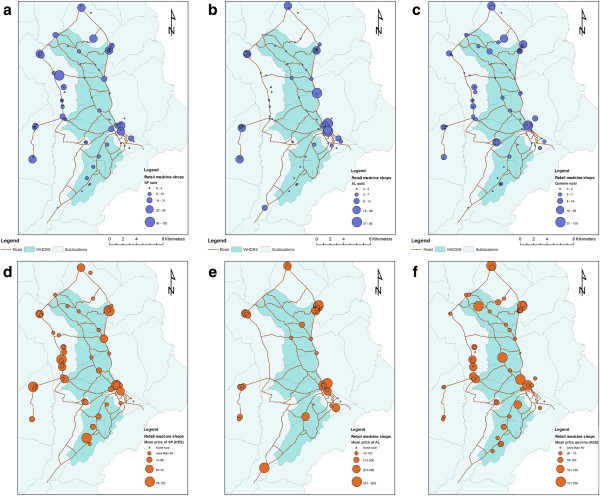
A survey of all medicine retailers serving Bungoma East District in western Kenya was conducted three months after the launch of the AMFm subsidy in Kenya. The survey obtained information on each anti-malarial in stock: brand name, price, sales volume, outlet characteristics and GPS co-ordinates. These data were matched to household-level data from the Webuye Health and Demographic Surveillance System, from which population density and fever prevalence near each shop were determined. Regression analysis was used to identify the factors associated with retailers' likelihood of stocking subsidized artemether lumefantrine (AL) and the association between price and sales for AL, quinine and sulphadoxine-pyrimethamine (SP).
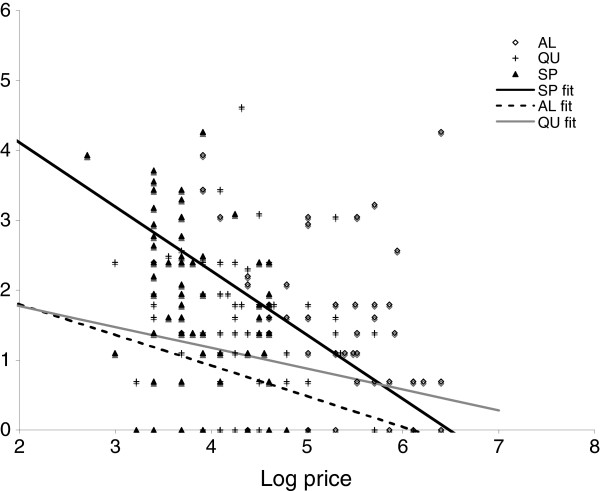
Ninety-seven retail outlets in the study area were surveyed; 11% of outlets stocked subsidized AL. Size of the outlet and having a pharmacist on staff were associated with greater likelihood of stocking subsidized AL. In the multivariable model, total volume of anti-malarial sales was associated with greater likelihood of stocking subsidized AL and competition was important; likelihood of stocking subsidized AL was considerably higher if the nearest neighbour stocked subsidized AL. Price was a significant predictor of sales volume for all three types of anti-malarials but the relationship varied, with the largest price sensitivity found for SP drugs.
The results suggest that helping small outlets overcome the constraints to stocking subsidized AL should be a priority. Competition between retailers and prices can play an important role in greater adoption of AL.
撒哈拉以南非洲的家庭高度依赖零售部门来购买治疗疟疾发热和其他疾病的药物。随着捐助者和政府寻求通过在零售部门提供补贴的抗疟药物来促进在疟疾流行地区使用青蒿素联合疗法,了解零售店的库存和定价决策至关重要。
在肯尼亚推出 AMFm 补贴三个月后,对服务于肯尼亚西部邦加罗东地区的所有药品零售商进行了调查。该调查获取了库存中每一种抗疟药物的信息:品牌名称、价格、销售量、网点特征和 GPS 坐标。这些数据与 Webuye 健康和人口监测系统的家庭层面数据相匹配,从中确定了每个商店附近的人口密度和发热流行率。回归分析用于确定与零售商储备补贴青蒿素-甲氟喹(AL)的可能性相关的因素,以及价格和 AL、奎宁和磺胺多辛-乙胺嘧啶(SP)销售之间的关联。
在所研究的地区,有 97 家零售网点接受了调查;11%的网点储备了补贴的 AL。网点规模和配备药剂师与储备补贴 AL 的可能性更大相关。在多变量模型中,抗疟药物总销售量与储备补贴 AL 的可能性更大相关,竞争也很重要;如果最近的邻居储备补贴 AL,则储备补贴 AL 的可能性要高得多。价格是所有三种抗疟药物销售量的重要预测指标,但关系不同,SP 药物的价格敏感度最大。
结果表明,帮助小网点克服储备补贴 AL 的限制应该是优先事项。零售商之间的竞争和价格可以在更大程度上采用 AL 方面发挥重要作用。