Kim Ryang, Okuno Hiroyuki, Bito Haruhiko
Department of Neurochemistry; The University of Tokyo Graduate School of Medicine; Bunkyo-ku, Tokyo Japan.
Commun Integr Biol. 2012 Sep 1;5(5):496-8. doi: 10.4161/cib.20853.
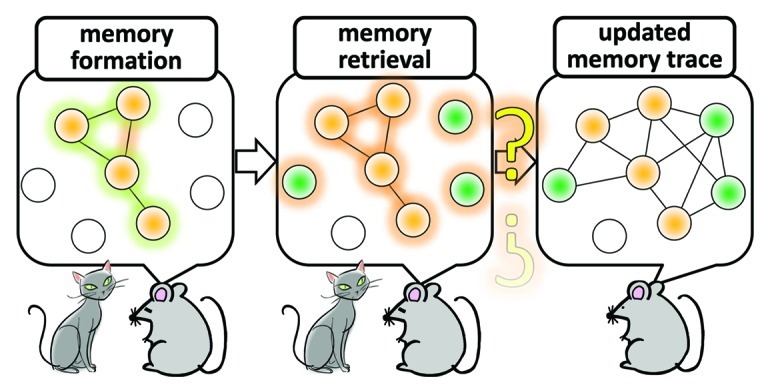
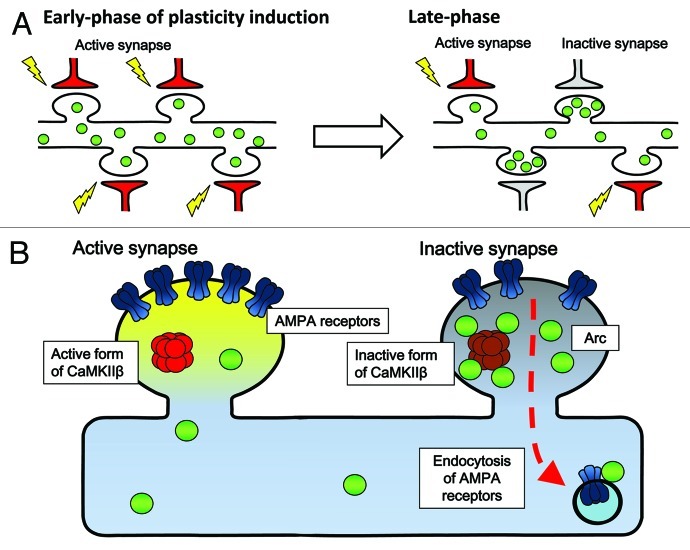
Neurons express new gene transcripts and proteins upon receiving synaptic inputs, and these events are essential for achieving proper neuronal wiring, adequate synaptic plasticity, and updatable memory. However, the biological impact of new gene expression on input-specific synaptic potentiation remains largely elusive, in part because the cell biological and biochemical mechanisms for synaptic targeting of newly synthesized proteins has remained obscure. A new study investigating the targeting of the memory related protein Arc from the soma to the synapses teases apart a novel "inverse" synaptic tagging mechanism that enables Arc to specifically target the un-potentiated synapses, thereby helping to maintain the contrast of synaptic weight between strengthened and weak synapses.
神经元在接收到突触输入后会表达新的基因转录本和蛋白质,这些事件对于实现正确的神经元连接、充分的突触可塑性和可更新的记忆至关重要。然而,新基因表达对输入特异性突触增强的生物学影响在很大程度上仍不清楚,部分原因是新合成蛋白质的突触靶向的细胞生物学和生化机制一直不明确。一项关于记忆相关蛋白Arc从胞体到突触靶向的新研究揭示了一种新型的“反向”突触标记机制,该机制使Arc能够特异性地靶向未增强的突触,从而有助于维持增强突触和弱突触之间突触权重的差异。