School of Public Health, University of São Paulo, Brazil.
Braz J Otorhinolaryngol. 2013 May-Jun;79(3):375-81. doi: 10.5935/1808-8694.20130066.
The use of cochlear implant (CI) in children enables the development of listening and communication skills, allowing the child's progress in school and to be able to obtain, maintain and carry out an occupation. However, the progress after the CI has different results in some children, because many children are able to interact and participate in society, while others develop limited ability to communicate verbally. The need for a better understanding of CI outcomes, besides hearing and language benefits, has spurred the inclusion of quality of life measurements (QOL) to assess the impact of this technology.
Identify the key aspects of quality of life assessed in children with cochlear implant.
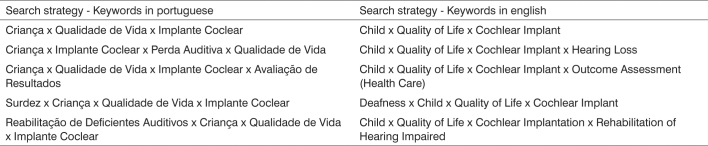
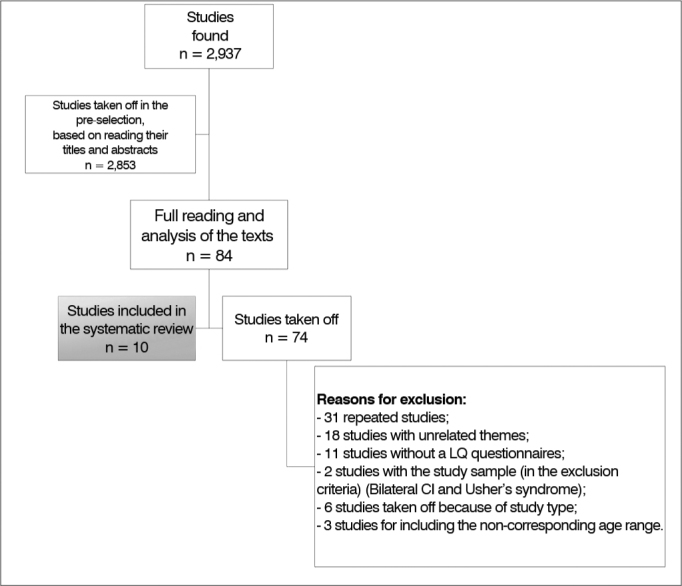
Through a systematic literature review, we considered publications from the period of 2000 to 2011.
We concluded that QOL measurements in children include several concepts and methodologies. When referring to children using CI, results showed the challenges in broadly conceptualizing which quality of life domains are important to the child and how these areas can evolve during development, considering the wide variety of instruments and aspects evaluated.
在儿童中使用人工耳蜗(CI)可以使听力和交流技能的发展成为可能,使儿童在学校中取得进步,并能够获得、维持和从事职业。然而,在某些儿童中,CI 后的进展结果不同,因为许多儿童能够进行互动并参与社会活动,而其他儿童的语言交流能力则发展有限。为了更好地了解 CI 的结果,除了听力和语言方面的好处外,还促使人们纳入生活质量(QOL)测量来评估这项技术的影响。
确定人工耳蜗植入儿童评估的生活质量的关键方面。
通过系统的文献回顾,我们考虑了 2000 年至 2011 年期间的出版物。
我们的结论是,儿童的 QOL 测量包括几个概念和方法。在涉及使用 CI 的儿童时,结果表明,广泛概念化对儿童重要的生活质量领域以及如何在发展过程中演变这些领域是具有挑战性的,同时考虑到评估的仪器和方面的多样性。