McHugh Kevin J, Saint-Geniez Magali, Tao Sarah L
The Charles Stark Draper Laboratory, Cambridge, Massachusetts; Schepens Eye Research Institute, Boston, Massachusetts; Department of Biomedical Engineering, Boston University, Boston, Massachusetts.
J Biomed Mater Res B Appl Biomater. 2013 Nov;101(8):1571-84. doi: 10.1002/jbm.b.32968. Epub 2013 Jun 7.
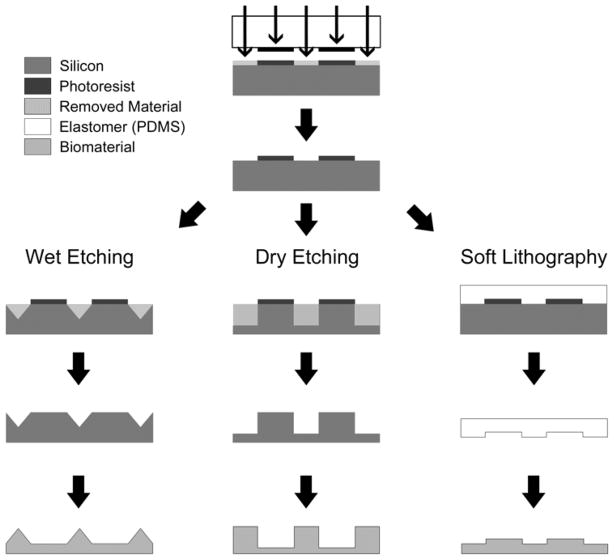
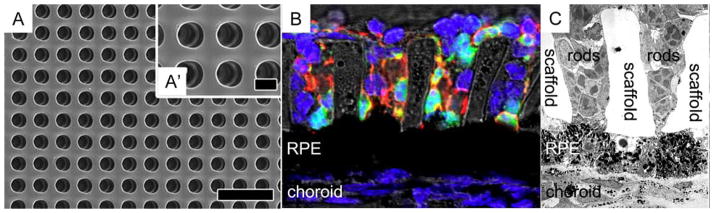
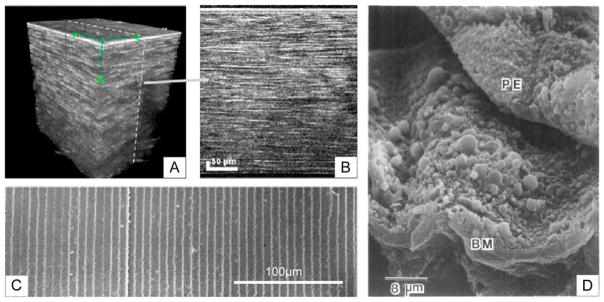
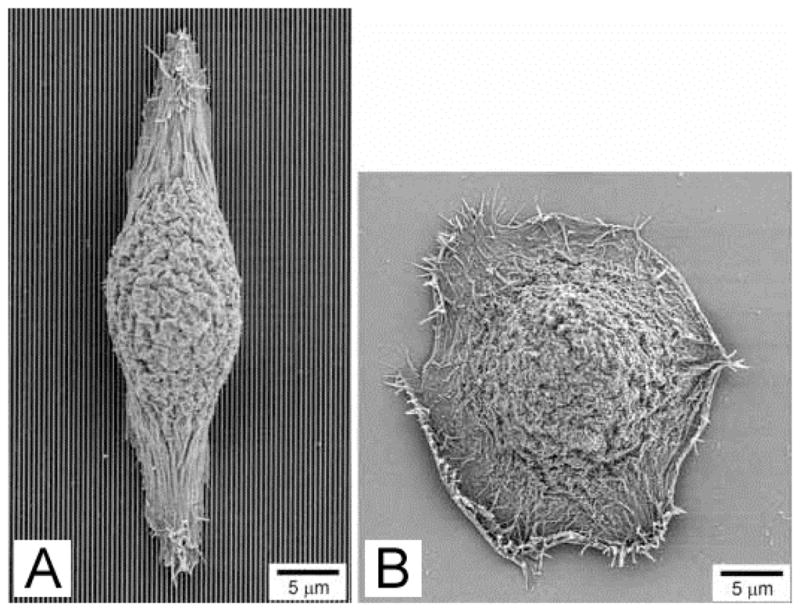
Visual impairment affects over 285 million people worldwide and has a major impact on an individual's quality of life. Tissue engineering has the potential to increase the quality of life for many of these patients by preventing vision loss or restoring vision using cell-based therapies. However, these strategies will require an understanding of the microenvironmental factors that influence cell behavior. The eye is a well-organized organ whose structural complexity is essential for proper function. Interactions between ocular cells and their highly ordered extracellular matrix are necessary for maintaining key tissue properties including corneal transparency and retinal lamination. Therefore, it is not surprising that culturing these cells in vitro on traditional flat substrates result in irregular morphology. Instead, topographically patterned biomaterials better mimic native extracellular matrix and have been shown to elicit in vivo-like morphology and gene expression which is essential for tissue engineering. Herein we review multiple methods for producing well-controlled topography and discuss optimal biomaterial scaffold design for cells of the cornea, retina, and lens.
视力障碍影响着全球超过2.85亿人,对个人生活质量有重大影响。组织工程有潜力通过基于细胞的疗法预防视力丧失或恢复视力,从而提高许多此类患者的生活质量。然而,这些策略需要了解影响细胞行为的微环境因素。眼睛是一个组织良好的器官,其结构复杂性对于正常功能至关重要。眼细胞与其高度有序的细胞外基质之间的相互作用对于维持包括角膜透明度和视网膜分层在内的关键组织特性是必要的。因此,在传统的平坦基质上体外培养这些细胞会导致形态不规则也就不足为奇了。相反,具有拓扑图案的生物材料能更好地模拟天然细胞外基质,并已被证明能引发类似体内的形态和基因表达,这对于组织工程至关重要。在此,我们综述了多种产生精确控制的拓扑结构的方法,并讨论了针对角膜、视网膜和晶状体细胞的最佳生物材料支架设计。