IRCCS San Camillo , Venice , Italy.
Front Psychol. 2013 May 24;4:296. doi: 10.3389/fpsyg.2013.00296. eCollection 2013.
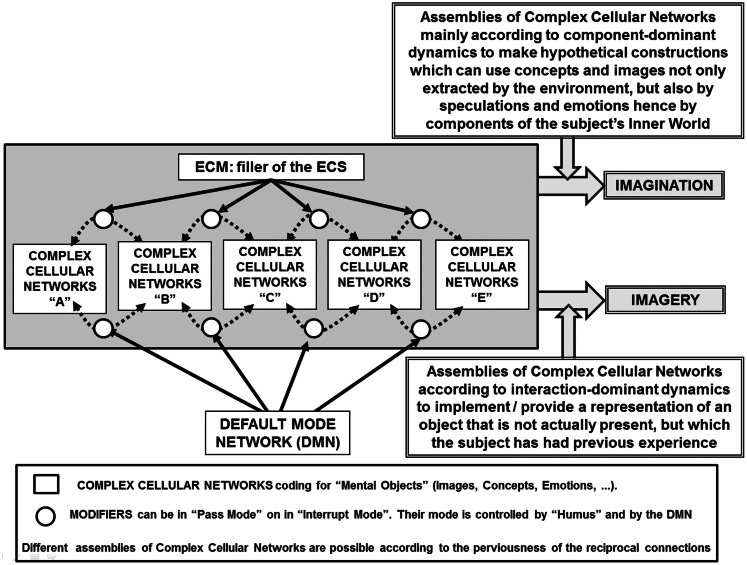
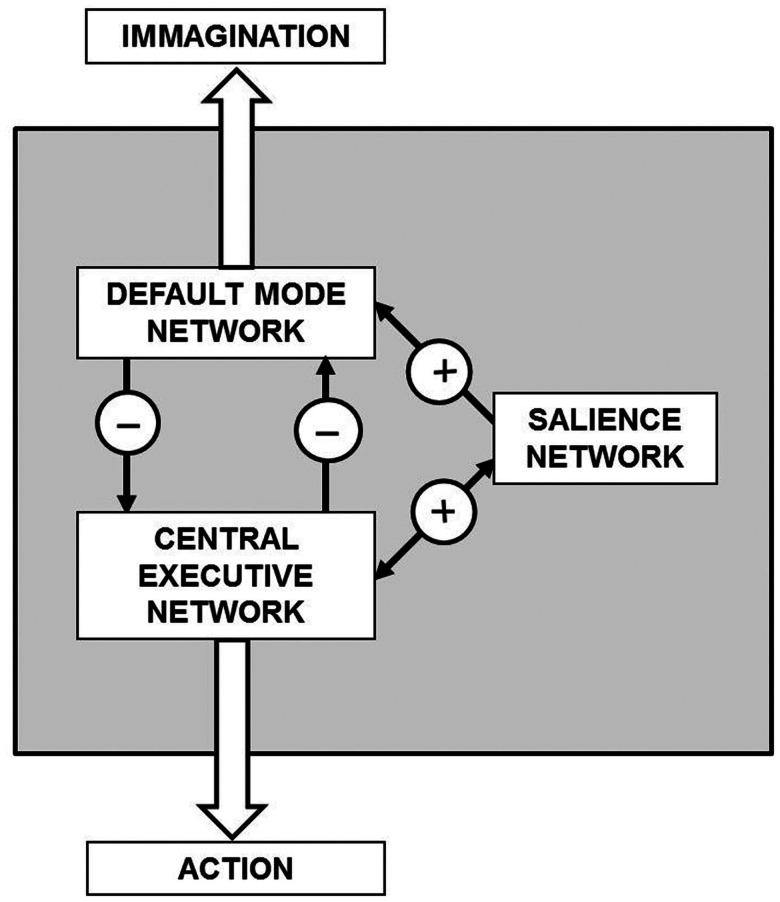
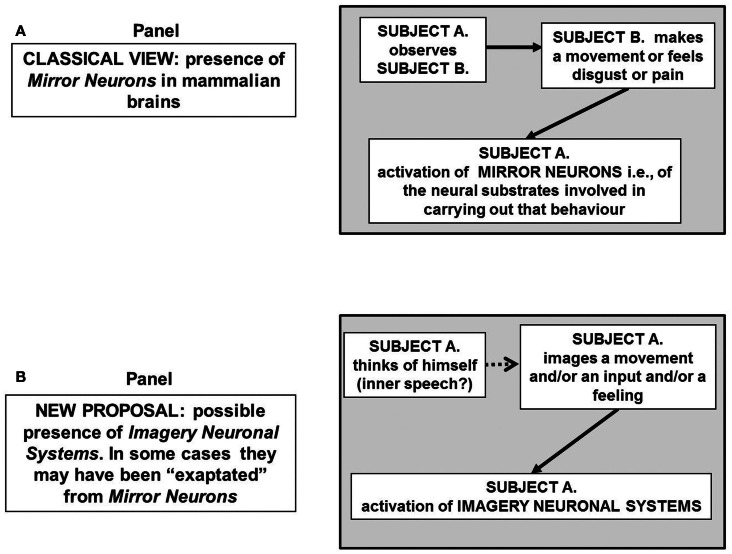
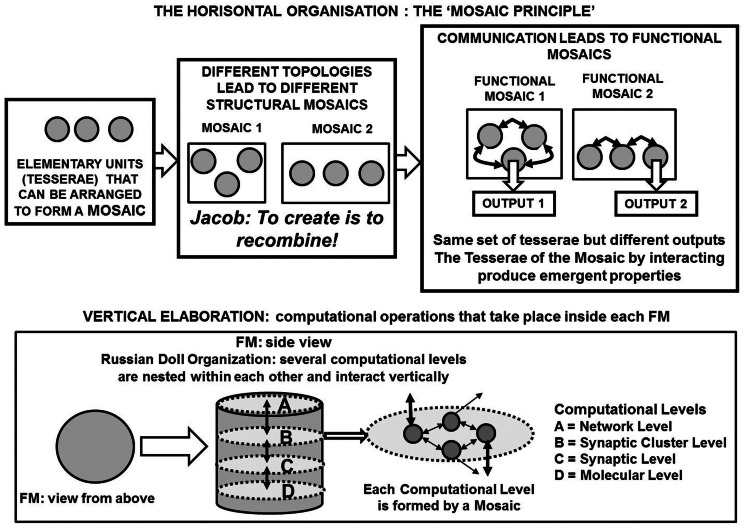
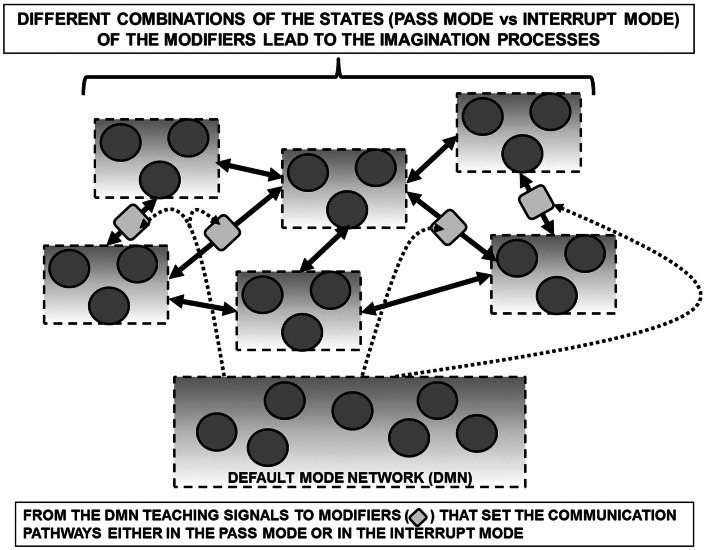
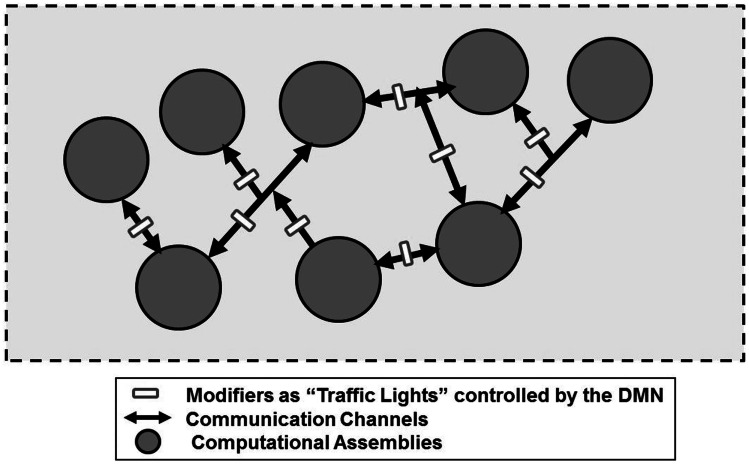
This work aims at presenting some hypotheses about the potential neurobiological substrate of imagery and imagination. For the present purposes, we will define imagery as the production of mental images associated with previous percepts, and imagination as the faculty of forming mental images of a novel character relating to something that has never been actually experienced by the subject but at a great extent emerges from his inner world. The two processes appear intimately related and imagery can arguably be considered as one of the main components of imagination. In this proposal, we argue that exaptation and redeployment, two basic concepts capturing important aspects of the evolution of biological structures and functions (Anderson, 2007), could also be useful in explaining imagery and imagination. As far as imagery is concerned it is proposed that neural structures originally implicated in performing certain functions, e.g., motor actions, can be reused for the imagery of the virtual execution of that function. As far as imagination is concerned we speculate that it can be the result of a "tinkering" that combines and modifies stored perceptual information and concepts leading to the creation of novel "mental objects" that are shaped by the subject peculiar inner world. Hence it is related to his self-awareness. The neurobiological substrate of the tinkering process could be found in a hierarchical model of the brain characterized by a multiplicity of functional modules (FMs) that can be assembled according to different spatial and temporal scales. Thus, it is surmised that a possible mechanism for the emergence of imagination could be represented by modulatory mechanisms controlling the perviousness of "modifiers" along the communication channels within and between FMs leading to their dynamically reassembling into novel configurations.
这项工作旨在提出一些关于意象和想象的潜在神经生物学基础的假设。就目前而言,我们将意象定义为与先前感知相关的心理意象的产生,而想象则是形成与主体从未实际经历过但在很大程度上源于其内在世界的新特征的心理意象的能力。这两个过程似乎密切相关,意象可以被认为是想象的主要组成部分之一。在这个建议中,我们认为适应和重新部署,这两个捕捉生物结构和功能进化的重要方面的基本概念(Anderson,2007),也可以用来解释意象和想象。就意象而言,我们提出,最初涉及执行某些功能的神经结构,例如运动动作,可以被重新用于该功能的虚拟执行的意象。就想象而言,我们推测它可能是一种“修补”的结果,这种修补结合和修改了存储的感知信息和概念,导致创造出新颖的“心理对象”,这些对象由主体独特的内在世界塑造。因此,它与主体的自我意识有关。修补过程的神经生物学基础可以在大脑的分层模型中找到,该模型的特点是具有多个功能模块(FM),这些模块可以根据不同的空间和时间尺度进行组装。因此,人们推测,想象出现的一个可能机制可以是控制“修饰符”在 FM 内部和之间的通信通道中的渗透性的调制机制,从而导致它们动态地重新组合成新的配置。