Center for Biomedical Engineering, Department of Medicine, Brigham and Women's Hospital, Harvard Medical School, Boston, MA 02139, USA.
Biomaterials. 2013 Sep;34(27):6355-66. doi: 10.1016/j.biomaterials.2013.04.045. Epub 2013 Jun 6.
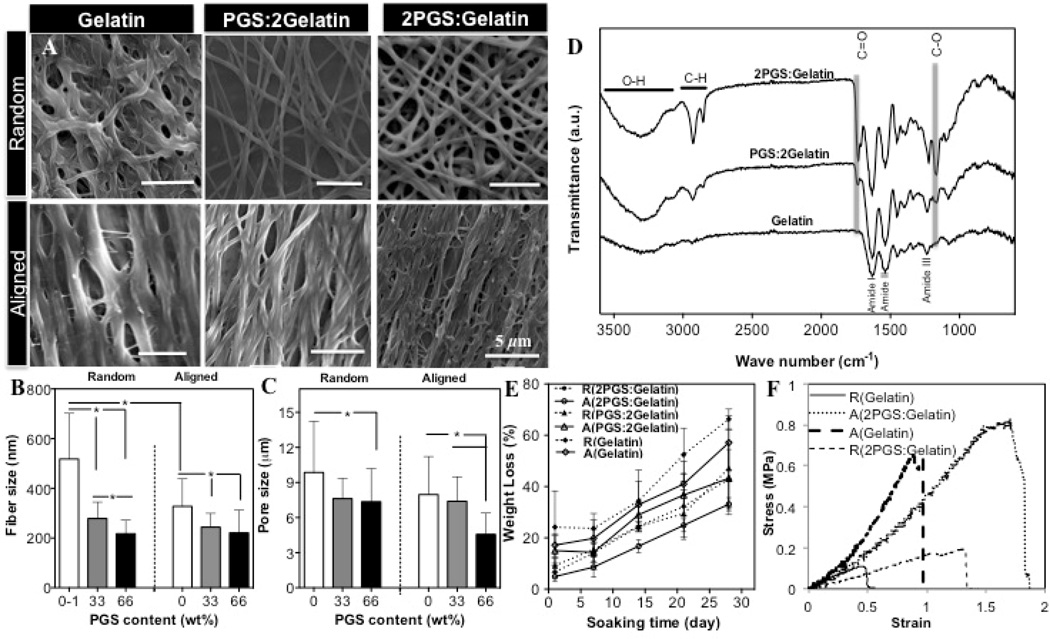
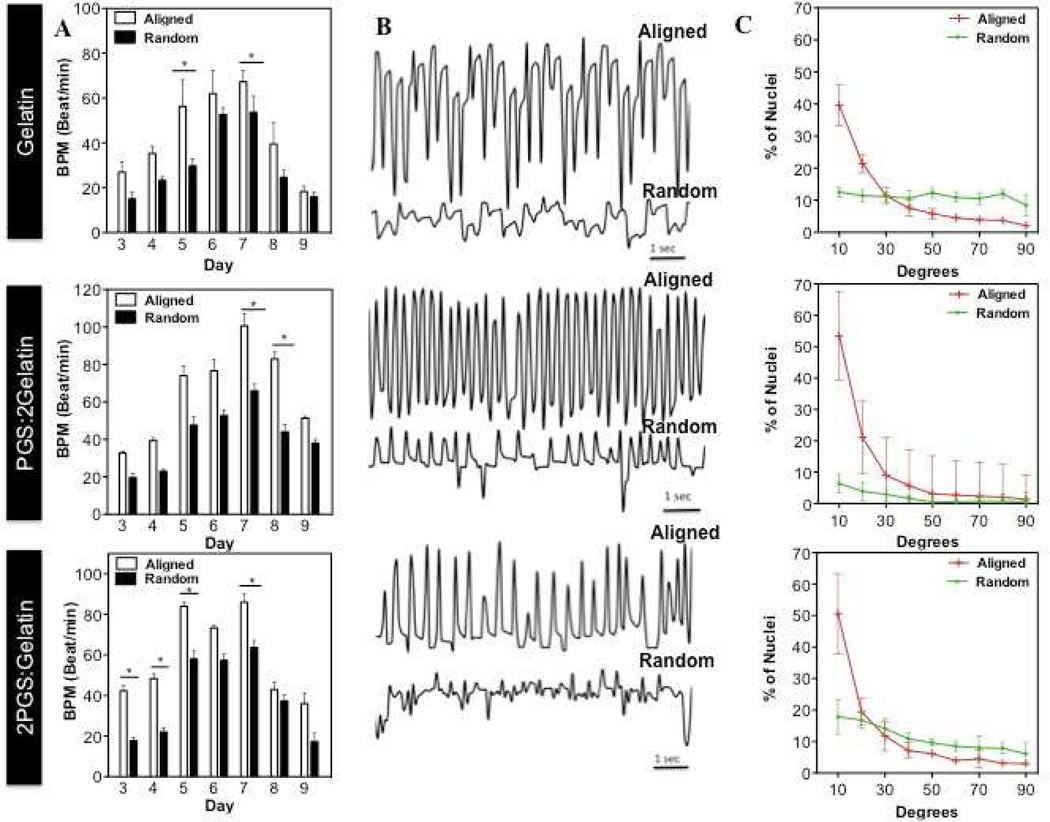
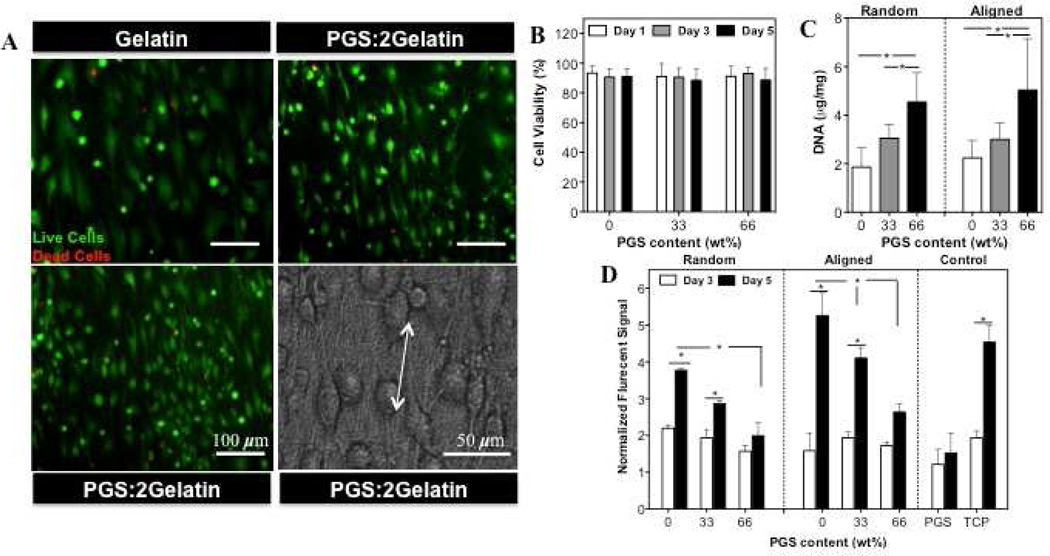
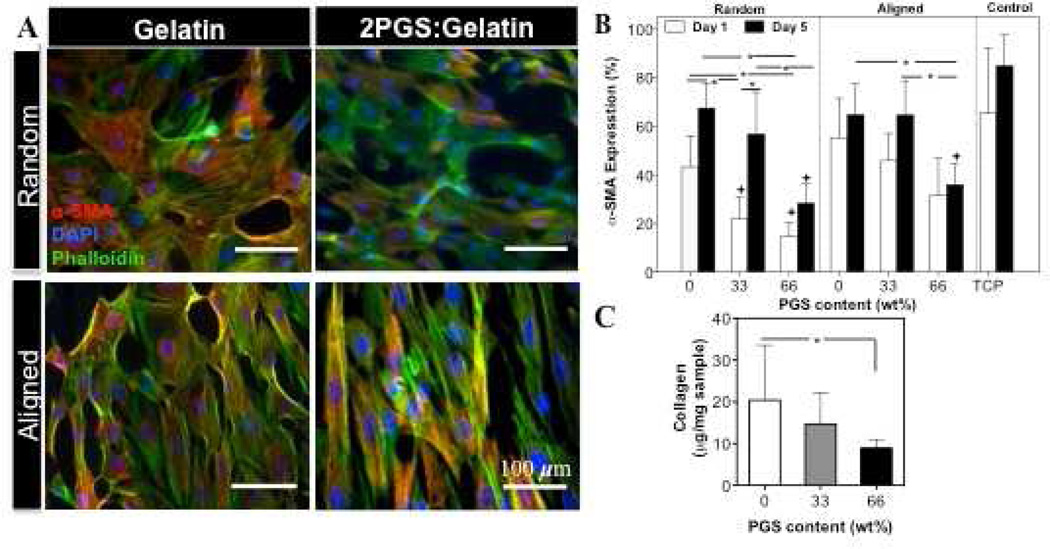
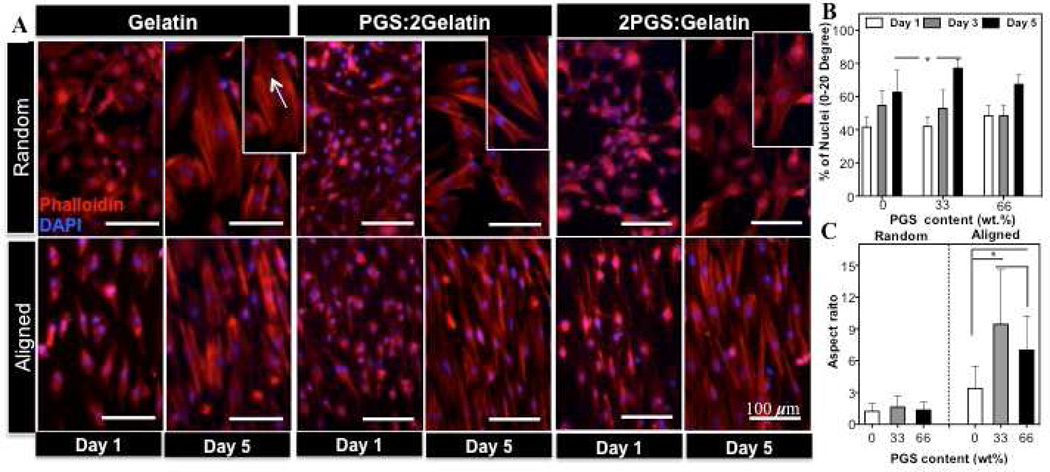
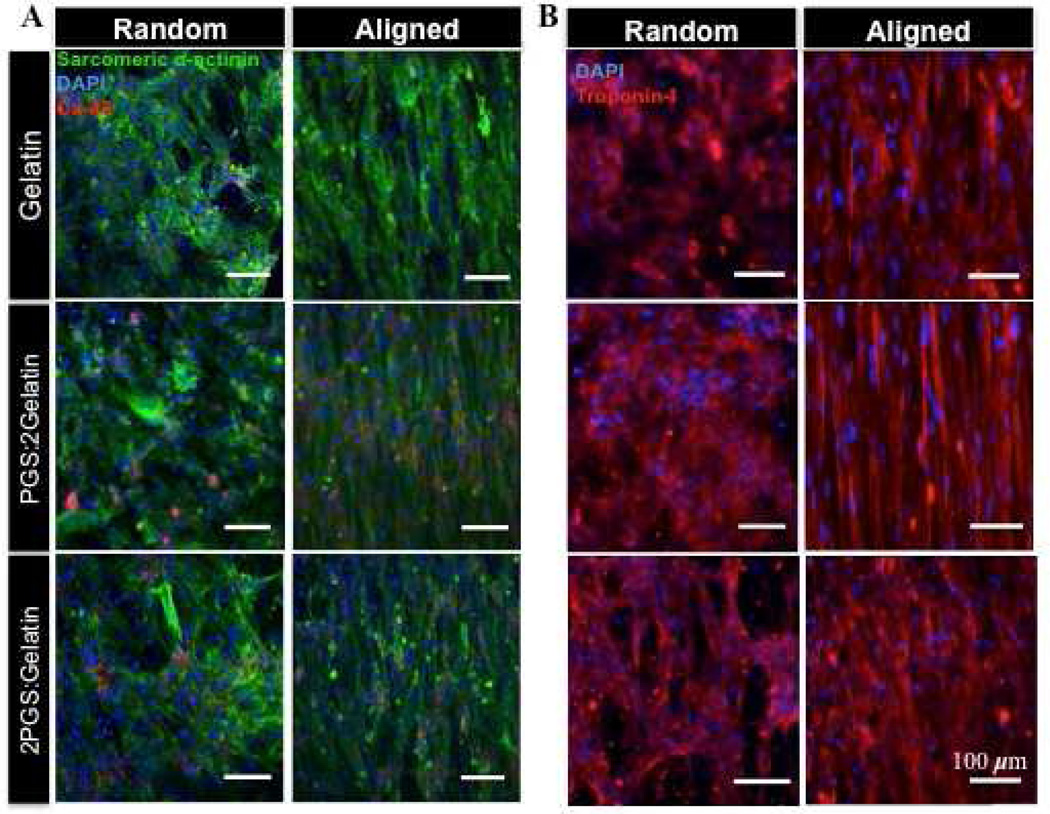
A significant challenge in cardiac tissue engineering is the development of biomimetic grafts that can potentially promote myocardial repair and regeneration. A number of approaches have used engineered scaffolds to mimic the architecture of the native myocardium tissue and precisely regulate cardiac cell functions. However, previous attempts have not been able to simultaneously recapitulate chemical, mechanical, and structural properties of the myocardial extracellular matrix (ECM). In this study, we utilized an electrospinning approach to fabricate elastomeric biodegradable poly(glycerol sebacate) (PGS):gelatin nanofibrous scaffolds with a wide range of chemical composition, stiffness and anisotropy. Our findings demonstrated that through incorporation of PGS, it is possible to create nanofibrous scaffolds with well-defined anisotropy that mimic the left ventricular myocardium architecture. Furthermore, we studied attachment, proliferation, differentiation and alignment of neonatal rat cardiac fibroblast cells (CFs) as well as protein expression, alignment, and contractile function of cardiomyocyte (CMs) on PGS:gelatin scaffolds with variable amount of PGS. Notably, aligned nanofibrous scaffold, consisting of 33 wt. % PGS, induced optimal synchronous contractions of CMs while significantly enhanced cellular alignment. Overall, our study suggests that the aligned nanofibrous PGS:gelatin scaffold support cardiac cell organization, phenotype and contraction and could potentially be used to develop clinically relevant constructs for cardiac tissue engineering.
在心脏组织工程学中,一个重大的挑战是开发仿生移植物,以促进心肌修复和再生。许多方法都使用工程支架来模拟天然心肌组织的结构,并精确调节心脏细胞的功能。然而,以前的尝试并不能同时再现心肌细胞外基质(ECM)的化学、机械和结构特性。在这项研究中,我们利用静电纺丝方法制备了具有广泛化学成分、硬度和各向异性的弹性可生物降解聚(甘油癸二酸酯)(PGS):明胶纳米纤维支架。我们的研究结果表明,通过加入 PGS,可以制造出具有明确各向异性的纳米纤维支架,模拟左心室心肌的结构。此外,我们研究了在具有不同 PGS 含量的 PGS:明胶支架上,新生大鼠心脏成纤维细胞(CFs)的附着、增殖、分化和排列以及心肌细胞(CMs)的蛋白表达、排列和收缩功能。值得注意的是,由 33wt%PGS 组成的取向纳米纤维支架可诱导 CMs 产生最佳的同步收缩,并显著增强细胞排列。总的来说,我们的研究表明,取向纳米纤维 PGS:明胶支架支持心脏细胞的组织、表型和收缩,并且可能被用于开发心脏组织工程学中具有临床相关性的构建物。