Department of Pediatrics, Columbia University, College of P&S, , New York, New York, USA.
Gut. 2014 Jun;63(6):928-37. doi: 10.1136/gutjnl-2013-304901. Epub 2013 Jun 7.
Enterochromaffin cell-derived serotonin (5-HT) promotes intestinal inflammation. We tested hypotheses that peripheral tryptophan hydroxylase (TPH) inhibitors, administered orally, block 5-HT biosynthesis and deplete 5-HT from enterochromaffin cells sufficiently to ameliorate intestinal inflammation; moreover, peripheral TPH inhibitors fail to enter the murine enteric nervous system (ENS) or central nervous systems and thus do not affect constitutive gastrointestinal motility.
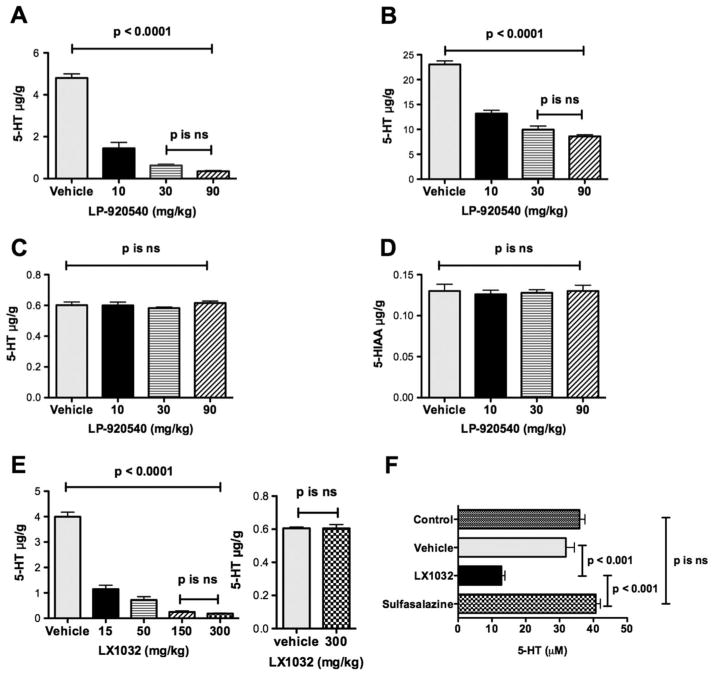
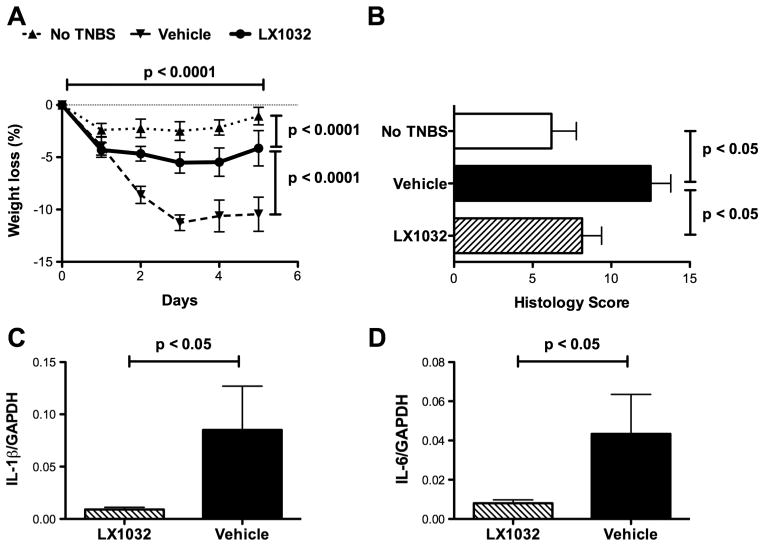
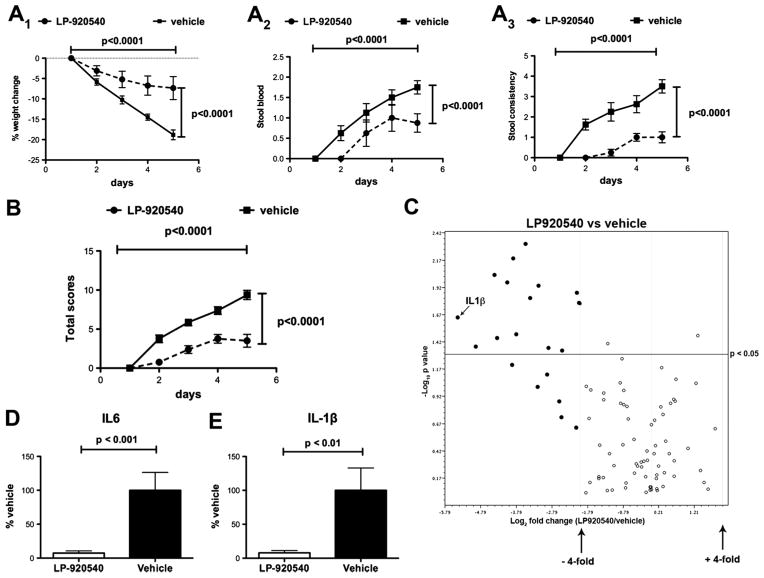
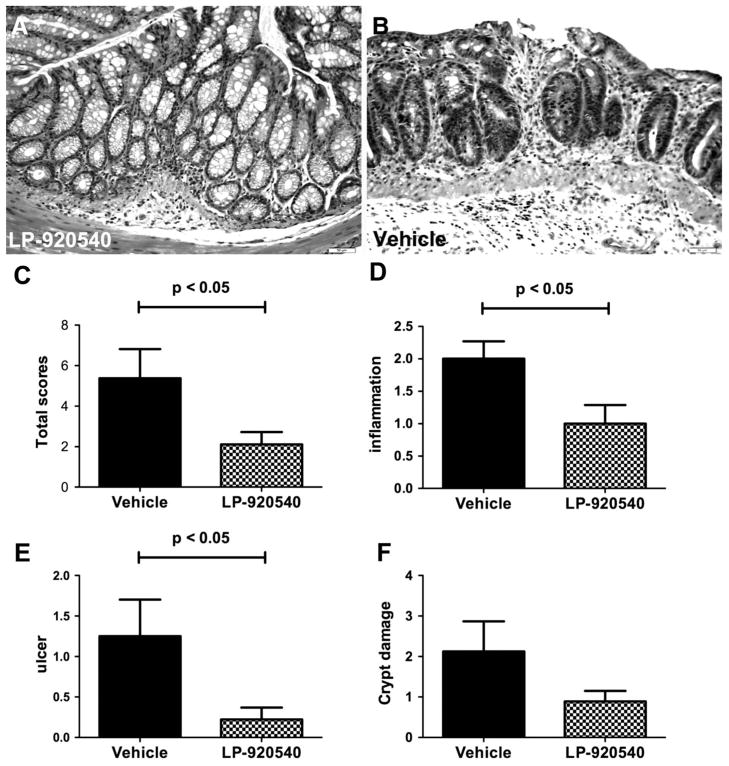
Two peripheral TPH inhibitors, LP-920540 and telotristat etiprate (LX1032; LX1606) were given orally to mice. Effects were measured on 5-HT levels in the gut, blood and brain, 5-HT immunoreactivity in the ENS, gastrointestinal motility and severity of trinitrobenzene sulfonic acid (TNBS)-induced colitis. Quantitation of clinical scores, histological damage and intestinal expression of inflammation-associated cytokines and chemokines with focused microarrays and real-time reverse transcriptase PCR were employed to evaluate the severity of intestinal inflammation.
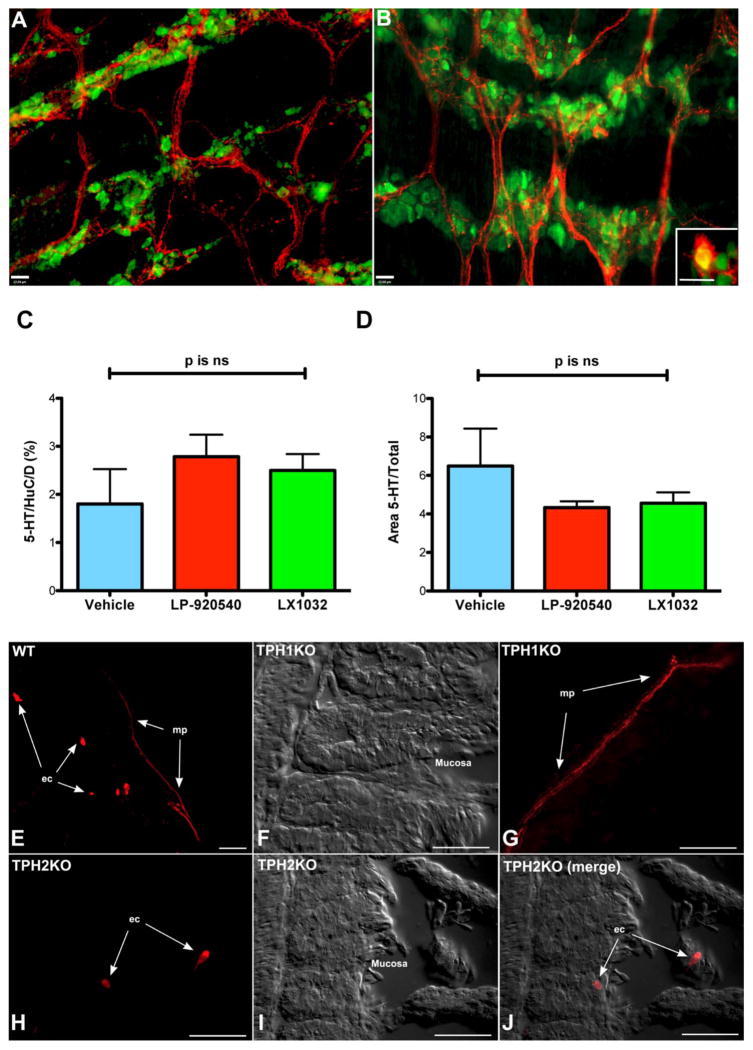
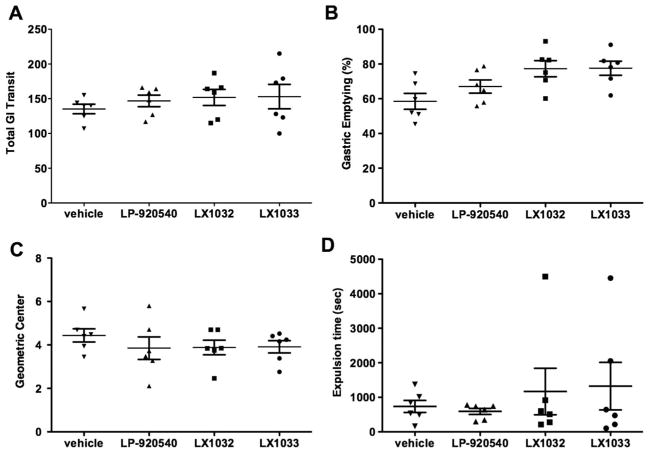
LP-920540 and LX1032 reduced 5-HT significantly in the gut and blood but not in the brain. Neither LP-920540 nor LX1032 decreased 5-HT immunoreactive neurons or fibres in the myenteric plexus and neither altered total gastrointestinal transit time, colonic motility or gastric emptying in mice. In contrast, oral LP-920540 and LX1032 reduced the severity of TNBS-induced colitis; the expression of 24% of 84 genes encoding inflammation-related cytokines and chemokines was lowered at least fourfold and the reduced expression of 17% was statistically significant.
Observations suggest that that peripheral TPH inhibitors uncouple the positive linkage of enterochromaffin cell-derived 5-HT to intestinal inflammation. Because peripheral TPH inhibitors evidently do not enter the murine ENS, they lack deleterious effects on constitutive intestinal motility in mice.
肠嗜铬细胞衍生的血清素(5-HT)可促进肠道炎症。我们验证了以下假设:外周色氨酸羟化酶(TPH)抑制剂经口服给药,可阻断 5-HT 的生物合成,并使肠嗜铬细胞内的 5-HT 耗竭,足以改善肠道炎症;此外,外周 TPH 抑制剂无法进入小鼠的肠神经系统(ENS)或中枢神经系统,因此不会影响固有胃肠道蠕动。
两种外周 TPH 抑制剂 LP-920540 和替洛利司特乙酯(LX1032;LX1606)经口服给予小鼠。测量了 5-HT 在肠道、血液和大脑中的水平,ENS 中 5-HT 免疫反应性,胃肠道蠕动和三硝基苯磺酸(TNBS)诱导的结肠炎的严重程度。采用聚焦微阵列和实时逆转录 PCR 定量评估临床评分、组织学损伤以及肠道中与炎症相关的细胞因子和趋化因子的表达,以评估肠道炎症的严重程度。
LP-920540 和 LX1032 显著降低了肠道和血液中的 5-HT,但未降低大脑中的 5-HT。LP-920540 和 LX1032 均未减少肌间神经丛中 5-HT 免疫反应性神经元或纤维,也未改变小鼠的总胃肠转运时间、结肠蠕动或胃排空。相比之下,口服 LP-920540 和 LX1032 可减轻 TNBS 诱导的结肠炎的严重程度;降低了编码炎症相关细胞因子和趋化因子的 84 个基因中 24%的表达,至少降低了 4 倍,其中 17%的降低具有统计学意义。
这些发现表明,外周 TPH 抑制剂使肠嗜铬细胞衍生的 5-HT 与肠道炎症之间的正反馈关系脱耦。由于外周 TPH 抑制剂显然不会进入小鼠的 ENS,因此它们对小鼠固有肠道蠕动没有不良影响。