Department of Neurosciences, Medical University of South Carolina , Charleston, SC , USA.
Front Psychiatry. 2013 May 30;4:46. doi: 10.3389/fpsyt.2013.00046. eCollection 2013.
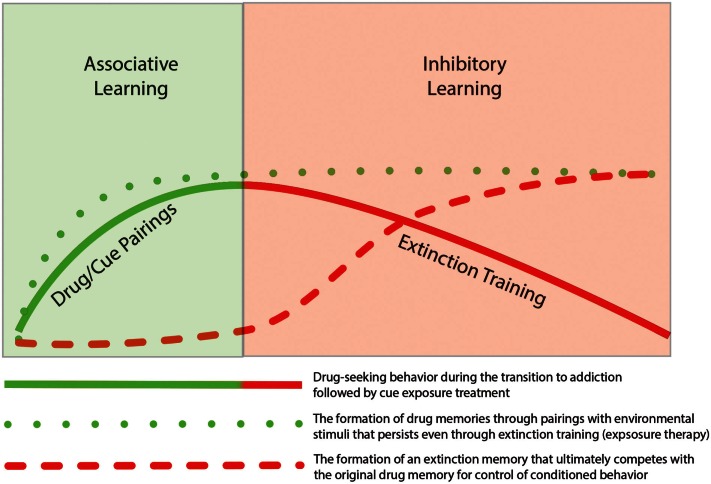
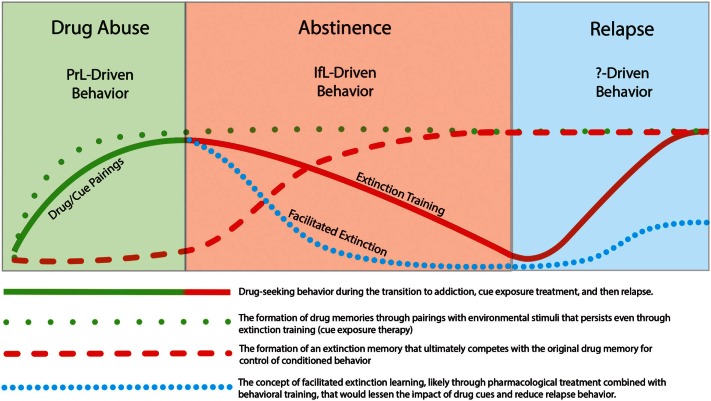
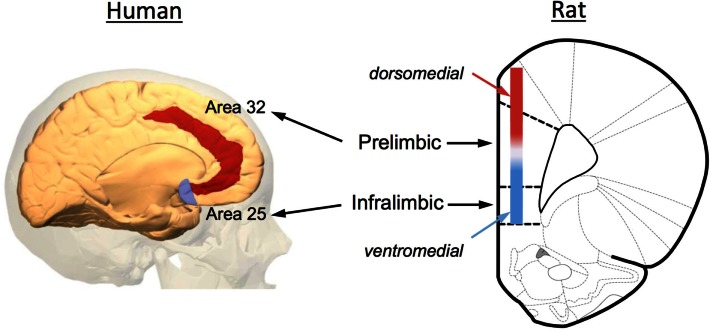
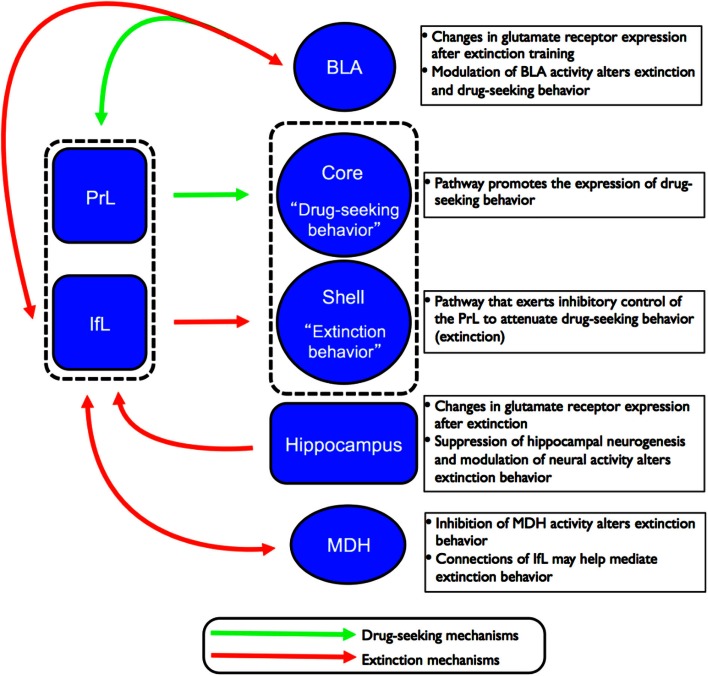
Theories of drug addiction that incorporate various concepts from the fields of learning and memory have led to the idea that classical and operant conditioning principles underlie the compulsiveness of addictive behaviors. Relapse often results from exposure to drug-associated cues, and the ability to extinguish these conditioned behaviors through inhibitory learning could serve as a potential therapeutic approach for those who suffer from addiction. This review will examine the evidence that extinction learning alters neuronal plasticity in specific brain regions and pathways. In particular, subregions of the prefrontal cortex (PFC) and their projections to other brain regions have been shown to differentially modulate drug-seeking and extinction behavior. Additionally, there is a growing body of research demonstrating that manipulation of neuronal plasticity can alter extinction learning. Therefore, the ability to alter plasticity within areas of the PFC through pharmacological manipulation could facilitate the acquisition of extinction and provide a novel intervention to aid in the extinction of drug-related memories.
将学习和记忆领域的各种概念纳入成瘾理论的观点认为,经典和操作性条件作用原则是成瘾行为强制性的基础。复发通常是由于接触与药物相关的线索引起的,通过抑制性学习来消除这些条件行为的能力可能成为那些成瘾者的潜在治疗方法。这篇综述将探讨证据表明,消退学习会改变特定大脑区域和通路中的神经元可塑性。特别是,前额叶皮层(PFC)的亚区及其与其他大脑区域的投射已被证明可以不同程度地调节觅药和消退行为。此外,越来越多的研究表明,神经元可塑性的操纵可以改变消退学习。因此,通过药物操纵改变 PFC 区域内的可塑性的能力可以促进消退的获得,并提供一种新的干预措施来帮助消除与药物相关的记忆。