School of Chemical and Biomolecular Engineering, Cornell University, Ithaca, NY 14853, USA.
Nucleic Acids Res. 2013 Aug;41(15):7577-88. doi: 10.1093/nar/gkt452. Epub 2013 Jun 12.
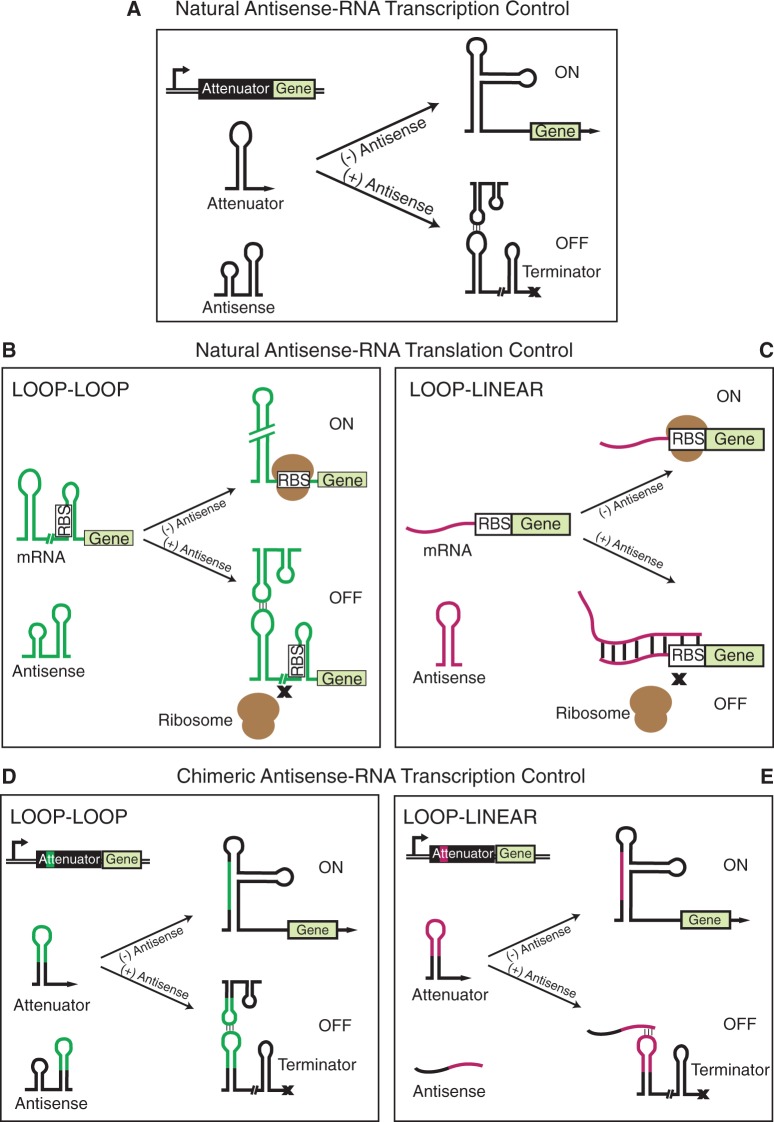
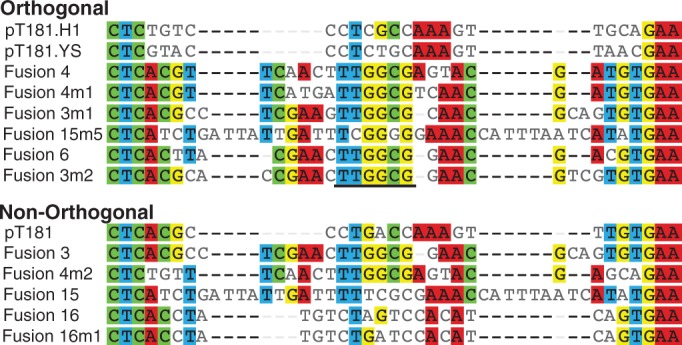
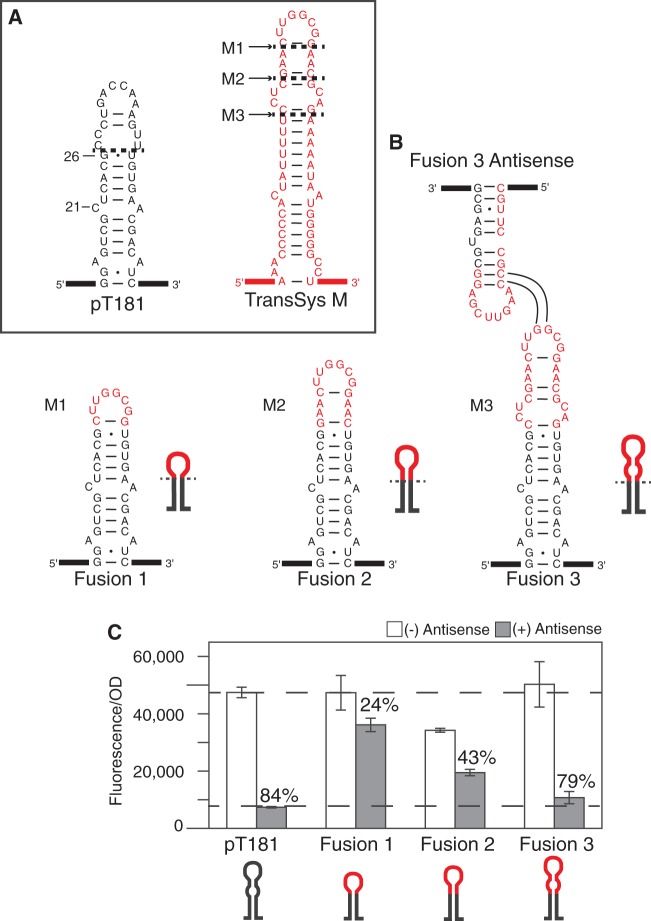
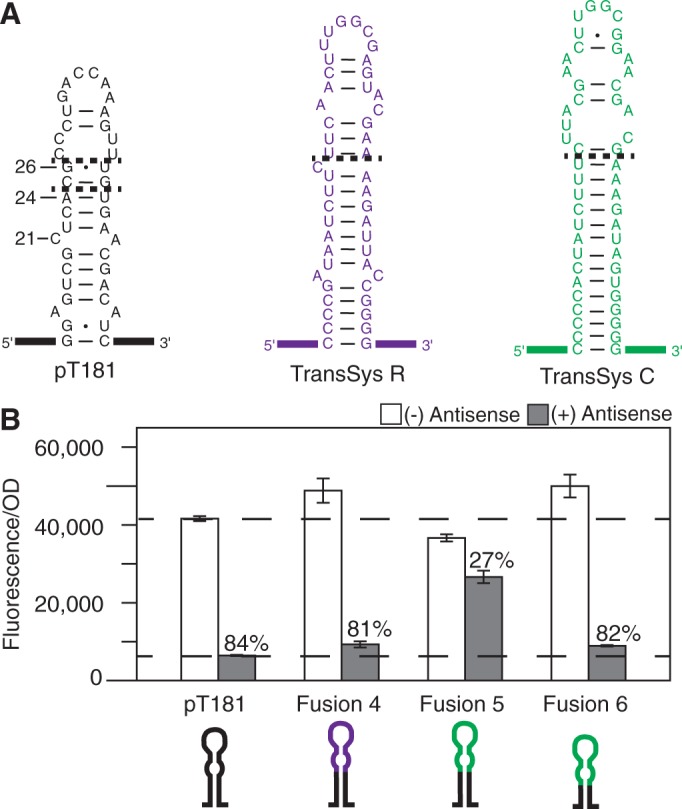
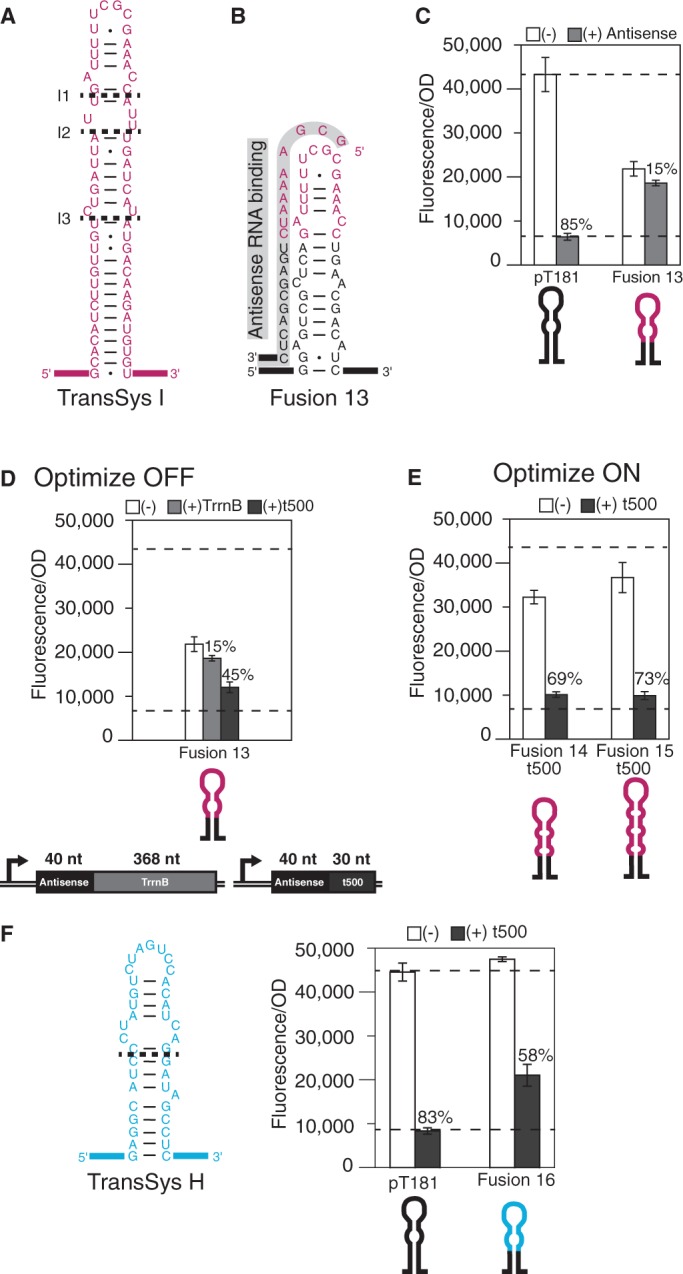
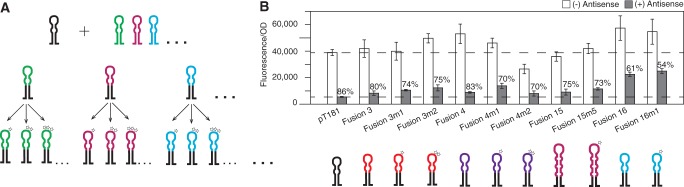
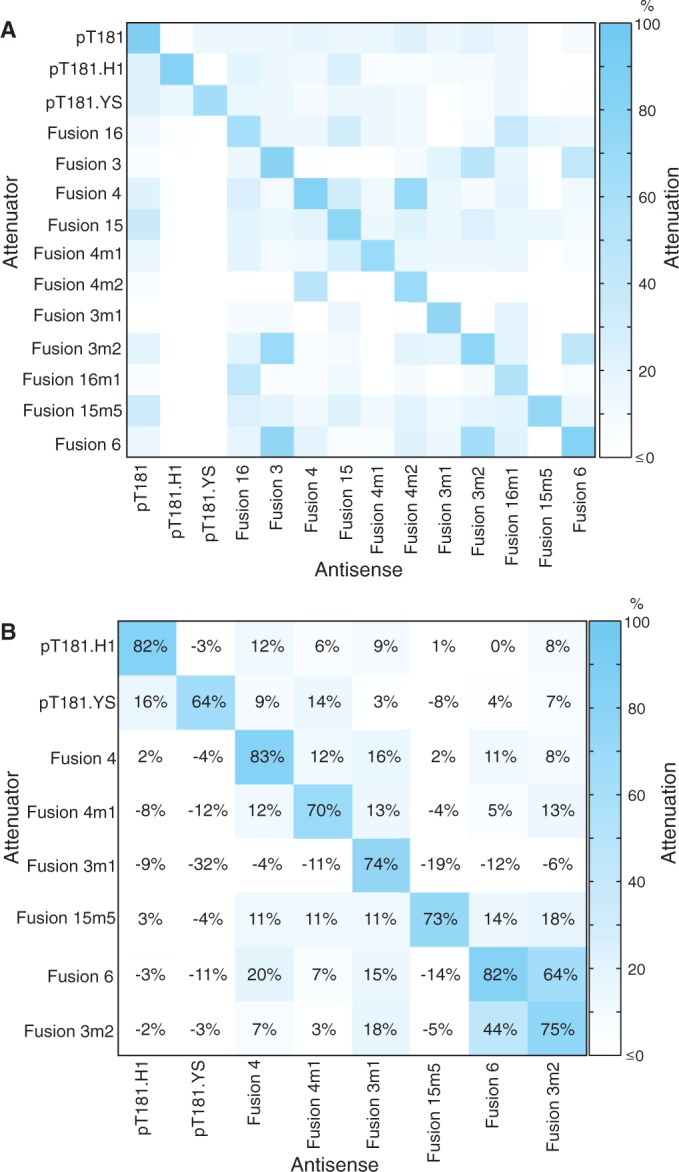
Antisense RNA transcription attenuators are a key component of the synthetic biology toolbox, with their ability to serve as building blocks for both signal integration logic circuits and transcriptional cascades. However, a central challenge to building more sophisticated RNA genetic circuitry is creating larger families of orthogonal attenuators that function independently of each other. Here, we overcome this challenge by developing a modular strategy to create chimeric fusions between the engineered transcriptional attenuator from plasmid pT181 and natural antisense RNA translational regulators. Using in vivo gene expression assays in Escherichia coli, we demonstrate our ability to create chimeric attenuators by fusing sequences from five different translational regulators. Mutagenesis of these functional attenuators allowed us to create a total of 11 new chimeric attenutaors. A comprehensive orthogonality test of these culminated in a 7 × 7 matrix of mutually orthogonal regulators. A comparison between all chimeras tested led to design principles that will facilitate further engineering of orthogonal RNA transcription regulators, and may help elucidate general principles of non-coding RNA regulation. We anticipate that our strategy will accelerate the development of even larger families of orthogonal RNA transcription regulators, and thus create breakthroughs in our ability to construct increasingly sophisticated RNA genetic circuitry.
反义 RNA 转录衰减子是合成生物学工具包的一个关键组成部分,它们能够作为信号整合逻辑电路和转录级联的构建模块。然而,构建更复杂的 RNA 遗传电路的一个核心挑战是创建更大的正交衰减子家族,使其能够相互独立地发挥作用。在这里,我们通过开发一种模块化策略来克服这一挑战,该策略用于在质粒 pT181 中的工程化转录衰减子和天然反义 RNA 翻译调节因子之间创建嵌合融合物。我们使用大肠杆菌中的体内基因表达测定来证明我们通过融合来自五个不同翻译调节因子的序列来创建嵌合衰减子的能力。对这些功能性衰减子的突变使我们能够总共创建 11 个新的嵌合衰减子。对这些衰减子的正交性综合测试最终得到了一个 7×7 的相互正交调节因子矩阵。对所有测试的嵌合体进行比较得出了设计原则,这将有助于进一步工程化正交 RNA 转录调节因子,并可能有助于阐明非编码 RNA 调控的一般原则。我们预计,我们的策略将加速更大的正交 RNA 转录调节因子家族的发展,从而在构建越来越复杂的 RNA 遗传电路方面取得突破。