College of Pharmacy, Chosun University, Dong-gu, Gwangju, Republic of Korea.
Oxid Med Cell Longev. 2013;2013:763257. doi: 10.1155/2013/763257. Epub 2013 May 9.
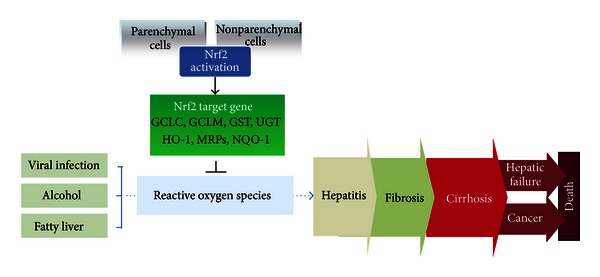
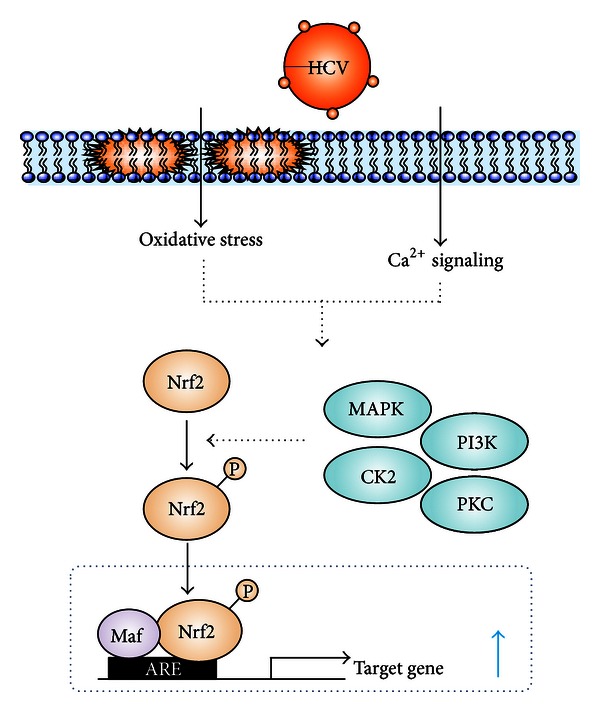
The liver is a central organ that performs a wide range of functions such as detoxification and metabolic homeostasis. Since it is a metabolically active organ, liver is particularly susceptible to oxidative stress. It is well documented that liver diseases including hepatitis, fibrosis, cirrhosis, and hepatocellular carcinoma are highly associated with antioxidant capacity. NF-E2-related factor-2 (Nrf2) is an essential transcription factor that regulates an array of detoxifying and antioxidant defense genes expression in the liver. It is activated in response to electrophiles and induces its target genes by binding to the antioxidant response element (ARE). Therefore, the roles of the Nrf2-ARE pathway in liver diseases have been extensively investigated. Studies from several animal models suggest that the Nrf2-ARE pathway collectively exhibits diverse biological functions against viral hepatitis, alcoholic and nonalcoholic liver disease, fibrosis, and cancer via target gene expression. In this review, we will discuss the role of the Nrf2-ARE pathway in liver pathophysiology and the potential application of Nrf2 as a therapeutic target to prevent and treat liver diseases.
肝脏是一种执行多种功能的中央器官,例如解毒和代谢稳态。由于它是一种代谢活跃的器官,因此肝脏特别容易受到氧化应激的影响。有大量文献记载表明,包括肝炎、纤维化、肝硬化和肝细胞癌在内的肝脏疾病与抗氧化能力密切相关。NF-E2 相关因子 2(Nrf2)是一种重要的转录因子,可调节肝脏中一系列解毒和抗氧化防御基因的表达。它会被亲电子物质激活,并通过与抗氧化反应元件(ARE)结合来诱导其靶基因的表达。因此,Nrf2-ARE 途径在肝脏疾病中的作用已得到广泛研究。来自多个动物模型的研究表明,Nrf2-ARE 途径通过靶基因表达,共同表现出针对病毒性肝炎、酒精性和非酒精性肝病、纤维化和癌症的多种生物学功能。在这篇综述中,我们将讨论 Nrf2-ARE 途径在肝脏病理生理学中的作用,以及将 Nrf2 作为预防和治疗肝脏疾病的治疗靶点的潜在应用。