Department of Smart Foods and Drugs, School of Food and Life Science, Inje University, 607 Obang-dong, Gimhae, Gyungnam 621-749, Korea.
Nutr Res Pract. 2013 Jun;7(3):166-71. doi: 10.4162/nrp.2013.7.3.166. Epub 2013 Jun 3.
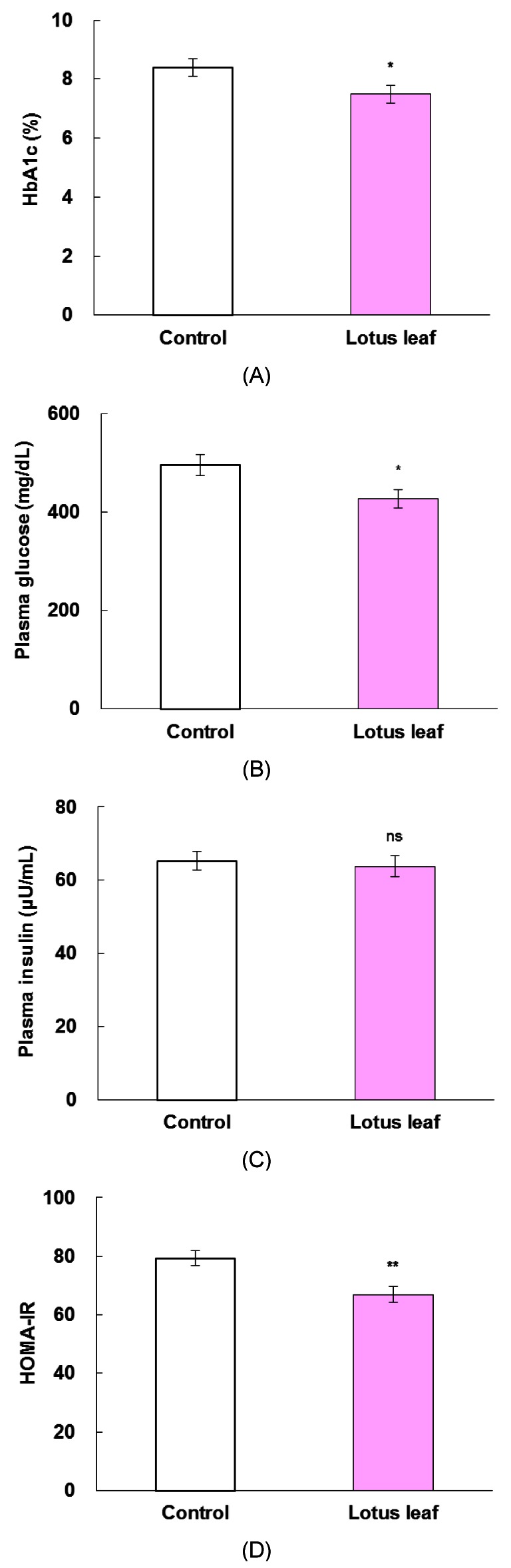
The purpose of this study was to investigate the effects of lotus leaf on hyperglycemia and dyslipidemia in animal model of diabetes. Inhibitory activity of ethanol extract of lotus leaf against yeast α-glucosidase was measured in vitro. The effect of lotus leaf on the postprandial increase in blood glucose levels was assessed in streptozotocin-induced diabetic rats. A starch solution (1 g/kg) with and without lotus leaf extract (500 mg/kg) was administered to the rats after an overnight fast, and postprandial plasma glucose levels were monitored. Four-week-old db/db mice were fed a basal diet or a diet containing 1% lotus leaf extract for 7 weeks after 1 week of acclimation to study the chronic effect of lotus leaf. After sacrifice, plasma glucose, insulin, triglycerides (TG), total cholesterol (CHOL), high-density lipoprotein (HDL)-CHOL, and blood glycated hemoglobin levels were measured. Lotus leaf extract inhibited α-glucosidase activity by 37.9%, which was 1.3 times stronger than inhibition by acarbose at a concentration of 0.5 mg/mL in vitro. Oral administration of lotus leaf extract significantly decreased the area under the glucose response curve by 35.1% compared with that in the control group (P < 0.01). Chronic feeding of lotus leaf extract significantly lowered plasma glucose and blood glycated hemoglobin compared with those in the control group. Lotus leaf extract significantly reduced plasma TG and total CHOL and elevated HDL-CHOL levels compared with those in the control group. Therefore, we conclude that lotus leaf is effective for controlling hyperglycemia and dyslipidemia in an animal model of diabetes mellitus.
本研究旨在探讨荷叶对糖尿病动物模型高血糖和血脂异常的影响。体外测定荷叶乙醇提取物对酵母α-葡萄糖苷酶的抑制活性。在链脲佐菌素诱导的糖尿病大鼠中评估荷叶对餐后血糖升高的影响。大鼠禁食一夜后,给予含淀粉溶液(1g/kg)和/或荷叶提取物(500mg/kg),监测餐后血浆葡萄糖水平。4 周龄 db/db 小鼠在适应期 1 周后,给予基础饮食或含 1%荷叶提取物的饮食 7 周,以研究荷叶的慢性作用。处死动物后,测定血浆葡萄糖、胰岛素、三酰甘油(TG)、总胆固醇(CHOL)、高密度脂蛋白(HDL)-CHOL 和糖化血红蛋白水平。荷叶提取物在体外对α-葡萄糖苷酶的抑制活性为 37.9%,抑制强度是阿卡波糖(浓度为 0.5mg/mL)的 1.3 倍。荷叶提取物口服给药可使葡萄糖反应曲线下面积较对照组降低 35.1%(P<0.01)。荷叶提取物慢性喂养可显著降低血浆葡萄糖和糖化血红蛋白水平,与对照组相比。荷叶提取物可显著降低血浆 TG 和总 CHOL,升高 HDL-CHOL 水平,与对照组相比。因此,我们得出结论,荷叶可有效控制糖尿病动物模型的高血糖和血脂异常。