Vélez Juan Carlos, Souza Aline, Traslaviña Samantha, Barbosa Clarita, Wosu Adaeze, Andrade Asterio, Frye Megan, Fitzpatrick Annette L, Gelaye Bizu, Williams Michelle A
Centro de Rehabilitación Club de Leones Cruz del Sur, Punta Arenas, Suiza 01441, Chile.
Sleep Disord. 2013;2013:910104. doi: 10.1155/2013/910104. Epub 2013 May 16.
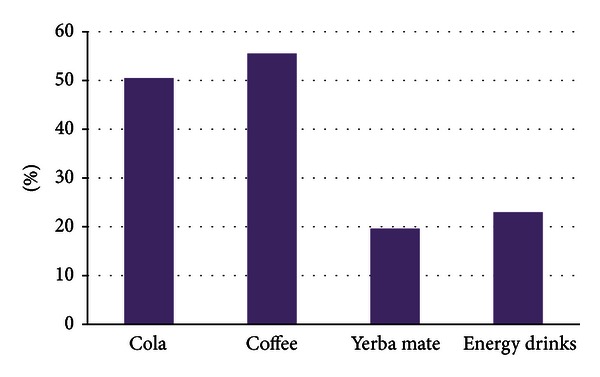
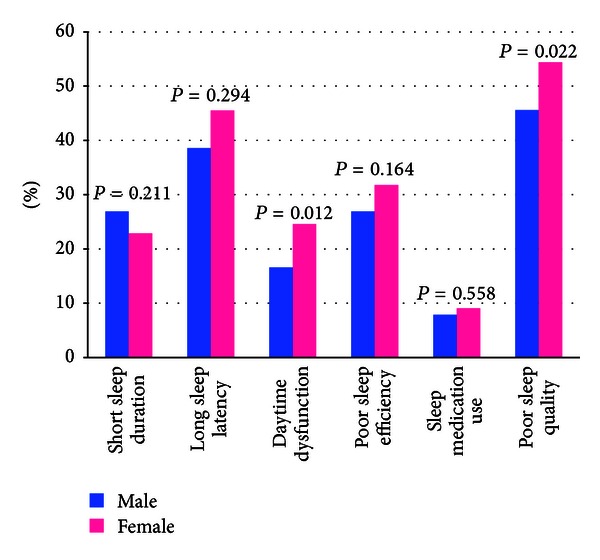
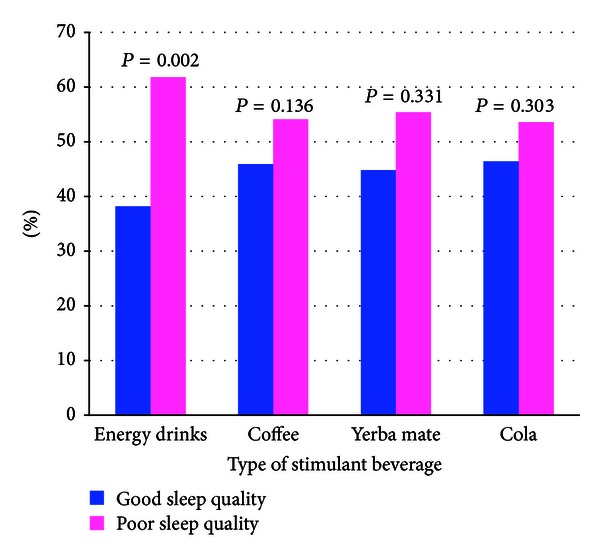
Objectives. (1) To assess sleep patterns and parameters of sleep quality among Chilean college students and (2) to evaluate the extent to which stimulant beverage use and other lifestyle characteristics are associated with poor sleep quality. Methods. A cross-sectional study was conducted among college students in Patagonia, Chile. Students were asked to complete a self-administered questionnaire to provide information about lifestyle and demographic characteristics. The Pittsburgh Sleep Quality Index (PSQI) was used to evaluate sleep quality. In addition, students underwent a physical examination to collect anthropometric measurements. Results. More than half of students (51.8%) exhibited poor sleep quality. Approximately 45% of study participants reported sleeping six hours or less per night and 9.8% used medications for sleep. In multivariate analysis, current smokers had significantly greater daytime dysfunction due to sleepiness and were more likely to use sleep medicines. Students who reported consumption of any stimulant beverage were 1.81 times as likely to have poor sleep quality compared with those who did not consume stimulant beverages (OR:1.81, 95% CI:1.21-2.00). Conclusions. Poor sleep quality is prevalent among Chilean college students, and stimulant beverage consumption was associated with the increased odds of poor sleep quality in this sample.
目标。(1)评估智利大学生的睡眠模式和睡眠质量参数,以及(2)评估刺激性饮料的使用和其他生活方式特征与睡眠质量差之间的关联程度。方法。在智利巴塔哥尼亚的大学生中进行了一项横断面研究。要求学生完成一份自我管理的问卷,以提供有关生活方式和人口统计学特征的信息。匹兹堡睡眠质量指数(PSQI)用于评估睡眠质量。此外,学生接受了体格检查以收集人体测量数据。结果。超过一半的学生(51.8%)睡眠质量差。约45%的研究参与者报告每晚睡眠6小时或更少,9.8%的人使用睡眠药物。在多变量分析中,当前吸烟者因困倦导致的白天功能障碍明显更大,且更有可能使用睡眠药物。报告饮用任何刺激性饮料的学生睡眠质量差的可能性是未饮用刺激性饮料学生的1.81倍(比值比:1.81,95%置信区间:1.21 - 2.00)。结论。睡眠质量差在智利大学生中普遍存在,并且在该样本中,饮用刺激性饮料与睡眠质量差的几率增加有关。